MEDINDIA
 English
 हिन्दी
 Español
 français
 中文
中文
Two FDA-approved pain-relief drugs, bupivacaine and rimegepant, were found to ease osteosarcoma-related pain and slow tumor growth.
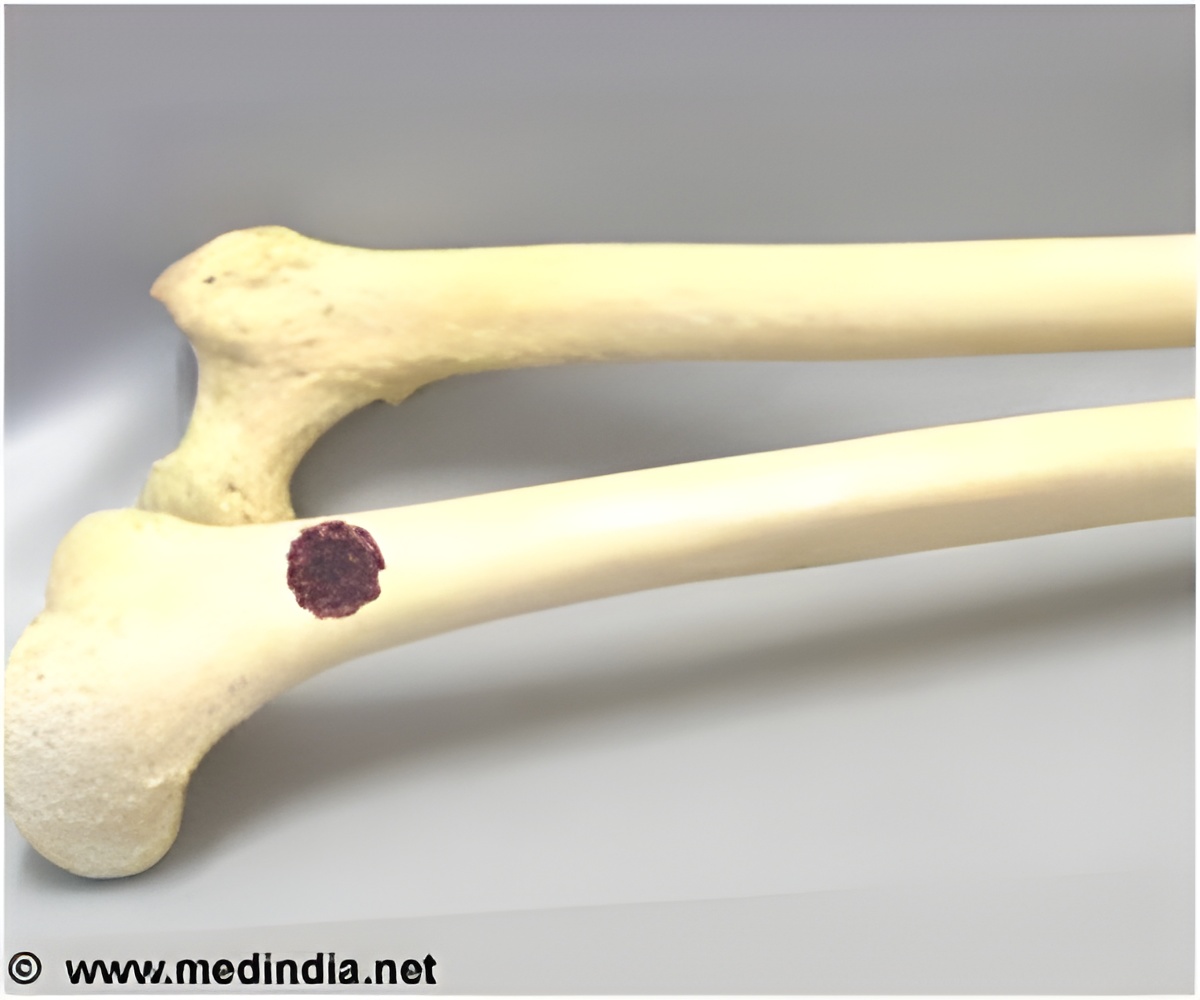
Johns Hopkins Study Reveals Pain Medications Also Inhibit Bone Cancer Growth
Go to source). Published in the Proceedings of the National Academy of Sciences of the United States of America (PNAS), a federally funded multicenter investigation led by Johns Hopkins Medicine revealed that two analgesic drugs, bupivacaine and rimegepant, commonly used to block the activity of such neurons, not only relieve pain related to tumors in laboratory mice but also suppress the uncontrolled proliferation of the cancer.
The paper was made available on October 21, 2025, for early preview and can be accessed online.
Bone Cancer - Causes, Symptoms, Signs, Diagnosis, Treatment, Prevention, Health Tips
Find the facts of bone cancer including types of bone cancer, symptoms, causes, treatment, diagnosis and more information.
Find the facts of bone cancer including types of bone cancer, symptoms, causes, treatment, diagnosis and more information.
TOP INSIGHT

Did You Know?
Two common pain-relief drugs already approved by the FDA were found to ease severe bone tumor pain and also slow down the growth of malignant bone cancer. #osteosarcoma #painrelief #medindia
Repurposing Analgesic Drugs for Cancer Control
Lead author Sowmya Ramesh, Ph.D., a postdoctoral researcher in pathology at the Johns Hopkins University School of Medicine, explains that the two medications, already approved by the USFDA for treating nerve pain (bupivacaine) and migraines (rimegepant), may hold potential as future cancer therapies.According to Sowmya, these drugs influence three proteins, calcitonin gene-related peptide (CGRP), tryptomyosin receptor kinase-A (TrkA), and nerve growth factor (NGF), which are responsible for communication between neurons and tumors. By blocking these proteins, the drugs prevent the development of nerve supply and new blood vessels within osteosarcomas.
She adds that applying these two drugs to mice with osteosarcoma-like tumors not only limits the growth of nerves and blood vessels but also slows the cancer’s expansion and spread. This raises hope that such findings could eventually contribute to developing a treatment for human osteosarcomas.
Quiz on Bone Cancer
Bone cancer may arise primarily from a bone or may spread from other organs to the bone. See how much you know on bone cancer by taking this ...
Bone cancer may arise primarily from a bone or may spread from other organs to the bone. See how much you know on bone cancer by taking this ...
Opposite Effects from Previous Bone Repair Discoveries
Interestingly, the goal of reducing TrkA and NGF activity contrasts with earlier findings from the James Laboratory at Johns Hopkins Medicine, the same team leading the current investigation.Senior author Aaron James, M.D., Ph.D., professor of pathology at the Johns Hopkins University School of Medicine, states that their earlier work demonstrated how NGF-TrkA signaling by peripheral neurons is crucial in bone healing after fractures, as it promotes the sprouting of sensory nerves and blood vessels.
However, in the current context, the team aims to inhibit this nerve communication to prevent excessive nerve and blood vessel formation in osteosarcomas, thereby restricting the tumor’s growth and spread.

Gene Therapy Improves Bone Cancer (Osteosarcoma) Treatment
A key therapeutic target and unique delivery system to treat bone cancer have been discovered.
A key therapeutic target and unique delivery system to treat bone cancer have been discovered.
Understanding Nerve Signaling in Osteosarcoma Progression
The first step of the PNAS investigation involved identifying the role of sensory neurons in controlling the development and spread of osteosarcomas. The team used genetically modified mice with osteosarcoma-like tumors that were engineered to block TrkA signaling activity.According to Ramesh, mice with disrupted NGF-TrkA signaling displayed significantly reduced nerve growth. Additionally, many of these mice showed slower tumor expansion, decreased metastasis, and extended survival.

Quiz on Cancer
Cancer, is the second most leading cause of death worldwide. Cancer is not just one disease but many diseases. There are more than 100 different types of cancer. Take this quiz on and test how much you know about ...
Cancer, is the second most leading cause of death worldwide. Cancer is not just one disease but many diseases. There are more than 100 different types of cancer. Take this quiz on and test how much you know about ...
Immune Cell Influence on Tumor Growth
Co-lead author Qizhi Qin, Ph.D., a postdoctoral fellow in the James Laboratory, observed that reduced TrkA activity also resulted in fewer tumor-associated macrophages. These white blood cells, commonly found in osteosarcomas, tend to promote tumor development, blood vessel growth, and metastasis by weakening the immune system’s defenses and contributing to resistance against chemotherapy.The researchers then analyzed samples from human osteosarcomas and found that each displayed evidence of NGF-TrkA binding, consistent with heightened nerve and blood vessel formation.
Human Evidence of Nerve and Blood Vessel Growth
James explains that this pattern in human tumors mirrors what was observed in mice, NGF-TrkA signaling leading to increased nerve and vessel growth, which fuels tumor progression and pain associated with osteosarcoma.The team also examined dorsal root ganglion (DRG) neurons, nerves along the spinal cord responsible for transmitting sensory information, from individuals with and without tumors. Upon reanalysis, they discovered elevated CGRP activity and inflammation in DRG neurons taken from patients experiencing tumor-related pain.
Blocking Nerve Signals to Stop Tumor Spread
Having confirmed that osteosarcoma growth, spread, and pain are all linked to CGRP-triggered NGF-TrkA signaling, the researchers tested whether blocking CGRP could ease both problems.Their experiments in mouse models revealed that both FDA-approved medications, bupivacaine and rimegepant, significantly decreased nerve and blood vessel formation within tumors.
With this understanding, the team now plans to explore more deeply how peripheral sensory nerves interact with osteosarcomas, how they respond to cancer signals, and how their responses might be controlled to develop more effective therapies.
Reference:
- Johns Hopkins Study Reveals Pain Medications Also Inhibit Bone Cancer Growth - (https://bioengineer.org/johns-hopkins-study-reveals-pain-medications-also-inhibit-bone-cancer-growth/)
Source-Eurekalert
 Email
Email