MEDINDIA
 English
 हिन्दी
 Español
 français
 中文
中文
The new study challenges the belief that chromosomal changes take place slowly and gradually over time.


Breast Cancer Screening using Mammogram
Breast cancer if detected early can be completely cured. Mammography is used to screen women for breast cancer.
Breast cancer if detected early can be completely cured. Mammography is used to screen women for breast cancer.
TOP INSIGHT

Abnormal chromosomal evolution occur in short, punctuated “bursts” at the early stages of tumor growth almost in all types of solid cancers which has positive implications for faster clinical diagnosis and treatment
Navin’s study supports the “bursts” model and demonstrates the majority of CNAs are acquired at the earliest stages of tumor evolution. The discovery is important since most genomic studies have focused on a single point in time, after a tumor has been surgically removed, making it difficult to study the natural history of chromosome evolution during tumor growth.
The finding also indicated other cancers may demonstrate similar CNA behavior.
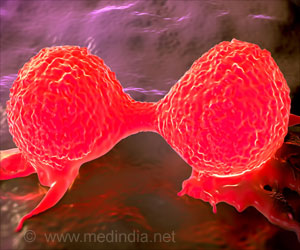
What Makes Breast Cancer More Common Than Heart Cancer?
Small critical organs have evolved better anticancer mechanisms when compared with bigger organs, according to a few researchers.
Small critical organs have evolved better anticancer mechanisms when compared with bigger organs, according to a few researchers.
The research team developed a new method called highly multiplexed single-nucleus sequencing (HM-SNS) to investigate CNA’s clonal substructure and evolution in a cohort of 12 TNBC patients, whose tumors had been surgically removed prior to further therapy. HM-SNS allows researchers to sequence the genomes of single tumor cells and study multiple cells simultaneously, both lowering the cost and boosting data analysis for such studies.

Interesting Facts About Breast Cancer
Breast cancer is the most commonly diagnosed cancer in women and in 2020 and nearly 2.3 million breast cancers were diagnosed globally.
Breast cancer is the most commonly diagnosed cancer in women and in 2020 and nearly 2.3 million breast cancers were diagnosed globally.
The study was funded by the Lefkofsky Family Foundation, the Andrew Sabin Family Fellowship Program, the National Institutes of Health, the American Cancer Society, the Nellie B. Connally Breast Chair in Breast Cancer Research, the Susan G. Komen, the Cancer Prevention and Research Institute, and Nadia’s Gift Foundation.
Quiz on Breast Cancer
Breast cancer is one of the leading causes of cancer deaths among women. It is often said that a woman who breast-feeds is at a lower risk of developing cancer compared to another who does not .Are these mere old wives tales or is there some truth in it? This quiz on breast cancer has all the details.
Breast cancer is one of the leading causes of cancer deaths among women. It is often said that a woman who breast-feeds is at a lower risk of developing cancer compared to another who does not .Are these mere old wives tales or is there some truth in it? This quiz on breast cancer has all the details.
 Email
Email