MEDINDIA
 English
 हिन्दी
 Español
 français
 中文
中文
Identifying the presence of residual breast cancer becomes easy by using image-guided breast biopsies after neoadjuvant chemotherapy, reveals a new study.
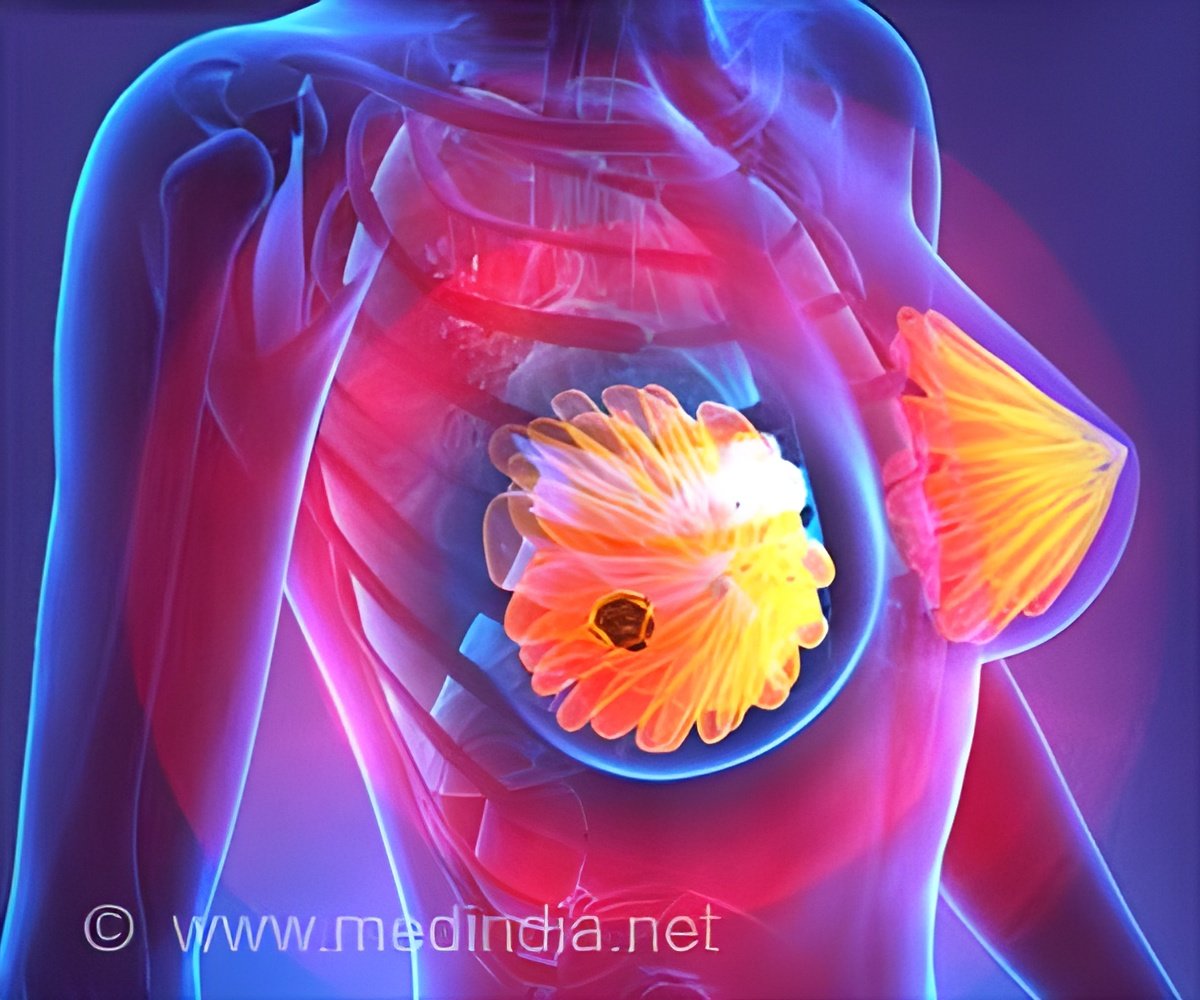

Breast Cancer - Causes, Risks, Symptoms, Diagnosis, Staging, Treatment, Prevention & Prognosis
Breast cancer is a cancer that affects the breasts or mammary glands. Early detection and lifestyle changes help in controlling breast cancer.
Breast cancer is a cancer that affects the breasts or mammary glands. Early detection and lifestyle changes help in controlling breast cancer.
TOP INSIGHT

Image-guided breast biopsies can reliably predict residual disease in breast cancer patients.
Read More..
Data analyzed from 166 women in the study showed that the cancer could be completely eradicated with NAC given first, also called overall pathologic complete response (pCR) in 51.2%. This high rate of pCR suggests that many patients may not benefit from surgery if the cancer already is eradicated. When the image-guided biopsy was representative, the false negative rate (FNR) across the whole cohort was 18.7%.
However, when using MD Anderson criteria for selection of patients to study the safety of eliminating breast cancer surgery, the analysis of accuracy of vacuum assisted biopsies in cases with a residual imaging abnormality of < 2 centimeters to allow adequate sampling and at least six representative biopsies taken (n=76) showed an FNR of 3.2%, a negative predictive value (NPV) of 97.4% and an overall accuracy of 89.5%. These findings suggest an optimal post-NAC biopsy protocol to support omitting surgery and the ability to accurately predict residual cancer.

Breast Lumps Screening-FNAC and Core Needle Biopsy
On needle aspiration if clear fluid is drawn out the lump is likley to be benign but if bloody it may turn out to be malignant
On needle aspiration if clear fluid is drawn out the lump is likley to be benign but if bloody it may turn out to be malignant
The majority (n=160) of patients in the analysis had invasive ductal carcinoma (IDC) with phenotype distribution of 18.7% (n=31) hormone receptor (HR) positive/human epidermal growth factor receptor (HER) 2 negative, 28.3% (n=47) HR and HER2 positive, 17.5% (n=29) HR negative/HER2 positive and 35.5% (n=59) triple negative (TN) breast cancer.

New Liquid Biopsy Test for Breast Cancer Diagnosis may be a Possible Game-Changer
Novel blood test known as TARDIS for breast cancer could help avoid thousands of unnecessary surgeries, and can precisely monitor disease progression, reveals a new study.
Novel blood test known as TARDIS for breast cancer could help avoid thousands of unnecessary surgeries, and can precisely monitor disease progression, reveals a new study.
Median tumor size on pre-treatment imaging was 33.5 mm (range: 12 – 100) and median number of samples was 6 (range: 2 – 18). The biopsy was performed under ultrasound (n=129) or stereo guidance (n=37) and in 159 cases was representative of the tumor bed.
Survival in Women, Men Diagnosed With Breast Cancer: Study
Men had higher mortality across all breast cancer stages. For men, the three-year survival rate was 86.4% and the five-year survival rate was 77.6%.
Men had higher mortality across all breast cancer stages. For men, the three-year survival rate was 86.4% and the five-year survival rate was 77.6%.
Future additional studies will be designed to deescalate treatment in NAC-exceptional responders and study the safety of eliminating surgery for this select patient population.
The study was supported by the National Cancer Institute and the PH and Fay Eta Robinson Distinguished Professorship Endowment.
Kuerer reports disclosures of royalties from McGraw-Hill Professional Inc. and UpToDate Inc., employment by the NEJM Group, Inc., and consultancy for Genomic Health Inc.
Source-Newswise
 Email
Email