MEDINDIA
 English
 हिन्दी
 Español
 français
 中文
中文
Our body signals fullness, but taste and portions often mask it. Retrieving these cues fosters healthier living.

Effects of apple form on satiety in 4–6 year-old children: possible evidence of sex differences
Go to source). Whether a fruit was eaten whole or as juice, kids still ate same amount overall, which is contrasting than what has been observed in adults in previous studies.
“Boys in this study adjusted the total number of calories they consumed during the meal to accommodate their snack intake whereas girls consumed a similar amount at the meal regardless of whether they had a snack,” said Kathleen Keller, professor and Helen A. Guthrie Chair of Nutritional Sciences at Penn State and senior author of this research study.

Cues from Internal Hunger Key to Keep Your Weight Under Control
Over-relying on external cues to stop eating a meal may prove useful in offering a partial explanation of why body mass index varies across people.
Over-relying on external cues to stop eating a meal may prove useful in offering a partial explanation of why body mass index varies across people.
TOP INSIGHT

Did You Know?
#Kids follow #eating_habits often from #family and #society. But today's high caloricdiet may detach them from fullness, leading to health problems. #kidseatinghabits #hungercues #appetite #medindia
The Apple Study: Methodology for Comparing Food Forms
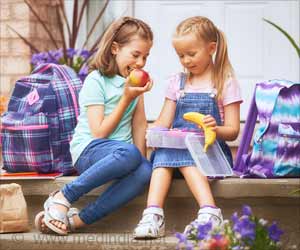
The researchers recruited 64 children — 32 boys and 32 girls — between the ages of four and six years old. Each child participated in the experiment five times with a one-week break between sessions.At each session, the child was offered a different pre-meal snack — apple slices, applesauce, apple juice, low-calorie apple juice or no snack. All snacks were the same number of calories, except for the low-calorie apple juice and the condition with no snack.
The volume of a food can influences how full it makes people feel. To account for this, the researchers used a box shaped like a large apple to disguise the volume of the snack.
Speed of consumption also influences how full food makes people feel, with faster eating or drinking associated with lower feelings of fullness, according to Keller. To help control eating pace in this study, the researchers read the children an apple-themed story.
When apples were mentioned, it was a cue for the child to reach into the box and get a portion of snack to eat — for example, a single apple slice or a spoonful of applesauce. Overall, children consumed 16 portions of the snack, which was approximately equal to a medium-sized apple.

Quiz on Weight Loss
If you thought fried foods, processed foods and potato are the bad guys in your weight loss plan, you thought right! Take this quiz and find out what actually can help you get the figure you always ...
If you thought fried foods, processed foods and potato are the bad guys in your weight loss plan, you thought right! Take this quiz and find out what actually can help you get the figure you always ...
Meal was Measured and Analyzed Separately for Boys and Girls
About eight minutes after the snack and story were finished, the researchers offered the children a full meal with macaroni and cheese, carrots, grapes, graham crackers, broccoli and a glass of water. Children were provided with additional portions of any food item if they requested it.Once the child was done eating, the researchers weighed the remaining portion of each food individually and calculated exactly how many calories the child consumed of each food. Children who did not consume the meal due to picky eating were excluded from the analysis.
After analyzing the data, the researchers found the form of food had no effect on how much the children consumed. Taken together, the data revealed that children in the study reduced the number of calories consumed during the meal to account for the pre-meal snack.
However, this result was driven by boys and did not hold true when the girls’ data were analyzed separately.

Bad Foods that May Still Be Good for Weight Loss
Who thought potato or pasta could help with your weight loss? Watch this slideshow to find out what researchers and nutritionists are saying about these and other 'bad' foods.
Who thought potato or pasta could help with your weight loss? Watch this slideshow to find out what researchers and nutritionists are saying about these and other 'bad' foods.
Possible Explanations for Sex-Based Differences in Eating Behaviors
Boys adjusted calorie intake to account for the snacks they ate and — regardless of food form — were better at regulating intake than girls. Girls, on the other hand, did not adjust the amount of the meal they consumed based on how much of the pre-meal snack they had eaten.The exact reasons for the sex-based difference in eating behavior were not measured in this experiment, but Keller, a Penn State Social Science Research Institute co-funded faculty member, identified two factors that she said she believes are likely to contribute to the disparity.
“The messaging around food differs for men and women in society, and this study suggests these messages start at a very young age,” said Keller, who is president of the Society for the Study of Ingestive Behavior, an international research organization dedicated to advancing scientific research on food and fluid intake.

Weight Loss Calculator
Weight Loss Calculator calculates calories needed to lose weight for men and women. Find out the amount of calories burned while doing exercises for weight loss and check the list of low calorie foods.
Weight Loss Calculator calculates calories needed to lose weight for men and women. Find out the amount of calories burned while doing exercises for weight loss and check the list of low calorie foods.
Societal and Developmental Factors Influencing Eating Habits
“For women, thinness is highly valued, so it is possible that parents, caretakers and teachers are subtly sending the message to young girls that they should focus on what people say they should eat rather than on what their body is telling them.”Girls are also known to be more socially compliant, making them more likely to pay attention to environmental cues when deciding how much or what to eat.
The other mechanism that Keller said probably contributed to this result is a component of the maturation process.
“There is evidence showing that all babies — boys and girls — are able to regulate how much they eat,” Keller said. “They eat when they are hungry and stop when they are full. But as they age, humans lose this natural ability as they learn to read social cues for how much they should eat.”
Broader Implications on Fullness and Amount of Food
Prior research has demonstrated girls develop socially more rapidly than boys, and Keller said that it is possible the results between boys and girls may have been more similar if the children were older and the boys had time to learn the social cues the girls were attending to.Keller said this attention to social cues can be useful. For example, children learn what foods are safe to eat and what foods should be avoided by observing the behaviors of family and peers.
For people living in a society with easy access to high calorie-density foods, however, Keller said this loss of connection between fullness and how much is eaten may contribute to problems like obesity or disordered eating.
“This result provides another reminder that we all need to be listening to our bodies. If we pay attention, our bodies provide cues that we have eaten enough.”
“But external influences like advertising, packaging, portion size, and taste can heighten the pleasure of food and overwhelm our innate biological awareness of fullness.” If people can learn to listen for those cues again, we may be able to live healthier lifestyles.
Takeaways for Parents and Encouraging Internal Cues
Beyond the general implications, Keller emphasized the importance of these findings for parents of young children.“For as long as possible, parents should encourage children to focus on how they feel internally,” Keller said. “By necessity, kids frequently have regimented schedules and are given food at times when they are not hungry. It is important for kids to understand when they are eating for hunger and when they aren’t.”
“All of us snack occasionally when we aren’t hungry, but when we do this repeatedly without checking in with our bodies, it can become problematic.”
Reference:
- Effects of apple form on satiety in 4-6 year-old children: possible evidence of sex differences - (https://www.sciencedirect.com/science/article/abs/pii/S0195666325004222?via%3Dihub)
Source-Eurekalert
 Email
Email