MEDINDIA
 English
 हिन्दी
 Español
 français
 中文
中文
Clapping combines physics, rhythm, and social bonding, making it a unique human behavior.
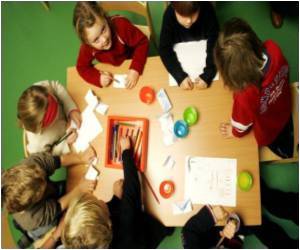
Clapping and Reciting Poems Found to be Relaxing for Children Suffering from Cancer
Nearly two dozen children between the ages of 3 and 12 can be seen sitting on reed mats in the mornings, clapping and reciting poems outside the out-patients-department at AIIMS,
Nearly two dozen children between the ages of 3 and 12 can be seen sitting on reed mats in the mornings, clapping and reciting poems outside the out-patients-department at AIIMS,
TOP INSIGHT

Could your unique #handclap be the next #biometric_ID? Each clap is distinct enough for identification, just like #fingerprints and #retinal_scans.
“The point was not to look just at the acoustics, or the flow excitation or the collision dynamics, but to look at them all simultaneously. That’s an interdisciplinary effort that allows us to really understand how sound relates to hand clapping.”
The Science of Clapping: It's Not What You Think
Contrary to what many believe, the noise of a clap is largely not the sound of two hands smashing into one another, the researchers said. It’s actually a complex acoustical phenomenon that involves a cavity of air being compressed and pushed out of a small space.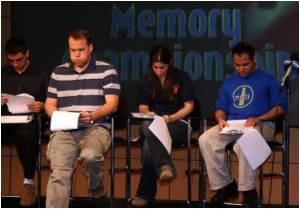
Motor and Cognitive Skills Improved by Hand-Clapping Songs
A study by Ben-Gurion University of the Negev (BGU) researchers has revealed a direct link between hand-clapping songs and the development of important skills in children
A study by Ben-Gurion University of the Negev (BGU) researchers has revealed a direct link between hand-clapping songs and the development of important skills in children
“It’s work driven by curiosity. We want to simplify a problem and explain it to the world in a way that’s eloquent and accurate.”

Tribal Meditation May Help Overcome Stress
Simple tribal meditation techniques like clapping or chanting has been found beneficial in fighting stress.
Simple tribal meditation techniques like clapping or chanting has been found beneficial in fighting stress.
This produces sound in a similar way to what's known as Helmholtz resonance — the principle behind the tone you hear when blowing across the mouth of an empty bottle.
Breath Biometrics: It’s Time to Sniff Out Your Identity
Do you know! Your breath can be your best ID. Newly developed olfactory sensor can now screen breath for biometric authentication.
Do you know! Your breath can be your best ID. Newly developed olfactory sensor can now screen breath for biometric authentication.
“Traditional Helmholtz resonators have rigid walls – think of the glass walls of a bottle,” Zhang said. “This produces a long-lasting sound that attenuates very slowly because most of the energy contributes to the acoustic signal.
“But when we have elastic walls – let's say our hands – there's going to be more vibration of the solid material, and all of that motion absorbs energy away from the sound.”
This why clapping makes a single short “pop” as opposed to a longer noise, he said.
“One of the most promising applications of this research is human identification,” said Guoqin Liu, a graduate researcher in the acoustics center. “Just through the sound, we could tell who made it.”
The research can also help inform music education – where handclaps are often used for rhythm timing – and teach future students about how small air cavities contribute to sound production and resonance.
“This is the science behind our daily lives,” Liu said. “Everyone uses handclaps, but at the same time, it is interesting that every person’s clapping has a different sound, a different frequency and a different resonance.
“We all clap, sometimes on a daily basis. But understanding the science behind it is something new, and that’s what we were trying to do.”
Source-Eurekalert
 Email
Email