MEDINDIA
 English
 हिन्दी
 Español
 français
 中文
中文
A balance of elongation and trimming in stem cells results in telomeres that are, as Goldilocks would say, not too short and not too long, but just right.
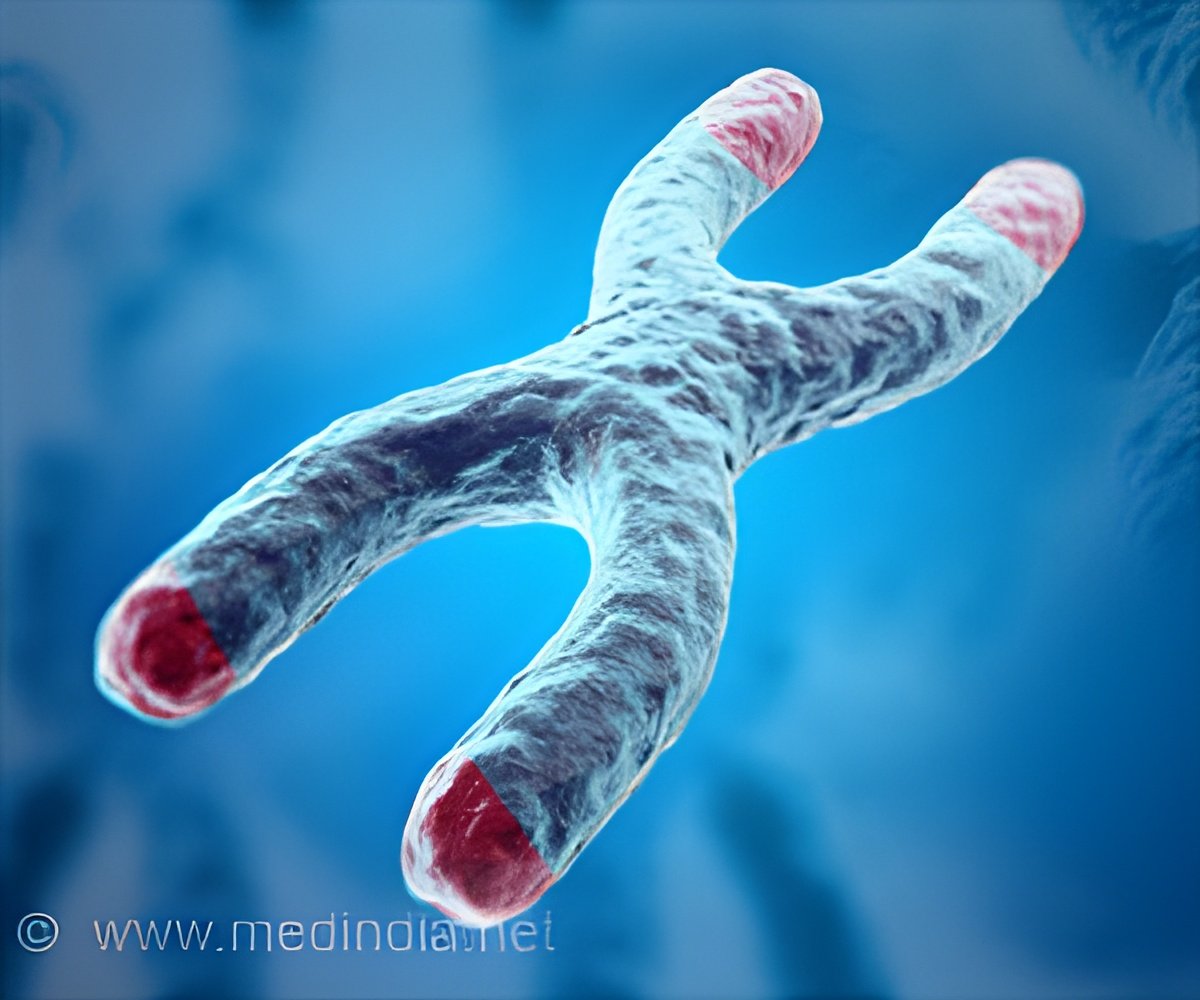

Telomere Shortening And Ageing
Telomeres are cap- like structures at chromosome ends that play an important role in ageing and in the initiation and progression of various diseases.
Telomeres are cap- like structures at chromosome ends that play an important role in ageing and in the initiation and progression of various diseases.
TOP INSIGHT

It was believed that increasing telomeres could lengthen an organism's life. Now, it has been observed that forcing cells to generate long telomeres caused telomeric fragility, which can lead to cancer.
Ever since researchers connected the shortening of telomeres - the protective structures on the ends of chromosomes - to aging and disease, the race has been on to understand the factors that govern telomere length. Now, scientists at the Salk Institute have found that a balance of elongation and trimming in stem cells results in telomeres that are, as Goldilocks would say, not too short and not too long, but just right.
The finding, which appears in the Nature Structural & Molecular Biology, deepens our understanding of stem cell biology and could help advance stem cell-based therapies, especially related to aging and regenerative medicine.

Research Links Depression to Telomere Enzyme, Aging, Chronic Disease
The first symptoms of major depression may be behavioral. Despite this, the common mental illness is based in biology — and not limited to the brain.
The first symptoms of major depression may be behavioral. Despite this, the common mental illness is based in biology — and not limited to the brain.
"In our experiments, limiting telomere length compromised pluripotency, and even resulted in stem cell death," says Teresa Rivera, a Salk research associate and first author of the paper. "So then we wanted to know if increasing telomere length increased pluripotent capacity. Surprisingly, we found that over-elongated telomeres are more fragile and accumulate DNA damage."
Telomere Lengths Predict Life Expectancy in the Wild
At the University of East Anglia, researchers have found that biological age and life expectancy can be predicted by measuring an individual's DNA.
At the University of East Anglia, researchers have found that biological age and life expectancy can be predicted by measuring an individual's DNA.
"We were surprised to find that forcing cells to generate really long telomeres caused telomeric fragility, which can lead to initiation of cancer," says Karlseder, who also holds the Donald and Darlene Shiley Chair. "These experiments question the generally accepted notion that artificially increasing telomeres could lengthen life or improve the health of an organism."
Telomere Length Indicates Life Expectancy in Mammals
The length of the telomeres, the end portion of a chromosome, indicates the longevity of mammals, a new study by researchers at Spanish National Cancer Research Centre (CNIO) reveals.
The length of the telomeres, the end portion of a chromosome, indicates the longevity of mammals, a new study by researchers at Spanish National Cancer Research Centre (CNIO) reveals.
Next, the team looked at induced pluripotent stem cells (iPSCs), which are differentiated cells (e.g., skin cells) that are reprogrammed back to a stem cell-like state. iPSCs - because they can be genetically matched to donors and are easily obtainable - are common and crucial tools for potential stem cell therapies. The researchers discovered that iPSCs contain markers of telomere trimming, making their presence a useful gauge of how successfully a cell has been reprogrammed.
"Stem cell reprogramming is a major scientific breakthrough, but the methods are still being perfected. Understanding how telomere length is regulated is an important step toward realizing the promise of stem cell therapies and regenerative medicine," says Rivera.
Source-Eurekalert
 Email
Email