MEDINDIA
 English
 हिन्दी
 Español
 français
 中文
中文

 Email
Email
- Cognitive Training Improves Sleep Quality and Cognitive Function among Older Adults with Insomnia - (https://pmc.ncbi.nlm.nih.gov/articles/PMC3618113/)
About
Overthinking at bedtime can be frustrating and exhausting. Many people struggle to fall asleep because their minds are racing with worries, to-do lists, or memories of the day. Cognitive shuffling is a scientifically backed technique that can help break these thought loops and promote better sleep(1✔ ✔Trusted Source
Cognitive Training Improves Sleep Quality and Cognitive Function among Older Adults with Insomnia
Go to source).
Did You Know?
Cognitive shuffling can reset your mind, making it easier to fall asleep. #sleepbetter #medindia





What Is Cognitive Shuffling?
Cognitive shuffling is a mental exercise designed to disrupt the repetitive and intrusive thoughts that prevent restful sleep. It involves shifting focus from anxious thoughts to random, unrelated mental imagery, helping the brain relax and drift into sleep.
How Does Cognitive Shuffling Work?
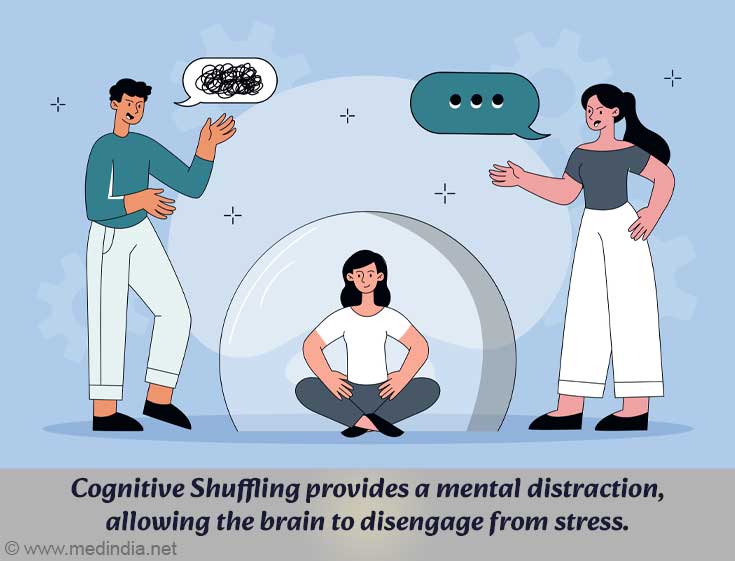
When you overthink at night, your brain is stuck in a loop of worry, stress, or planning. Cognitive shuffling acts as a mental reset by:
- Distracting the brain with neutral or random thoughts.
- Preventing anxiety from escalating.
- Encouraging relaxation and reducing cognitive arousal.
This technique was developed by Dr. Luc P. Beaudoin, a cognitive scientist at Simon Fraser University, who found that shifting the brain’s focus to random thoughts helps induce sleep.
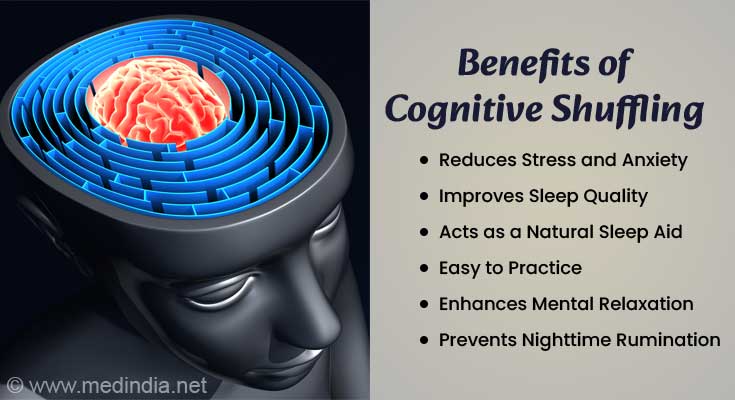
Benefits of Cognitive Shuffling
- Reduces Stress and Anxiety: Redirects the mind from distressing thoughts.
- Improves Sleep Quality: Helps in falling asleep faster.
- Acts as a Natural Sleep Aid: No medication needed.
- Easy to Practice: Requires no special tools or apps.
How to Practice Cognitive Shuffling
Here are a few simple techniques to try:
1. The Alphabet Game
Pick a category (e.g., animals, cities, foods).
Mentally list words related to that category in alphabetical order (A - Apple, B - Banana, C - Carrot).
2. Word Association
Start with a random word (e.g., "ocean").
Think of related words quickly (ocean → waves → beach → sand).
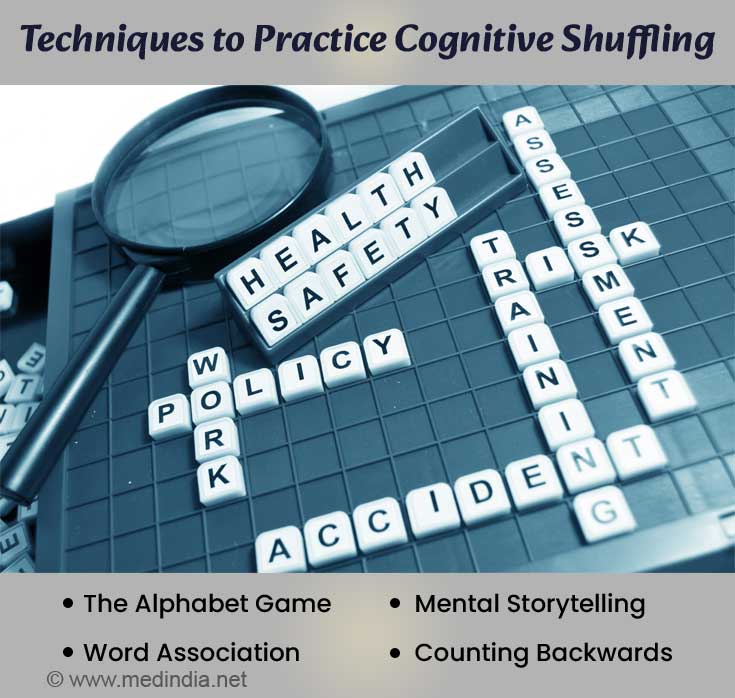
3. Mental Storytelling
Imagine a random, nonsensical story.
The aim is not coherence but distraction from worries.
4. Counting Backwards
Slowly count backward from a large number.
This requires focus and helps relax the mind.
Does Cognitive Shuffling Really Work?
Research suggests that techniques like the Serial Diverse Imagining Task (SDIT), a form of cognitive shuffling, can improve sleep and reduce pre-sleep anxiety. While research is still evolving, many people report success with this simple method.
Cognitive shuffling is a powerful, simple tool to help stop overthinking at bedtime. By redirecting your focus to random thoughts, you can break free from anxious loops and achieve restful sleep. If you struggle with bedtime overthinking, give cognitive shuffling a try-it might just be the sleep solution you need!