MEDINDIA
 English
 हिन्दी
 Español
 français
 中文
中文
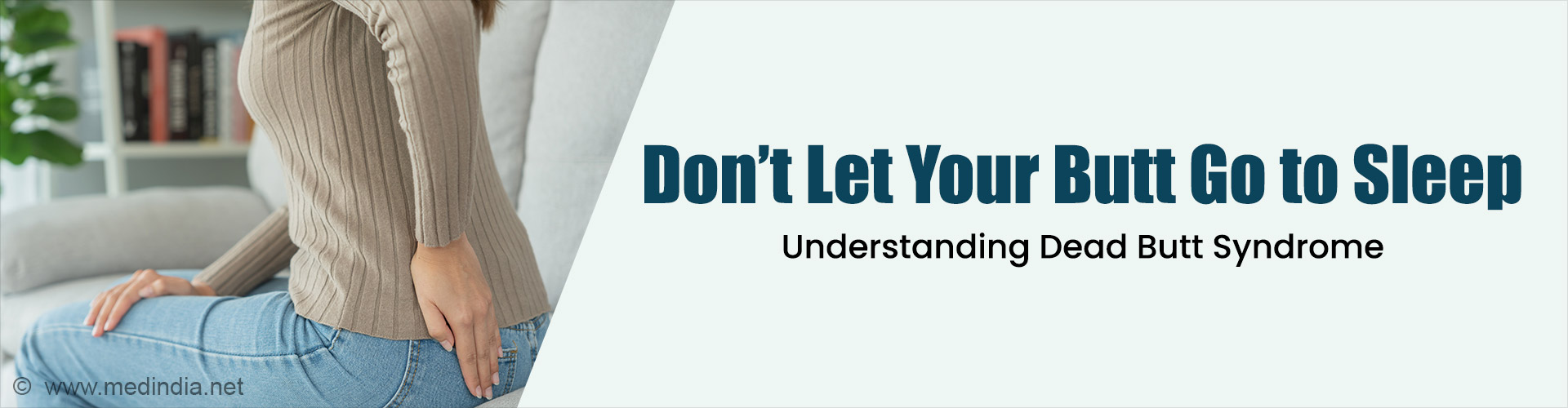
FAQs on Dead Butt Syndrome Explained: Causes, Symptoms & How to Recover
1. What makes Dead Butt Syndrome different from regular butt pain?DBS is specifically about weak or inactive gluteal muscles (gluteus medius / maximus) losing their ability to stabilize your hips, not just soreness or muscle strain.
2. Can DBS happen even if I exercise?
Yes. If your workouts don’t properly target or activate the glutes, or you don’t stretch your hips, you can still develop gluteal amnesia.
3. How long does it take to recover from DBS?
It depends on severity, consistency of treatment, and lifestyle change. With regular exercise, posture correction, and movement, many see significant improvement in a few weeks to months.
4. Are there any devices or chairs that help prevent DBS?
Ergonomic chairs, standing desks, and lumbar supports can help. Also, use reminders or apps to stand and move frequently.
5. Does DBS go away on its own?
Not usually. Without changing sitting habits, strengthening weak muscles, and stretching tight ones, symptoms tend to persist or worsen. Delaying can cause secondary pain elsewhere.
 Email
Email