Medindia » Consumer Health » Health Information » Vitiligo - About
Disease Info Index
Drugs For Vitiligo
Page Options
Locate a Doctor
Speciality
City (or)
eg:Chennai
Pincode
eg:600000

Vitiligo-Symptoms-Diagnosis-Treatment-Research-Lifestyle

About

RSS Feeds   Text 
Vitiligo is a skin disease characterized by patches of unpigmented skin. The skin loses melanin, the pigment that determines the color of your skin, hair and eyes. Vitiligo is usually slowly progressive. Principal areas affected includes periorificial areas (around the eyes, nose, lips, genitalia) and the hands, feet, flexor surface of the wrists, ankles, elbows, knees, and major body folds. Vitiligo affects all races. It is more noticeable and disfiguring in people with darker skin. About 0.5 to 1 percent of the world's population have Vitiligo.

Causes

In Vitiligo, melanin is either destroyed or not produced. The exact cause of Vitiligo is not known yet. A number of theories exist. The most widely accepted view is that Vitiligo is an autoimmune disease, i.e. one in which the person’s immune system attacks the organs and tissues of the body. Heredity may be a factor since Vitiligo runs in certain families. However, only 5 to 7 percent of children will get Vitiligo even if a parent has it.
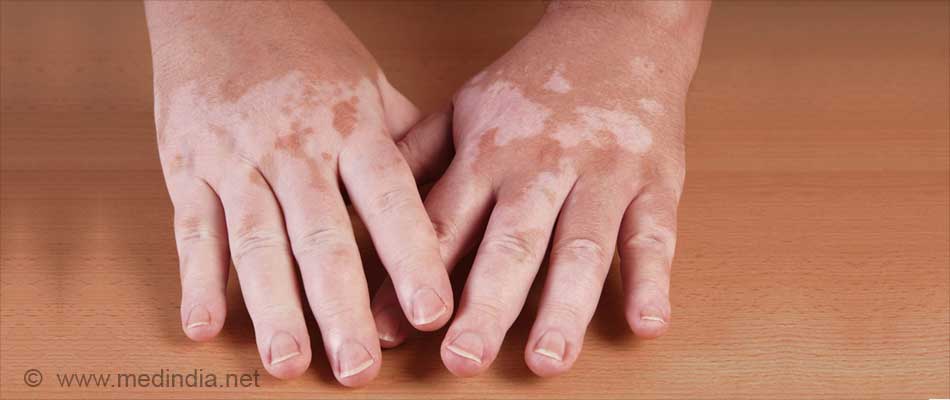
Vitiligo

Sometimes, a single event, such as sunburn or emotional distress, can trigger the condition.

Quiz on Rash

The main sign of Vitiligo is pigment loss. Vitiligo causes milky-white patches (depigmentation) on skin. The diagnosis of Vitiligo is made based on a physical examination, medical history, and laboratory tests. Medical treatment for Vitiligo is not always necessary. Treatment includes topical corticosteroids, topical immunomodulators (e.g., tacrolimus), phototherapy etc. Surgical modalities are also available.

Share it!
Comment & Contribute
Comments should be on the topic and should not be abusive. Comments are normally moderated and are reviewed after they are posted.
* Your comment can be maximum of 2500 characters

Notify me when reply is posted
I agree to the terms and conditions
  
If you have a question about health related issues, you can now post it in our Ask An Expert section on our community website Medwonders.com and get answers from our panel of experts.
Posted by:  chems(Guest)  Posted on: 04/04/2012
omg thats the most similar vitiligo to mine I ever seen except im not so dark skined,, I have it only in my palms and feet, I noticed it since I was 5 and my parents since I was 8 and discovered what it was. it hasnt spread much the only time it spread was at age 11 a bit grew down my palms and simultaneously up my feet a little but not much in fact over the last couple years some of it actually dissapeared from my palm.


X
Related Links
Skin disease
Know Your Skin
Skin Biopsy
Skin Disorder
Boils / Skin Abscess
Atopic Dermatitis
Psoriasis
Quiz on Rash
Pityriasis Rosea
Body Surface Area for Adults
Know Your Immune System
Albinism
Complete Blood Count
Beat the Heat - Skin Health
Citing this Health Article
The information on Medindia is factual, unbiased and authentic. If you find the content useful - PLEASE INCLUDE A LINK TO THIS PAGE.

Highlight the text, right-click, and select “copy”. Paste the link into your website, email, or any other HTML document.

News on Vitiligo
* Reactions to HIV Drug Have Autoimmune Cause: AIDS Journal
* Hormone Boosts Production of Molecules Which Fight Skin Infection
* Scientists Turn Skin Cells Into Healthy Heart Muscle
* Belly Fat Removal Reduces Skin Cancer Risk in Mice
* Aggressive Characteristics in Prostate, Bladder and Skin Cancers Linked to Protein RAL
Total News Item 692
Are you a member of Facebook? Become a fan of Medindia and get breaking news delivered to your Facebook page.