MEDINDIA
 English
 हिन्दी
 Español
 français
 中文
中文
Antimicrobial resistance (AMR) occurs when microbes evolve to resist drugs, making infections harder to treat.

Estimated undertreatment of carbapenem-resistant Gram-negative bacterial infections in eight low-income and middle-income countries
Go to source).
The Stark Reality of Carbapenem-Resistant Infections
Led by the Global Antibiotic Research and Development Partnership (GARDP), the study analyzed eight countries—Bangladesh, Brazil, Egypt, India, Kenya, Mexico, Pakistan, and South Africa. Researchers estimated that in 2019, 1.5 million cases of carbapenem-resistant Gram-negative (CRGN) infections occurred in these countries, resulting in nearly 480,000 deaths. Yet, only 104,000 courses of antibiotics capable of treating these infections were distributed—covering a mere 6.9% of the estimated need. Kenya had the lowest access rate at just 0.2%, while Egypt and Mexico reached 14.9%.
Antibiotics
Antibiotics are among the most used and abused medications. This article explains some general features about antibiotics.
Antibiotics are among the most used and abused medications. This article explains some general features about antibiotics.
TOP INSIGHT

1.9 Million deaths a year by 2050 due to drug-resistant infections. That's not a prediction, it's a warning. The clock is ticking. #AntibioticResistance
While AMR has largely been framed as a consequence of antibiotic overuse, Cohn warned that the narrative has neglected the equally critical issue of access. "We’ve focused so much on limiting use to curb resistance that we’ve ignored that millions simply aren’t getting treated at all," she said.
The study’s authors are calling for a global push akin to early 2000s HIV treatment efforts, which expanded access to life-saving antiretrovirals in sub-Saharan Africa. They propose similar strategies for antibiotics—such as voluntary licensing agreements that would allow generic production and reduce prices. One such effort is already underway, with GARDP and pharmaceutical company Shionogi aiming to broaden access to cefiderocol, an antibiotic that targets CRGN infections.

Natural Antibiotics to Fight Bacterial Infections
Fighting infections the natural way and preventing them is always more effective than consuming medicines and antibiotics to treat them.
Fighting infections the natural way and preventing them is always more effective than consuming medicines and antibiotics to treat them.
The researchers are now advocating for a global treatment access framework similar to the HIV ‘care cascade’, with measurable targets ensuring that patients are diagnosed, treated effectively, and monitored for outcomes.
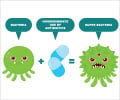
Antibiotic Resistance - An Emerging Global Crisis
Antibiotic resistance refers to the adaption of bacteria that allows them to grow even in the presence of antibiotics. The infection by the resistant bacteria are difficult to treat.
Antibiotic resistance refers to the adaption of bacteria that allows them to grow even in the presence of antibiotics. The infection by the resistant bacteria are difficult to treat.
Reference:
- Estimated undertreatment of carbapenem-resistant Gram-negative bacterial infections in eight low-income and middle-income countries - (https://www.thelancet.com/journals/laninf/article/PIIS1473-3099(25)00108-2/fulltext)
Source-Medindia

Quiz on Antibiotics
Your doctor may suggest antibiotics at the first sight of an infection, but how much do you really know about these wonder drugs? Test yourself. ...
Your doctor may suggest antibiotics at the first sight of an infection, but how much do you really know about these wonder drugs? Test yourself. ...
 Email
Email