MEDINDIA
 English
 हिन्दी
 Español
 français
 中文
中文
New findings in biomarker panel improve the triage process for patients with dengue and help clinicians determine those who may be at risk of developing moderate to severe disease.
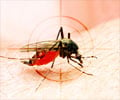
Dengue and Dengue Fever - Symptoms, Causes, Diagnosis, Treatment & Prevention
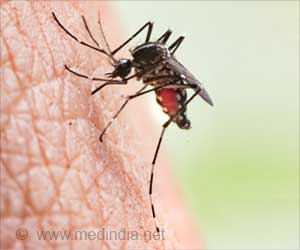
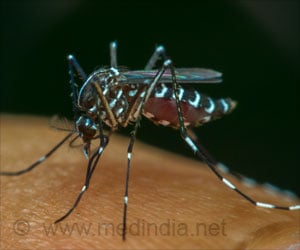
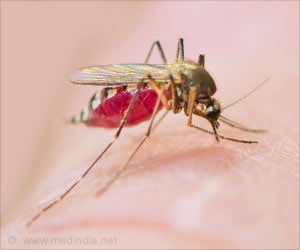
Dengue is a tropical disease caused by mosquitoes carrying the dengue virus. Symptoms include fever, joint & muscle ache, fatigue, nausea and skin rash.
Dengue is a tropical disease caused by mosquitoes carrying the dengue virus. Symptoms include fever, joint & muscle ache, fatigue, nausea and skin rash.
TOP INSIGHT

New combination of biological markers associated with severe dengue are identified.
"While most symptomatic dengue infections are self-limiting, a small number of patients develop complications that usually occur at around four to six days from symptom onset," explains first author Vuong Nguyen Lam, Researcher and PHD Student at Oxford University Clinical Research Unit (OUCRU), Ho Chi Minh City, Vietnam.
Vuong and colleagues selected 10 candidate biomarkers which are more likely to increase during the early stages of disease from vascular, immunological and inflammatory pathways associated with dengue disease pathogenesis.
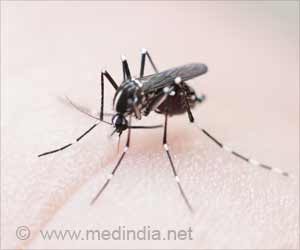
Watch Out: Anemia can Spread Deadly Dengue Virus
Dengue virus transmission is more likely when mosquitoes feed on the blood of infected persons who are anemic and iron deficient. Thus, iron supplementation in dengue-prone areas might help reduce the transmission of the deadly mosquito disease.
Dengue virus transmission is more likely when mosquitoes feed on the blood of infected persons who are anemic and iron deficient. Thus, iron supplementation in dengue-prone areas might help reduce the transmission of the deadly mosquito disease.
Later they selected 281 cases in four countries - Vietnam, Cambodia, Malaysia and El Salvador to compare with selected 556 patients with uncomplicated dengue who shared similar geographies and demographic characteristics.

Novel Technique Eradicates Disease-causing Mosquitoes
New technique utilizing a combination of radiation and Wolbachia bacteria has been shown to effectively eradicate disease-causing mosquitoes and control the spread of deadly mosquito-borne diseases such as dengue and Zika.
New technique utilizing a combination of radiation and Wolbachia bacteria has been shown to effectively eradicate disease-causing mosquitoes and control the spread of deadly mosquito-borne diseases such as dengue and Zika.
They discovered that higher levels of any of the 10 biomarkers during the first three days of illness increase a patient's risk to develop moderate to severe dengue.
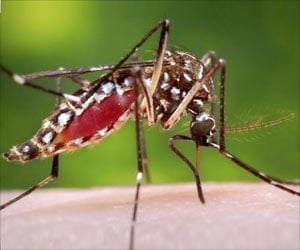
Link Between Dengue and COVID-19
People who had dengue in the past are twice as likely to develop COVID-19 symptoms.
People who had dengue in the past are twice as likely to develop COVID-19 symptoms.
All these findings can assist in the development of biomarker panels can improve individual patient management and healthcare allocation, especially in outbreak settings.
Source-Medindia
 Email
Email