MEDINDIA
 English
 हिन्दी
 Español
 français
 中文
中文
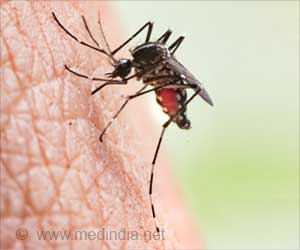
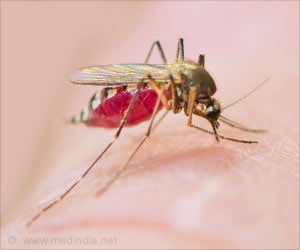
Natural compounds from stingless bee propolis and essential oils show promising larvicidal activity against Aedes aegypti mosquitoes.
Characterization of Larvicidal Diterpene Resin Acids in Melipona quadrifasciata Geopropolis via LC-ESI-MS/MS, GC-MS and Computational Analysis
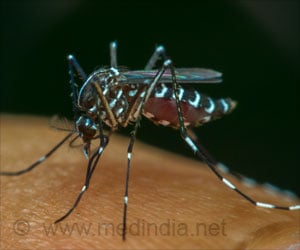
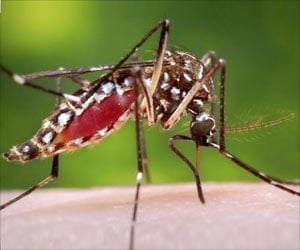
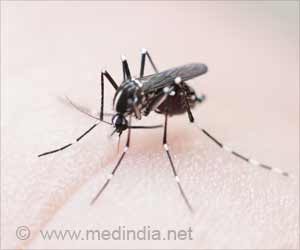
Go to source). The project aimed to find natural larvicides to combat the mosquito that carries viruses such as dengue, yellow fever, chikungunya, and Zika. Currently, this mosquito is controlled using a highly toxic chemical insecticide.
Dengue Fever | Dengue Hemorrhagic Fever
Dengue is a tropical disease caused by mosquitoes carrying the dengue virus. Symptoms include fever, joint & muscle ache, fatigue, nausea and skin rash.
Dengue is a tropical disease caused by mosquitoes carrying the dengue virus. Symptoms include fever, joint & muscle ache, fatigue, nausea and skin rash.
TOP INSIGHT

Did You Know?
A natural compound found in the propolis of a stingless Brazilian bee can kill 90% of mosquito larvae within 24 hours. #medindia #mosquitocontrol #naturallarvicide
Larvicidal Properties of Stingless Bee Propolis
“Bees are known to collect materials in nature to build their colonies, which in some cases can protect against invasive fungi and bacteria. We conducted a series of analyses on geopropolis, which mixes plant resins with soil or clay particles in its composition [traditional propolis contains only resins, wax, and bee secretions]. We observed that the diterpene present in it was responsible for the larvicidal activity,” explains Norberto Peporine Lopes, a professor at the Ribeirão Preto School of Pharmaceutical Sciences (FCFRP) at USP.Lopes is coordinating the project “Inventorying Secondary Metabolism through Metabolomics: Contribution to the Valuation of Brazilian Biodiversity”, which is supported by FAPESP as part of the FAPESP Research Program on the Characterization, Conservation, Restoration, and Sustainable Use of Biodiversity (BIOTA).
The researchers compared the action of traditional propolis produced by European honeybees (Apis mellifera) with that of geopropolis from the mandaçaia tree in Aedes aegypti larvae. The former exhibited very low activity even after 72 hours of exposure. However, in tests with geopropolis, 90% of the larvae died within 24 hours, and 100% within 48 hours.
Top 15 Dos and Don’ts for Preventing and Managing Dengue Fever
Dengue can be easily prevented and managed if you follow proper precautionary measures. Here we give you the most important dos and don’ts for dengue fever.
Dengue can be easily prevented and managed if you follow proper precautionary measures. Here we give you the most important dos and don’ts for dengue fever.
Diterpene Larvicidal Agent Linked to Pine Resin Foraging
Analyses performed with computational tools indicated that the most likely larvicidal agent among the compounds present in geopropolis is diterpene. While studying the habits of bees in Bandeirantes, in the state of Paraná, where geopropolis was collected, it was observed that mandaçaias frequently visit plantations of pine (Pinus elliottii), a species of tree from the Northern Hemisphere that is cultivated in Brazil for timber and resin.“It was known that the chemical composition of propolis is influenced by the resins collected for nest construction and protection, as well as by the floristic composition of the environment, the biome, and seasonal factors. In this case, it became clear that the pine resin processed by the mandaçaias’ saliva is what provides the larvicidal action,” says Luís Guilherme Pereira, the first author of the article. The study was conducted with support from FAPESP during Pereira’s PhD at FCFRP-USP.

Diet During Dengue
Dengue is a viral infection spread by mosquitoes. A dengue diet would include foods like fruits, vegetables, dairy products, and enough fluids for hydration.
Dengue is a viral infection spread by mosquitoes. A dengue diet would include foods like fruits, vegetables, dairy products, and enough fluids for hydration.
Unique Characteristics of Mandaçaia Bees and Their Propolis
Mandaçaias are of particular interest in Brazil because they are easy to cultivate, they have no stingers, and they are native to the country. One idea of the researchers is to evaluate products other than honey produced by these bees.In the case of propolis, that of the mandaçaia differed from that of the other native bees analyzed in the study and found in the same municipality: the borá (Tetragona clavipes), the mirim (Plebeia droryana), and the jataí (Tetragonisca angustula). The propolis of these three native, stingless species had low larvicidal activity.
Ingredient from Chestnut Tree Found to be Safe for Dengue Fever Patients
Researchers have found that an ingredient called Celgosivir, which is present in the seeds of the Moreton Bay Chestnut tree, is safe among people infected with the dengue virus.
Researchers have found that an ingredient called Celgosivir, which is present in the seeds of the Moreton Bay Chestnut tree, is safe among people infected with the dengue virus.
Limitations and Industrial Potential of Geopropolis Use
The researchers explain that the volume of geopropolis produced by mandaçaia bees is very low, making its use as a larvicidal agent impractical. However, it is good news that diterpene is found in pine resin. Since the resin is produced on a large scale for various industrial applications, such as solvents and glues, it could undergo chemical processes similar to those performed by mandaçaias.“These are modifications that can form molecules with greater activity than the original compound and that can be induced in bioreactors, equipment used in the pharmaceutical industry,” says Lopes.
According to Feitosa, the workflow used in the study involving different mass spectrometry techniques can be applied to the search for compounds with a wide variety of purposes. “We’re currently searching for natural molecules with anti-tumor activity,” says the researcher, who is now pursuing postdoctoral studies at FCFRP-USP.
The Ministry of Health project, which is coordinated by Professor Laila Salmen Espindola from UnB, also led to the discovery of another larvicidal compound present in an essential oil produced on a large scale. This discovery has not yet been published, and the data are with the Ministry.
The researchers even produced a powder and a tablet based on the essential oil, which protects water for up to 24 days. The powder kills the larvae immediately, while the slow-release tablet gradually dissolves to keep the water free of mosquitoes.
Reference:
- Characterization of Larvicidal Diterpene Resin Acids in Melipona quadrifasciata Geopropolis via LC-ESI-MS/MS, GC-MS and Computational Analysis - (https://analyticalsciencejournals.onlinelibrary.wiley.com/doi/10.1002/rcm.10025)
Source-Eurekalert
 Email
Email