MEDINDIA
 English
 हिन्दी
 Español
 français
 中文
中文
A new material for a portable device for hemodialysis could soon be created by scientists of Tomsk State University.
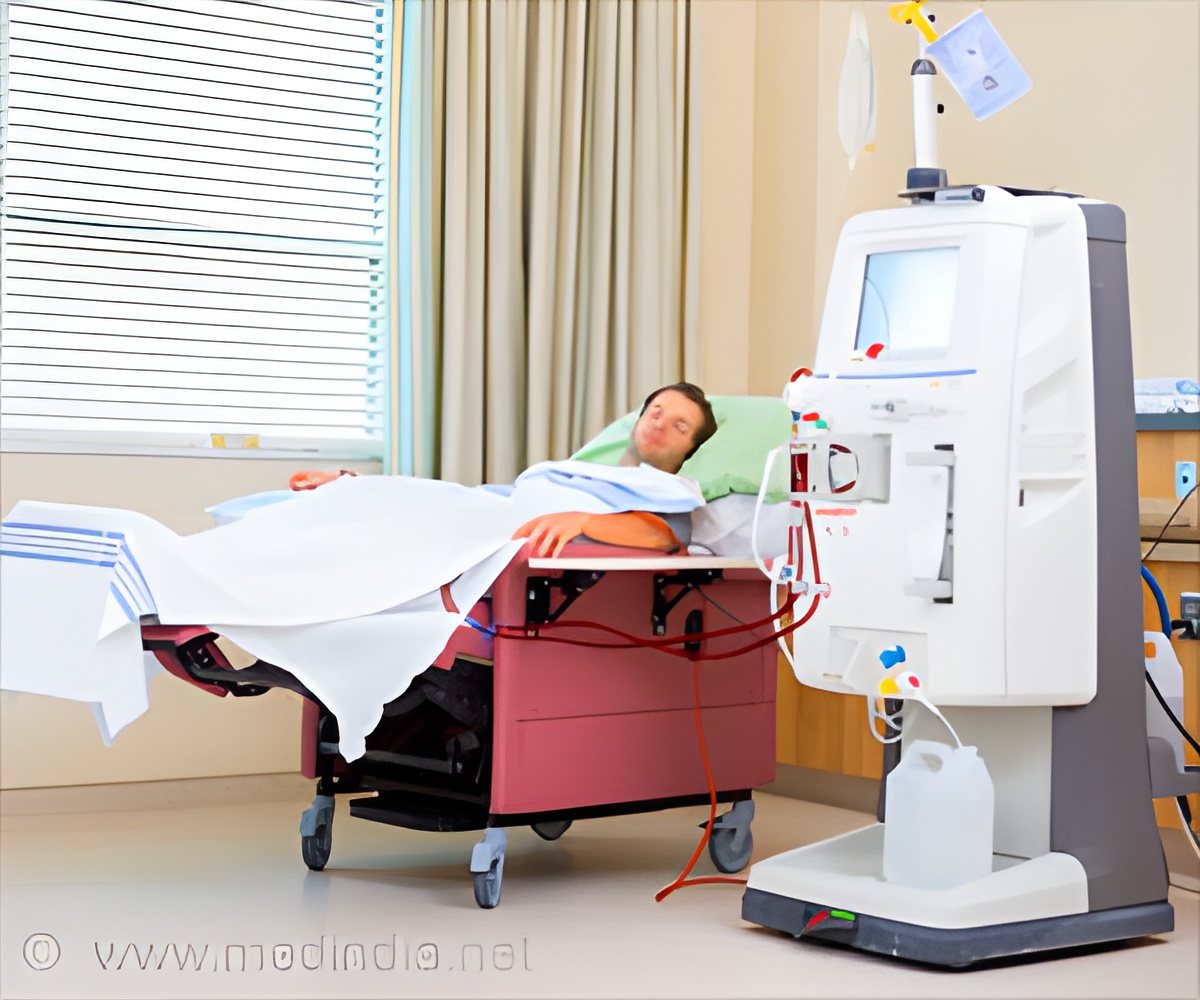

Dialysis - Hemodialysis, Peritoneal Dialysis and Role of Diet and Drugs
Dialysis is an artificial process for removing excess water and waste from the blood. Hemodialysis and peritoneal dialysis are the types of dialysis.
Dialysis is an artificial process for removing excess water and waste from the blood. Hemodialysis and peritoneal dialysis are the types of dialysis.
TOP INSIGHT

A new material for a portable device for hemodialysis could soon be created by scientists of Tomsk State University.
"Natural zeolites are hard alumosilicates, that is why finding the most appropriate chopping technology is important to increase specific surface area," says Alexander Buzimov, student in the faculty of Physics and Engineering. Changing the specific surface area using mechanical treatment is aimed at changing properties of zeolites.
When they will have learnt to control zeolite's properties, the scientists plan to combine the mineral with nanoceramics which is manufactured by the scientists of the Institute of Strength Physics and Materials Science Siberian Branch of Russian Academy of Sciences and Tomsk State University, and thus produce a new gradient material. Thus, manufactured composite sieve will become the main part of the portable device for hemodialysis.

Pittsburgh Analysis Questions Acute Hemodialysis Treatment Use
In an analysis led by experts at the University of Pittsburgh School of Medicine, a common approach to treating kidney failure by removing waste products from the blood did not improve survival chances for people who suddenly developed the condition.
In an analysis led by experts at the University of Pittsburgh School of Medicine, a common approach to treating kidney failure by removing waste products from the blood did not improve survival chances for people who suddenly developed the condition.
Zeolite with high specific surface area provides effective moisture absorption. The device will be connected to a shunt, which is implanted under the skin of the patient. The blood will circulate through the composite sieve and will be cleaned.The scientists hope to get the new material in a year, whereas the first device will be created in two years.
Potential Treatment for Better Heart Health in Hemodialysis Patients Identified
A potential way to improve the lipid profiles in patients undergoing hemodialysis that may prevent cardiovascular disease common in these patients has been discovered by researchers.
A potential way to improve the lipid profiles in patients undergoing hemodialysis that may prevent cardiovascular disease common in these patients has been discovered by researchers.
Source-Eurekalert

Wearable Artificial Kidney may Become an Alternative to Conventional Hemodialysis
A wearable kidney device was shown to effectively clear the blood of waste products, like urea, creatinine and and phosphorus, while also removing excess water and salt.
A wearable kidney device was shown to effectively clear the blood of waste products, like urea, creatinine and and phosphorus, while also removing excess water and salt.
 Email
Email