MEDINDIA
 English
 हिन्दी
 Español
 français
 中文
中文
Tumor-free status after treatment may not predict longer survival in rectal cancer, questioning its role in fast-tracking drug approvals.
Pathologic Complete Response and Survival in Rectal Cancer
Go to source).
Colorectal Cancer - Types, Causes, Risk Factors, Symptoms, Diagnosis, Treatment, Prognosis & Prevention
Colorectal cancer is a cancer that starts in the colon or the rectum. Colorectal cancer is the third most common cancer in men.
Colorectal cancer is a cancer that starts in the colon or the rectum. Colorectal cancer is the third most common cancer in men.
TOP INSIGHT

Did You Know?
Nearly 12,000 rectal cancer patients were analyzed and no link was found between tumor-free status and longer survival. #medindia #cancertreatment #rectalcancer
Tumor-Free Status May Not Predict Long-Term Survival
The study, published in JAMA Network Open in collaboration with researchers at Mayo Clinic in Arizona, found that the absence of detectable tumors after treatment – a key metric in clinical cancer drug trials known as pathologic complete response or pCR, does not reliably predict an improvement in long-term survival for patients diagnosed with rectal cancer.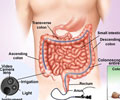
Colorectal Cancer Screening with Colonoscopy
Colonoscopy is a widely used endoscopic procedure to screen individuals for colorectal cancer. It is very sensitive in detecting colorectal cancers.
Colonoscopy is a widely used endoscopic procedure to screen individuals for colorectal cancer. It is very sensitive in detecting colorectal cancers.
Shift from Overall Survival to Surrogate Endpoints
Traditionally, success of treatments for these patients was determined by measuring “overall survival,” or the years between a person’s diagnosis and death. Since 2012, the U.S. Food and Drug Administration has allowed pharmaceutical companies to use tumor-free status post-therapy as a surrogate for overall survival to cut down on time and expenses needed to approve new cancer treatments.Lack of Correlation Between pCR and Survival
The researchers conducted a meta-analysis of 25 clinical trials involving nearly 12,000 rectal cancer patients. They found no statistical relationship between pCR and overall survival, meaning cancer drugs may be moving toward development without showing meaningful long-term improvements over existing treatments, said first author Kavin Sugumar, chief resident of general surgery at Tulane University School of Medicine.
Do More Tests After Surgery Benefit Colorectal Cancer Patients?
Increased follow-up does not benefit colorectal cancer patients according to a new study at the Aarhus University. The survival rate after five years is the same for patients scanned twice or five times in the first three years after surgery.
Increased follow-up does not benefit colorectal cancer patients according to a new study at the Aarhus University. The survival rate after five years is the same for patients scanned twice or five times in the first three years after surgery.
Concerns Over Effectiveness and Drug Approval Standards
“This is about patient outcomes, but it’s also about how we evaluate whether a new drug works,” Sugumar said. “The FDA has approved pCR as a substitute for a result that would normally take years to determine, but we found that pCR should not be used as a sole endpoint to determine if a cancer treatment has been effective.”Local Clearance Vs Broader Impact
PCR remains vital for effectively determining if cancer has been cleared locally from tissue, and patients whose tumors disappear often fare better than those who don’t.Still, the metric may fail to capture the full picture, such as whether the patient has lingering toxicity from chemotherapy or undetected cancer cells elsewhere in the body.
Potential Financial Risks for Drug Development
The use of pCR as a gold standard for drug approval may also increase costs for drug companies which may invest in approved therapies that cannot guarantee improved survival rates.“Overall survival is a costly and time-consuming endpoint to determine, and I don’t think we’ve found the ideal surrogate yet,” Sugumar said. “Instead of relying solely on pCR, we should maybe include a combination of surrogate endpoints that also includes pCR.”
Reference:
- Pathologic Complete Response and Survival in Rectal Cancer - (https://jamanetwork.com/journals/jamanetworkopen/fullarticle/2836423)
Source-Eurekalert
 Email
Email