MEDINDIA
 English
 हिन्दी
 Español
 français
 中文
中文
Patients prescribed anticoagulants after a diagnosis of atrial fibrillation in the emergency department are more likely to continue long-term use of medications to treat the condition.

TOP INSIGHT

Physicians working in the emergency department should consider initiating oral anticoagulants in similar patients [patients with atrial fibrillation] who are being discharged home.
Read More..
The usual practice is to refer to patients seen in the emergency department for atrial fibrillation to primary care or a cardiologist for anticoagulant prescription and follow-up.
In this study performed at 15 centers in Ontario, researchers found that if an oral anticoagulant was prescribed in the emergency department to patients aged 65 years or older who were not at high risk of bleeding, there was a 31% absolute increase in the tendency to fill the prescription at 6 months, compared with referral to the patient's physician to consider starting the medication.
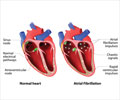
Drugs for Atrial Fibrillation - Symptoms, Treatment, Side Effects & Precautions
Atrial fibrillation is a condition with irregular heart rhythm. Be aware of the prescribed drugs, their side effects and precautions, to avoid risk to life.
Atrial fibrillation is a condition with irregular heart rhythm. Be aware of the prescribed drugs, their side effects and precautions, to avoid risk to life.
Source-Eurekalert
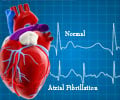
Atrial Fibrillation - Causes, Symptoms, Diagnosis, Treatment, Complication, Risks
Atrial fibrillation may not be life-threatening in itself but it is important to understand the causes, symptoms and treatments because of the risk of life-threatening complications.
Atrial fibrillation may not be life-threatening in itself but it is important to understand the causes, symptoms and treatments because of the risk of life-threatening complications.
 Email
Email