MEDINDIA
 English
 हिन्दी
 Español
 français
 中文
中文
Targeted prevention and treatment interventions for Zika by gender, as well as education level, should be considered by local governments, especially if there is another outbreak, research at the University of Miami reports.
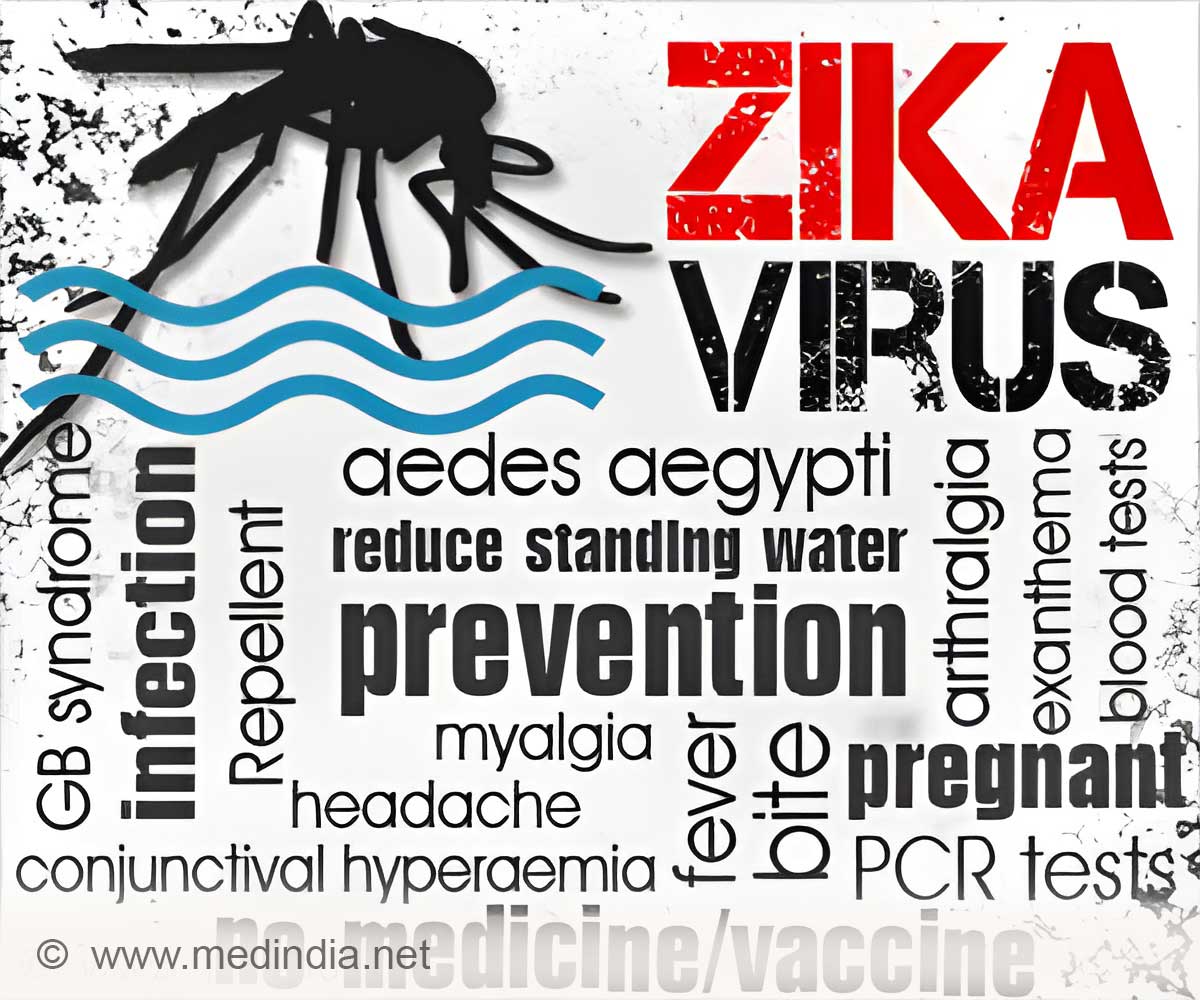
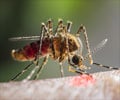
Zika Fever - Causes, Symptoms, Diagnosis, Treatment and Prevention
Zika virus is transmitted to humans by infected mosquitoes which causes mild fever with maculopapular rash. No treatment or vaccine is currently available.
Zika virus is transmitted to humans by infected mosquitoes which causes mild fever with maculopapular rash. No treatment or vaccine is currently available.
TOP INSIGHT

Gender and educational qualification are important factors in designing targeted intervention for Zika.
Using the Health Belief Model, the survey included such straightforward questions as: Have you ever heard of the Zika virus? Approximately how many cases of Zika are in Miami-Dade? If a pregnant woman has Zika, what are the risks for her fetus/baby? How confident are you that you can protect yourself and your household members from getting Zika virus?
"Men did care about Zika prevention, especially if they knew a female family member or acquaintance who was pregnant," said Moise, who added that messages that cater to the different needs, attitudes, knowledge, and perceptions of the target audience are most effective. "Targeted prevention and treatment interventions by gender, as well as education level, should definitely be considered by local governments, especially if there is another outbreak."
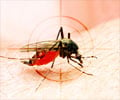
Dengue and Dengue Fever - Symptoms, Causes, Diagnosis, Treatment & Prevention
Dengue is a tropical disease caused by mosquitoes carrying the dengue virus. Symptoms include fever, joint & muscle ache, fatigue, nausea and skin rash.
Dengue is a tropical disease caused by mosquitoes carrying the dengue virus. Symptoms include fever, joint & muscle ache, fatigue, nausea and skin rash.
In addition, the survey indicated that more women than men felt confident they could protect the people in their households from contracting Zika by taking protective measures, such as checking for and draining standing water, and using repellents and window/door screens.
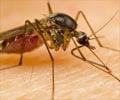
Malaria - Causes, Symptoms, Diagnosis, Prevention, Treatment
Malaria is caused by a parasite that enters blood through the bite of an infected mosquito. It is characterized by fever, vomiting, shivering, sweating and other symptoms.
Malaria is caused by a parasite that enters blood through the bite of an infected mosquito. It is characterized by fever, vomiting, shivering, sweating and other symptoms.
Source-Eurekalert
Malaria - Protection Strategies
Malaria is a dangerous disease with lethal consequences that requires protective measures for prevention and control of malaria in endemic regions of the world.
Malaria is a dangerous disease with lethal consequences that requires protective measures for prevention and control of malaria in endemic regions of the world.
 Email
Email