MEDINDIA
 English
 हिन्दी
 Español
 français
 中文
中文
Quality of life for people with motor dysfunction or paralysis might be improved using a new wearable brain-machine interface (BMI) system.
Is Tech the Key to Faster Healing in Rehabilitation?
Explore how cutting-edge robotics, virtual reality, and AI are transforming rehabilitation, enhancing patient outcomes, and redefining motor recovery.
Explore how cutting-edge robotics, virtual reality, and AI are transforming rehabilitation, enhancing patient outcomes, and redefining motor recovery.
TOP INSIGHT

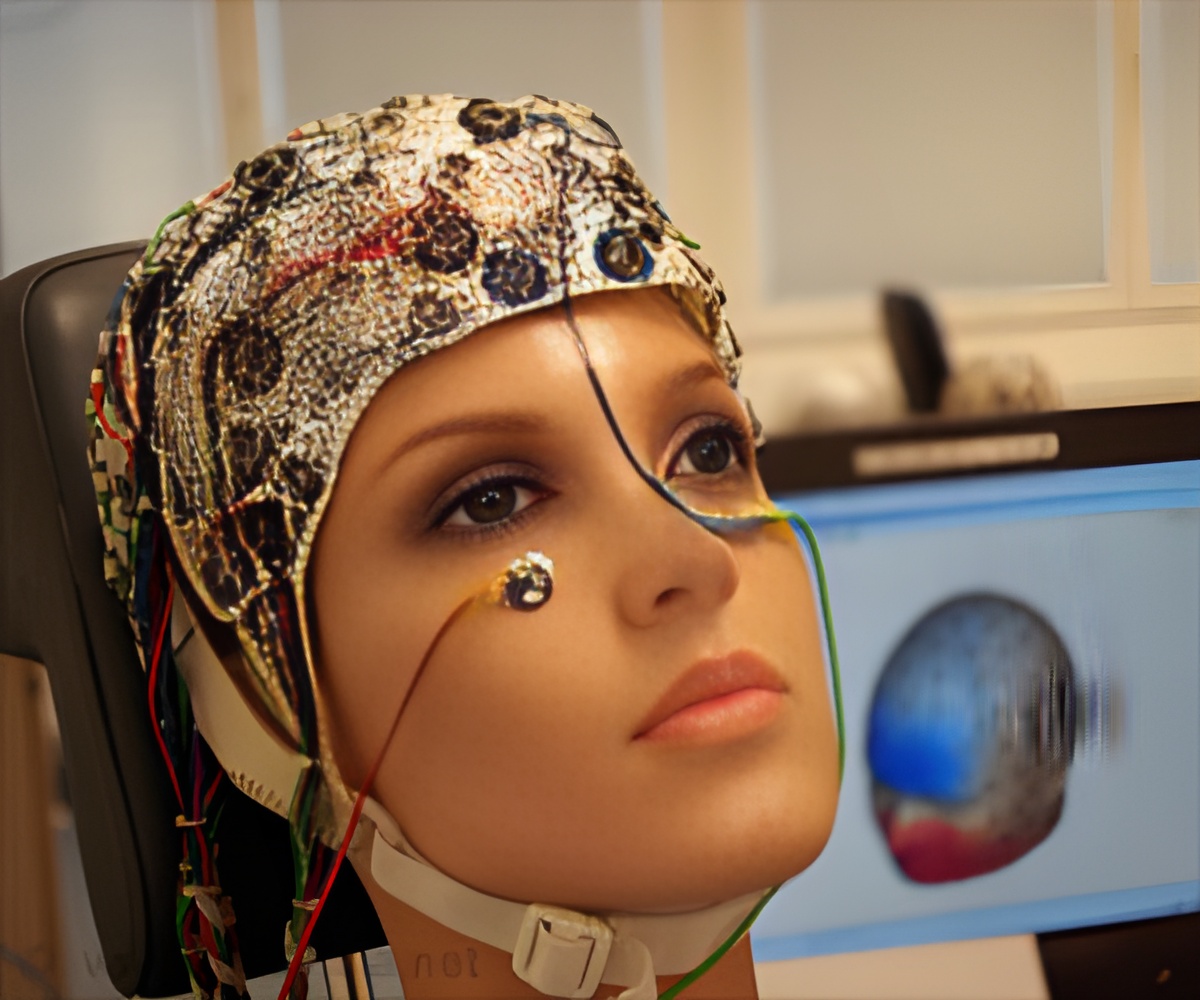
Quality of life for people with motor dysfunction or paralysis or even locked-in syndrome might be improved using a new wearable brain-machine interface (BMI) system. The technology employs soft wireless circuits to offer improved signal acquisition with powerful machine learning algorithms and virtual reality.
"The major advantage of this system to the user, compared to what currently exists, is that it is soft and comfortable to wear, and doesn't have any wires," says Yeo, associate professor on the George W. Woodruff School of Mechanical Engineering.
A person's brain signals (neural activity) are generally analyzed and translated into commands that are then turned into intentions and then actions in a BMI systems-based rehabilitation technology.

Brain-Machine Interface To Help Patients With Hand Paralysis
Stimulating the hand area of the motor cortex increases the strength of the neural signal.
Stimulating the hand area of the motor cortex increases the strength of the neural signal.
The Advanced Technology
New Brain-Machine Interface Controls Robot Arm Based on User's Brain Signals
This new approach will become a key element of the next generation brain-machine interfaces that mimic the natural motor control, says Jose Millan.
This new approach will become a key element of the next generation brain-machine interfaces that mimic the natural motor control, says Jose Millan.
This allows for accurate, high-quality control of thoughts - motor imagery. Although the technique has been tested on 4 humans, it is yet to be analyzed in disabled ones.
The team focuses on further advancing the integration of this technology.
Source-Medindia
 Email
Email