MEDINDIA
 English
 हिन्दी
 Español
 français
 中文
中文
This new approach will become a key element of the next generation brain-machine interfaces that mimic the natural motor control, says Jose Millan.
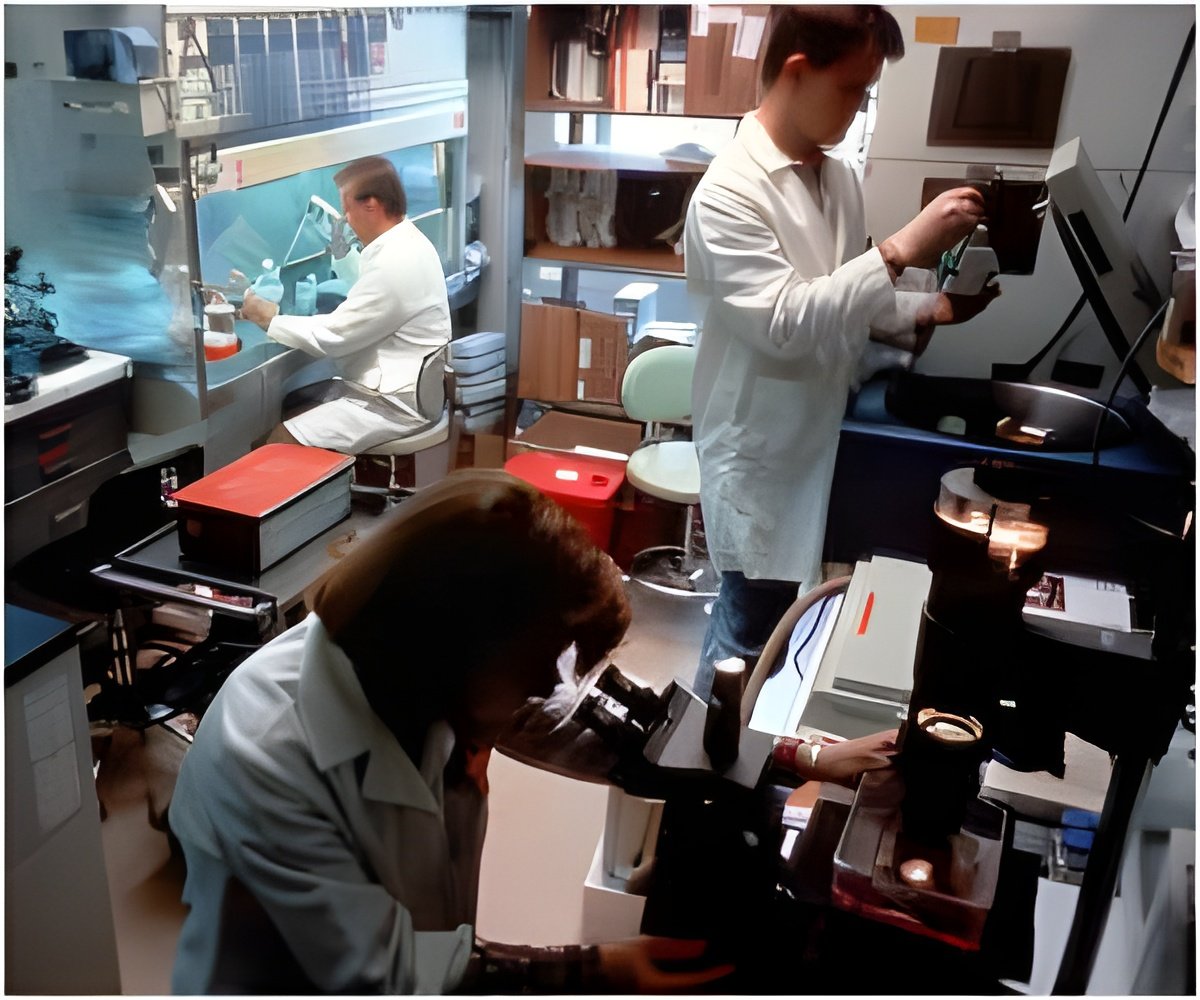
Most BMI operate, to be effective, requires significant training on the patient's side. Also, without several training sessions, patients will not able to perform some complex movements.
Jose Millán’s group at Ecole Polytechnique Federale de Lausanne in Switzerland have published introduced a BMI paradigm that enables neuroprosthetic devices to learn on the fly, thus decreasing patient training time.
The brain emits an electrical signal signifying the failure of the action when missing a step. This signal is called Error-related potential (ErrP). The new technology is based on the ErrP measured non-invasively using electroencephalographic (EEG) electrode arrays.
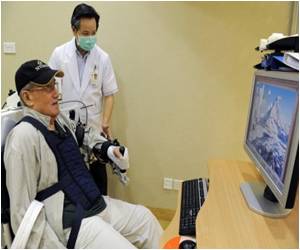
'Telepathic' Robot Arm Gives Paralysed Patients a Helping Hand
A helping hand sought by people who have lost the use of their arms due to stroke comes in the form of a robotic arm that can 'telepathically' respond to your thoughts.
A helping hand sought by people who have lost the use of their arms due to stroke comes in the form of a robotic arm that can 'telepathically' respond to your thoughts.

Thought-Guided Robot Arm Helps Paralysed Woman Drink Coffee
A paralyzed woman has been helped by scientists to lift a drink to her lips with a thought-controlled robotic arm.
A paralyzed woman has been helped by scientists to lift a drink to her lips with a thought-controlled robotic arm.
 Email
Email