MEDINDIA
 English
 हिन्दी
 Español
 français
 中文
中文
Low‑dose radiation therapy shows promise as a safe, effective alternative for reducing knee arthritis pain and stiffness.

Low-dose radiation therapy offers substantial relief to people with painful knee osteoarthritis
Go to source). Patients with mild to moderate disease reported notable reductions in pain and improved physical function within four months of treatment, which involved only a fraction of the radiation typically used in cancer care.
By including a simulated treatment group, researchers were able to separate the true therapeutic effects from placebo responses often seen in osteoarthritis studies.
Preliminary results from this Korean trial are being presented today at the American Society for Radiation Oncology (ASTRO) Annual Meeting.

Osteoarthritis - Causes, Symptoms, DIagnosis, Treatment, FAQs
Osteoarthritis is one of the commonest joint disorder and occurs as we age due to wear and tear of a joint. Osteoarthritis can affect any joint of the body.
Osteoarthritis is one of the commonest joint disorder and occurs as we age due to wear and tear of a joint. Osteoarthritis can affect any joint of the body.
TOP INSIGHT

Did You Know?
Osteoarthritis is the most common form of arthritis, affecting over 32 million adults in the U.S. alone - and it doesn’t just strike the elderly. Even younger adults can develop it after sports injuries or repetitive joint stress. #osteoarthritis #kneepain #arthritisrelief #lowdoseradiation #radiationtherapy #medindia
Bridging the Gap Between Medications and Surgery
“People with painful knee osteoarthritis often face a difficult choice between the risks of side effects from pain medications and the risks of joint replacement surgery,” said Byoung Hyuck Kim, MD, PhD, principal investigator on the trial and an assistant professor of radiation oncology at Seoul National University College of Medicine, Boramae Medical Center.“There’s a clinical need for moderate interventions between weak pain medications and aggressive surgery, and we think radiation may be a suitable option for those patients especially when drugs and injections are poorly tolerated.”

New Mechanism Behind Osteoarthritis Uncovered
The new analysis revealed that when knee cartilage tissue became stiffer, the gene that codes for Klotho was repressed.
The new analysis revealed that when knee cartilage tissue became stiffer, the gene that codes for Klotho was repressed.
Osteoarthritis Overview
Osteoarthritis, the most common type of arthritis, affects an estimated 32.5 million U.S. adults.It occurs when the cartilage that cushions the ends of bones wears down over time. Symptoms often involve the knees and hips and can substantially limit daily activities and quality of life.
Initial treatment typically involves pain medications and lifestyle measures, with surgery considered when symptoms worsen.

Osteoarthritis More Common in Women Than Men: Study
The severity of arthritis is much higher in women than men and was found that the incidence of arthritis among younger people is much higher.
The severity of arthritis is much higher in women than men and was found that the incidence of arthritis among younger people is much higher.
Low-Dose Radiation: Common in Europe, Emerging Elsewhere
Low-dose radiation is regularly used for joint pain in European countries such as Germany and Spain, where it is widely accepted.But high-quality, randomized evidence against placebo has been limited before this trial, Dr. Kim said, and there is low awareness of the treatment among health professionals in other countries.
“There is a misconception that medicinal, or therapeutic, radiation is always delivered in high doses,” he said.
“But for osteoarthritis, the doses are only a small fraction of what we use for cancer, and the treatment targets joints that are positioned away from vital organs, which lowers the likelihood of side effects.”
In this study, he noted, the doses were less than 5% of those typically used for cancer treatments, and no radiation-related side effects were observed.
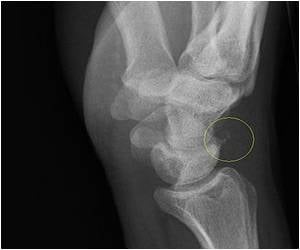
Knee Osteoarthritis Prevalence Has Dramatically Increased
Knee osteoarthritis is a wear-and-tear disease that is widespread today simply because more people are living longer and are more commonly obese.
Knee osteoarthritis is a wear-and-tear disease that is widespread today simply because more people are living longer and are more commonly obese.
Inside the Clinical Trial: Study Design and Patient Outcomes
In this multicenter trial, researchers enrolled 114 patients with moderate-to-mild knee osteoarthritis across three academic centers in Korea.Participants were randomly assigned to receive one of two radiation regimens — a very low dose (0.3 Gy) or a low dose (3 Gy) — or a control group that underwent simulated (sham) radiation.
In this placebo group, patients went through the same setup for radiation therapy, but the treatment machine did not deliver any radiation.
All participants received six sessions and did not know which group they were in.
To avoid masking any treatment effects, the use of other pain relievers was restricted, with only acetaminophen allowed as needed during the first four months.
Response to treatment was assessed using internationally accepted criteria that classify a patient as a “responder” if they achieve meaningful improvement in at least two of three areas: pain, physical function, and overall assessment of their condition.
Patients also completed a separate questionnaire for pain, stiffness, and function.
No treatment-related side effects were reported.
Results: Significant Pain Reduction and Improved Function
After four months, 70% of patients in the 3 Gy group met responder criteria, compared to 42% in the placebo group (p=0.014).Outcomes in the 0.3 Gy group were not significantly different from the control group (58.3% improved, p=0.157), indicating the 3 Gy regimen drove relief beyond placebo effects.
Meaningful improvements in the composite score of pain, stiffness, and physical function were reported more often in the 3 Gy group (56.8%) than in the placebo group (30.6%, p=0.024).
For other secondary outcomes, including the amount of pain medication needed, there were no significant differences.
Dr. Kim said this trial differed from previous research in two critical ways.
“The sham-controlled design helped rule out placebo effects, and we limited stronger analgesics, which made differences between groups more clearly attributable to the radiation itself,” he said.
“In previous studies, drugs such as NSAIDs or opioids were also used during the intervention or follow-up period. But using these pain relievers could mask the effects of radiation therapy,” he said.
Because analgesic use was limited to acetaminophen only during the four months of follow-up in this trial, that means the differences between treatment groups are more clearly attributable to the low-dose radiation therapy itself.
Placebo Effects and Future Research Directions
Responses in the placebo arms were substantial — about 40% met the criteria for treatment response without true radiation — but are consistent with rates reported in prior osteoarthritis trials of injections or medications and in at least one similar European study, Dr. Kim said.“It was surprising, and it underscores how important placebo-controlled designs are in osteoarthritis research. We need to examine this more closely in future studies.”
Radiation therapy may be best suited for patients with underlying inflammation and preserved joint structure, he explained.
“For severe osteoarthritis, where the joint is physically destroyed and cartilage is already gone, radiation will not regenerate tissue,” Dr. Kim said.
“But for people with mild to moderate disease, this approach could delay the need for joint replacement.”
He emphasized that low-dose radiation should be considered as part of shared decision-making alongside standard measures such as weight loss, physiotherapy, and medications.
“In clinical practice, responses could be even stronger when radiation is properly combined with other treatments, and patient satisfaction may be higher than with current options alone.”
Next Steps: Long-Term Outcomes and Broader Applications
The research team is completing 12-month follow-up to assess durability of benefits and to correlate symptom relief with imaging-based measures of joint structure.Planned studies also include larger, pragmatic trials to evaluate outcomes in specific subgroups and health-economic analyses comparing low-dose radiation with injections and medication regimens.
Reference:
- Low-dose radiation therapy offers substantial relief to people with painful knee osteoarthritis - (https://www.astro.org/news-and-publications/news-and-media-center/news-releases/2025/low-dose-radiation-therapy-offers-substantial-relief-to-people-with-painful-knee-osteoarthritis)
Source-American Society for Radiation Oncology
 Email
Email