MEDINDIA
 English
 हिन्दी
 Español
 français
 中文
中文
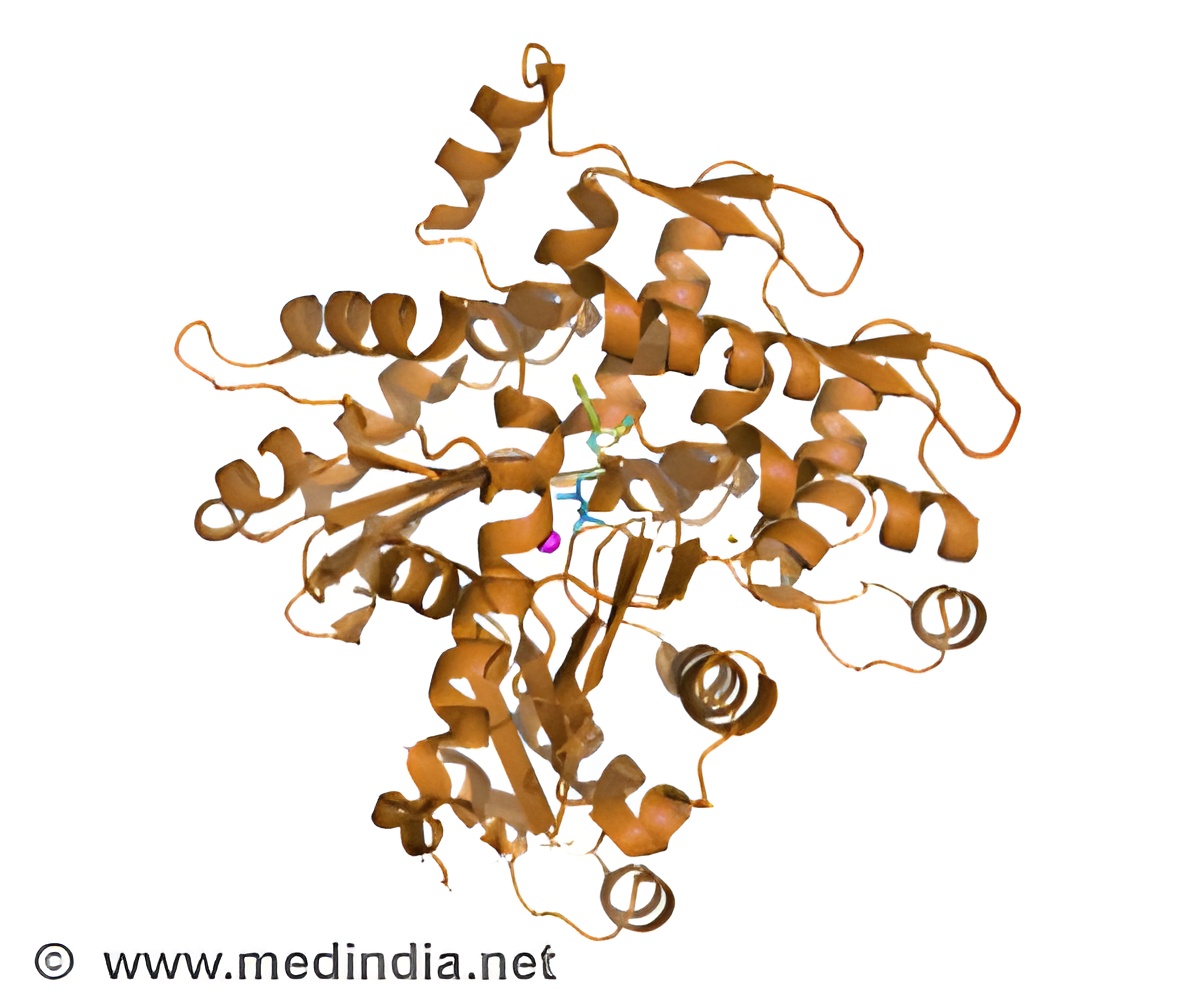
A new study reports on the discovery of a novel protein, called ceramide-1 phosphate transport protein (CPTP), which could lead to the development of a new class of drugs.
Tumor Markers - For Cancer Diagnosis and Prognosis
An ideal tumor marker for a cancer should be specific to that cancer and not generate false positive results.
An ideal tumor marker for a cancer should be specific to that cancer and not generate false positive results.
With assistance from Massey's Lipidomics Developing Shared Resource core, the researchers were able to determine the composition of the bioactive lipids regulated by CPTP. Residing in the cytosol, or the liquid within cells, the team found that CPTP regulates catabolism of C1P, a process that breaks down the molecule in order to release its energy. They also demonstrated that CPTP transports C1P to the cellular membrane where it helps synthesize eicosanoids from fatty acids in the membrane.
Confirming a decade of research from Chalfant's laboratory, the scientists provided further proof that C1P regulates group IVA phospholipase A2, an enzyme that promotes inflammation through the production of a fatty acid known as arachidonic acid. The release of arachidonic acid via C1P activation of this enzyme was shown to trigger the production of eicosanoids. These findings help to explain the reported link between ceramide kinase, the enzyme responsible for C1P production, and poor prognosis in breast cancer patients, which further suggests that alleviation of systemic inflammation may lead to better prognosis and better treatment responses.
Carcinoid Tumors - Carcinoid Syndrome - Symptoms, Signs, Diagnosis & Treatment
Carcinoid tumors is a benign tumor that results in carcinoid syndrome. Only 8 to 10% of all carcinoid tumors are associated with the carcinoid syndrome.
Carcinoid tumors is a benign tumor that results in carcinoid syndrome. Only 8 to 10% of all carcinoid tumors are associated with the carcinoid syndrome.

About Brain Tumor
Brain tumors are the abnormal growth of brain cells that may be benign or metastatic. Brain tumors account for about 2.4% of all the tumor diagnosesandare most challenging due to their critically delicate location.
Brain tumors are the abnormal growth of brain cells that may be benign or metastatic. Brain tumors account for about 2.4% of all the tumor diagnosesandare most challenging due to their critically delicate location.
 Email
Email