MEDINDIA
 English
 हिन्दी
 Español
 français
 中文
中文
A 71-year-old man with hepatitis B-related cirrhosis survived for 171 days after receiving a genetically modified pig liver, marking a historic first in xenotransplantation.

Highlights:
In a groundbreaking first, doctors in China have successfully transplanted a genetically modified pig liver into a 71-year-old man suffering from hepatitis B-related cirrhosis and a large liver tumor. The patient survived 171 days after the procedure, with the pig organ sustaining him for 38 days until his own liver regained function.
This achievement, conducted at the First Affiliated Hospital of Anhui Medical University, represents the first peer-reviewed, documented case of a pig liver transplant in a human, a major leap in xenotransplantation - the transplantation of animal organs into humans.
- World’s first peer-reviewed pig liver transplant in a human
- Patient lived 171 days post-surgery, 38 with pig liver support
- Major milestone for future organ shortage solutions

World Organ Donation Day: Be the Reason for Someone's Smile Today!
World Organ Donation Day highlights the importance of organ donation and aims to boost awareness and registrations, saving lives and improving patient outcomes.
World Organ Donation Day highlights the importance of organ donation and aims to boost awareness and registrations, saving lives and improving patient outcomes.
TOP INSIGHT

Did You Know?
A pig liver kept a human alive for over a month, rewriting transplant history!
#xenotransplantation #livertransplant #genetherapy #organtransplant #medicalbreakthrough #medindia
Inside the Groundbreaking Surgery
The surgery, performed in May 2024, used a genetically modified 11-month-old pig whose liver carried ten precise gene edits designed to reduce infection and minimize immune rejection. The patient received immunosuppressive drugs to support acceptance of the organ. During the operation, surgeons removed the tumor and implanted the pig liver to supplement the patient’s failing native liver. Within 24 hours, the pig organ showed active bile drainage and significantly improved liver function markers. For several weeks, the blood flow remained stable, and there were no early signs of inflammation or acute rejection, indicating a highly functional graft.
Xenotransplantation may Help to Compensate for the Shortage of Human Organs
Xenotransplantation (the use of transplant organs from animals) could help to compensate for the shortage of human organs available for transplant.
Xenotransplantation (the use of transplant organs from animals) could help to compensate for the shortage of human organs available for transplant.
Challenges and Clinical Insights
By day 25, the patient exhibited inflammatory changes and cardiac stress, likely due to a condition known as transplant-associated microangiopathy - where tiny clots damage small blood vessels. On day 38, the team removed the pig liver after the patient’s native liver recovered sufficient function to sustain life. Tragically, the patient passed away on day 171 from upper gastrointestinal bleeding, unrelated to the transplant or organ rejection. Experts believe this experiment proves that pig-to-human liver transplantation can serve as a temporary “bridge therapy” for patients awaiting donor livers or recovering from acute liver failure. Dr. Chen Xinyu, the lead surgeon, emphasized that this case provides vital data on immune responses, drug regimens, and surgical techniques essential for future trials.
Quiz on Organ Donation and Transplantation
See how much you know about organ donation and transplantation by taking this ...
See how much you know about organ donation and transplantation by taking this ...
A New Dawn for Organ Transplantation
The success of this transplant is being hailed as a turning point in transplant medicine, especially given the global shortage of human organs -with over 100,000 patients on waiting lists in the U.S. alone, including 9,000 awaiting liver transplants. European experts have expressed cautious optimism, noting that this development may redefine treatment possibilities for patients who cannot qualify for traditional transplants. Previous xenotransplantation trials had tested pig kidneys and hearts, but the liver’s complexity-due to its dual blood supply and crucial metabolic roles-made this success particularly remarkable. Earlier efforts involving perfused pig livers and transplants into brain-dead patients hinted at feasibility, but this is the first successful functional transplant in a living human.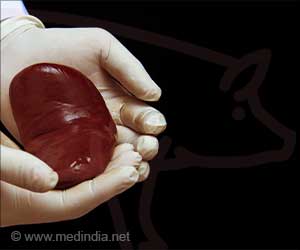
Pig Kidneys for Humans: A New Hope in Organ Transplantion
Can pig kidneys save lives? Discover how gene editing brings hope to organ transplants, the challenges ahead, and the future of xenotransplantation.
Can pig kidneys save lives? Discover how gene editing brings hope to organ transplants, the challenges ahead, and the future of xenotransplantation.
 Email
Email