MEDINDIA
 English
 हिन्दी
 Español
 français
 中文
中文
For people with advanced Hodgkin lymphoma, using PET imaging to guide chemotherapy treatment significantly increases the number of people who go into remission.
PET Scans Help Identify Effective TB Drugs
PET/CT scan can show whether or not a treatment drug is able to clear tuberculosis (TB) lung infection in human and macaque studies.
PET/CT scan can show whether or not a treatment drug is able to clear tuberculosis (TB) lung infection in human and macaque studies.
TOP INSIGHT

Some Europeans who've received a chemotherapy regimen called eBEACOPP became infertile, sustained heart or lung damage, and sometimes were put at greater risk of secondary cancers.
Doctors routinely use PET scans to detect cancer. In this study, they used this form of medical imaging to help treat cancer, too. Investigators tested "response-adapted therapy" with Stage III and IV Hodgkin patients - people whose cancer had spread throughout their lymphatic system and often into other parts of their body. These patients have the lowest chance for recovery.
Here's how the study worked.

Huntington's Disease Progression Tracked Using PET Scans By Feinstein Institute Researchers
A new way to measure the progression of Huntington's disease, using positron emission tomography (PET) to scan the brains of carriers of the gene was discovered by investigators.
A new way to measure the progression of Huntington's disease, using positron emission tomography (PET) to scan the brains of carriers of the gene was discovered by investigators.
The results of the SWOG trial were striking. Typically, if Hodgkin patients get two rounds of ABVD treatment, and a PET scan still shows the presence of cancer, about 15 to 30 percent will be cancer-free after two years. However, the SWOG trial showed that 64 percent of patients who were switched to eBEACOPP treatment after the PET scan were cancer-free after two years. That's more than double the expected remission rate expected for this group. As predicted, patients who got a clear scan and were treated exclusively with ABVD treatment fared even better. In this group, 82 percent were alive and cancer-free after two years.
PET Scans Confirms Efficacy of Estrogen-blocking Breast Cancer Drugs
SEATTLE – For the first time, researchers at Seattle Cancer Care Alliance have demonstrated the feasibility of using serial positron emission tomography (PET) scans, using a special
SEATTLE – For the first time, researchers at Seattle Cancer Care Alliance have demonstrated the feasibility of using serial positron emission tomography (PET) scans, using a special
SWOG managed the trial with support from the Alliance for Clinical Trials in Oncology and ECOG-ACRIN. All three groups enrolled patients to the trial, and Alliance experts read all PET scans centrally to ensure consistency. Researchers from the NCI's AIDS Malignancy Consortium also participated. SWOG, the Alliance, and ECOG-ACRIN are part of the NCI's National Clinical Trials Network.
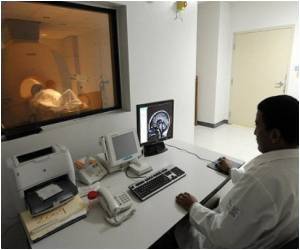
PET Scans Provide New Insight into Epilepsy in Children
Sudden destructive childhood epilepsy is a parent's worst nightmare, especially in the case of fever-induced refractory epileptic encephalopathy in school-age children (FIRES).
Sudden destructive childhood epilepsy is a parent's worst nightmare, especially in the case of fever-induced refractory epileptic encephalopathy in school-age children (FIRES).
Source-Newswise
 Email
Email