MEDINDIA
 English
 हिन्दी
 Español
 français
 中文
中文
The performance of screening for preeclampsia as currently recommended by NICE guidelines is poor and compliance with these guidelines is low. The performance of screening is substantially improved by a method combining maternal factors with biomarkers.

HELLP Syndrome - Causes, Symptoms, Diagnosis, Treatment & Prognosis
HELLP syndrome is a rare but serious complication that affects pregnant women. If detected on time, it can be treated to prevent harm to the mother and the baby.
HELLP syndrome is a rare but serious complication that affects pregnant women. If detected on time, it can be treated to prevent harm to the mother and the baby.
TOP INSIGHT

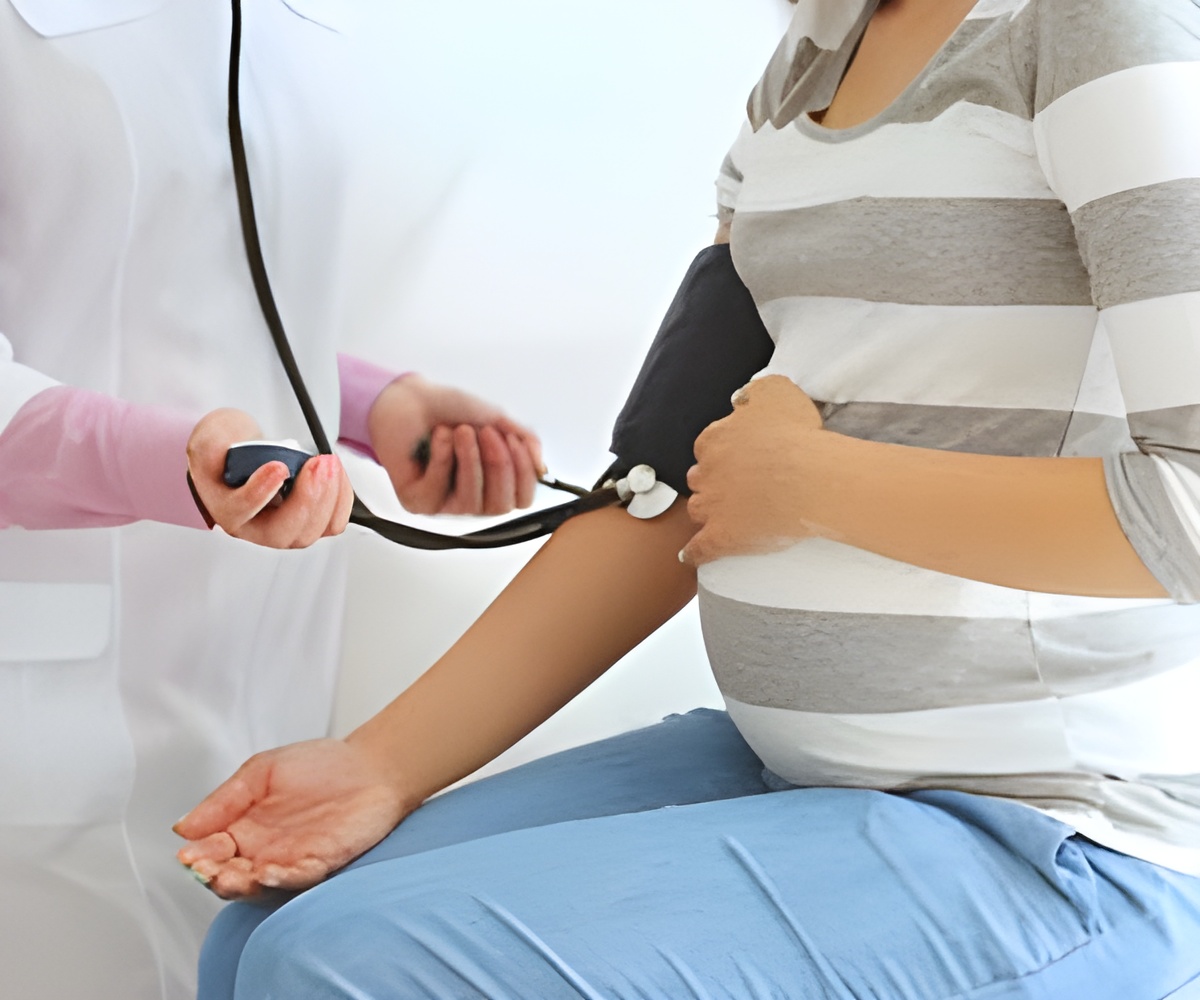
According to this study, the performance of first-trimester screening for preeclampsia (PE) by a method that uses Bayes' theorem to combine maternal factors with biomarkers is superior to that defined by current National Institute for Health and Care Excellence (NICE) guidelines.
This latest study called the Screening ProgRamme for prE-Eclampsia (SPREE) study was designed to compare the performance of first-trimester screening for PE by this alternative approach with that of the current NICE method. The study was conducted in seven National Health Service (NHS) maternity hospitals in England between April and December 2016. Singleton pregnancies at 11 to 13 weeks' gestation had recordings of maternal characteristics and medical history, as well as measurements of MAP, UtA-PI, and PlGF.
PE occurring at any point during pregnancy (all-PE) was found in 473 (2.8 percent) of the 16,747 pregnancies in the study, and preterm-PE was seen in 142 (0.8 percent). The detection rates of the NICE checklist for all-PE and preterm PE were 30.4 percent and 40.8 percent, respectively. Furthermore, compliance with the NICE recommendation that women at high risk for PE should be treated with aspirin from the first trimester was only 23 percent. If screening was carried out by the first-trimester combined test, the detection rates for all-PE and preterm PE were increased to 42.5 percent and 82.4 percent, respectively.

About Pregnancy
Detailed look at Early pregnancy Symptoms and easy health solutions during 1st, 2nd and 3rd trimester of pregnancy. With an addition of an online pregnancy due date calculator.
Detailed look at Early pregnancy Symptoms and easy health solutions during 1st, 2nd and 3rd trimester of pregnancy. With an addition of an online pregnancy due date calculator.
"The SPREE study has provided definitive proof to support risk-based screening for preterm-PE using various biomarkers. It is now time to revise the professional guidelines and to move away from using a checklist-based method for screening." said co-senior author Liona Poon, MD, of King's College London, in London.
Anemia in Pregnancy - Causes Prevention Symptoms Diagnosis Treatment
Anemia is the commonest blood disorder that may occur in pregnancy and is usually due to low iron or folate reserves of the body and this is reflected as anemia.
Anemia is the commonest blood disorder that may occur in pregnancy and is usually due to low iron or folate reserves of the body and this is reflected as anemia.
Source-Eurekalert
Antidepressants Use during Pregnancy
Depression is common during pregnancy and antidepressants are usually prescribed to overcome it. Is it safe to take these drugs while pregnant?
Depression is common during pregnancy and antidepressants are usually prescribed to overcome it. Is it safe to take these drugs while pregnant?
 Email
Email