MEDINDIA
 English
 हिन्दी
 Español
 français
 中文
中文
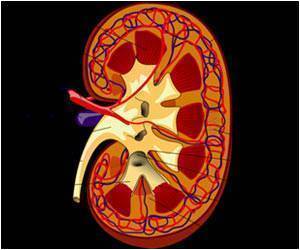
A new study points to a novel treatment for metabolic acidosis that may be a safe and effective alternative to current therapies to treat kidney disease.
Proton Pump Inhibitors Linked to Chronic Kidney Disease
A study demonstrates a significant association between the use of proton pump inhibitors (PPIs) and increased risks of chronic kidney disease and kidney failure.
A study demonstrates a significant association between the use of proton pump inhibitors (PPIs) and increased risks of chronic kidney disease and kidney failure.
TOP INSIGHT

TRC101, a hydrochloric acid binder for the treatment of metabolic acidosis associated with chronic kidney disease, provided a rapid and sustained average increase in serum bicarbonate.
In a study sponsored by the manufacturer of the drug, Tricida Inc., David Bushinsky, MD (University of Rochester School of Medicine) and his colleagues tested a novel approach to treating metabolic acidosis: oral administration of a non-absorbed polymer called TRC101 that binds to and eliminates acid from the gastrointestinal tract and thereby increases serum bicarbonate. "In contrast to sodium bicarbonate and other compositions that neutralize acid while also delivering sodium or other counterions, TRC101 was designed to selectively bind hydrochloric acid in the gastrointestinal tract and excrete the bound hydrochloric acid along with the feces without delivering any counterion," explained Dr. Bushinsky.
In their first-in-human trial, the researchers randomized 135 patients with CKD and metabolic acidosis who were on a controlled diet to 14 days with placebo or 1 of 4 TRC101 dosing regimens (1.5 g, 3 g, or 4.5 g twice daily; 6 g once daily). After treatment, patients were discharged and followed for 7-14 days.

Coffee may Reduce Mortality in Chronic Kidney Disease Patients
A cup of coffee may mean longer lifespan for patients living with chronic kidney disease, bringing down the mortality risk lower by as high as 24%.
A cup of coffee may mean longer lifespan for patients living with chronic kidney disease, bringing down the mortality risk lower by as high as 24%.
"This study demonstrated that TRC101 was well-tolerated in CKD patients with metabolic acidosis, and treatment with TRC101 led to a rapid and sustained mean increase in serum bicarbonate," said Dr. Bushinsky. "If longer-term studies support these initial results, TRC101, a novel, counterion-free, non-absorbed polymer, may be an important new therapeutic approach for the treatment of chronic metabolic acidosis in CKD patients."
Intensive BP Lowering Benefits Patients With Chronic Kidney Disease
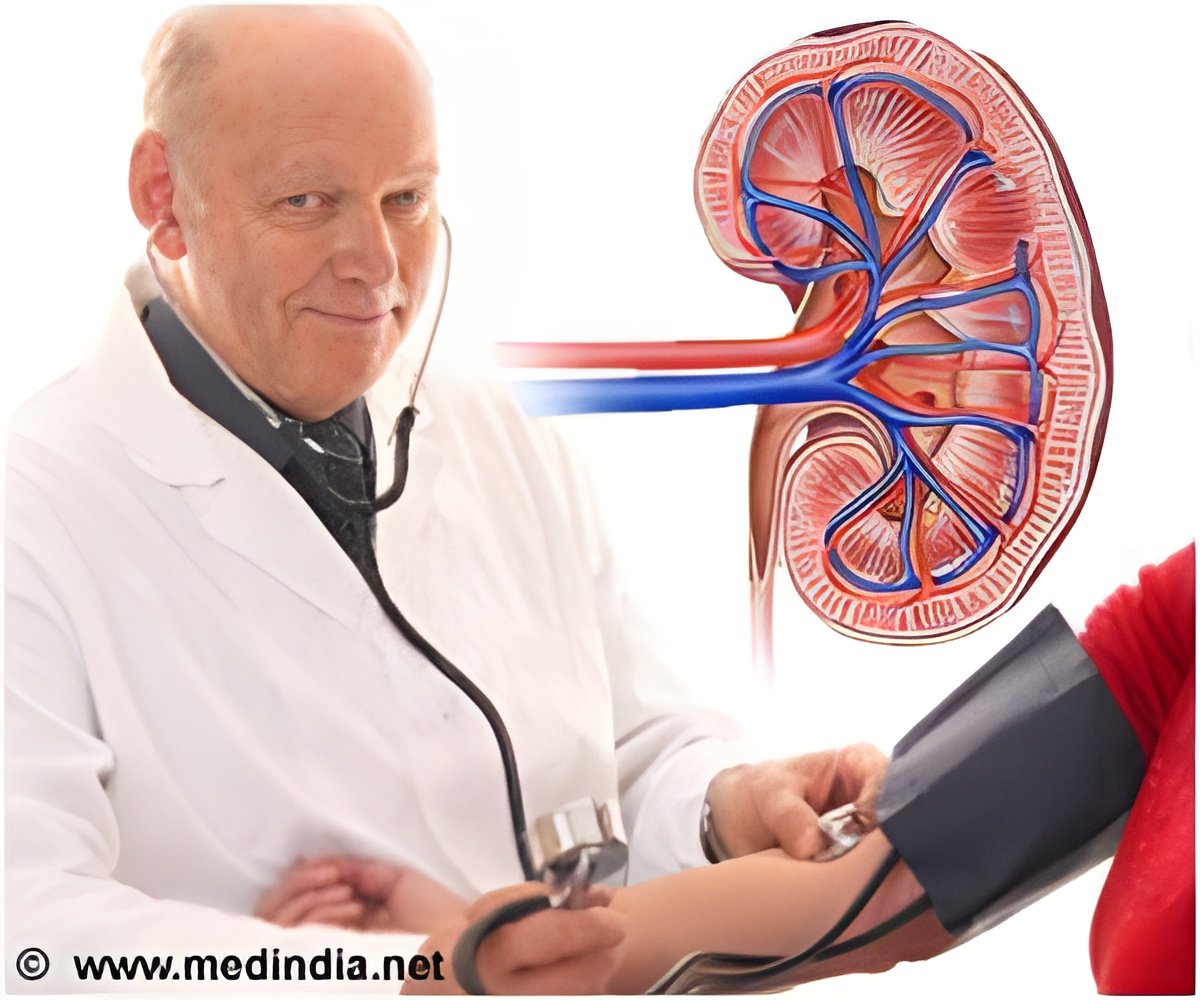
The exact reason for blood pressure in patients with chronic kidney disease (CKD) and hypertension has been unclear and hence, researchers are examining the issue.
The exact reason for blood pressure in patients with chronic kidney disease (CKD) and hypertension has been unclear and hence, researchers are examining the issue.
Source-Eurekalert

Chronic Kidney Disease Worsens Outcome of Hospital Acquired Complications
Hospital acquired complications (HACs) and early death are higher among in-patients with chronic kidney disease among hospitalized patients.
Hospital acquired complications (HACs) and early death are higher among in-patients with chronic kidney disease among hospitalized patients.
 Email
Email