MEDINDIA
 English
 हिन्दी
 Español
 français
 中文
中文
VSP-deficient sperm had a greatly reduced ability to fertilize eggs in vitro, said new study. The new finding could aid in future fertility treatments.

About Male Infertility
Encyclopedia section of medindia briefs you about the Genetics of Male Infertility
Encyclopedia section of medindia briefs you about the Genetics of Male Infertility
TOP INSIGHT

Protein defect was found to leave sperm chasing their tails.
Lead author of the study Takafumi Kawai explains, "Determining the physiological role of VSP was the main aim of our study. To do this, we generated a VSP-deficient mouse line so that we could examine VSP-deficient sperm from these animals."
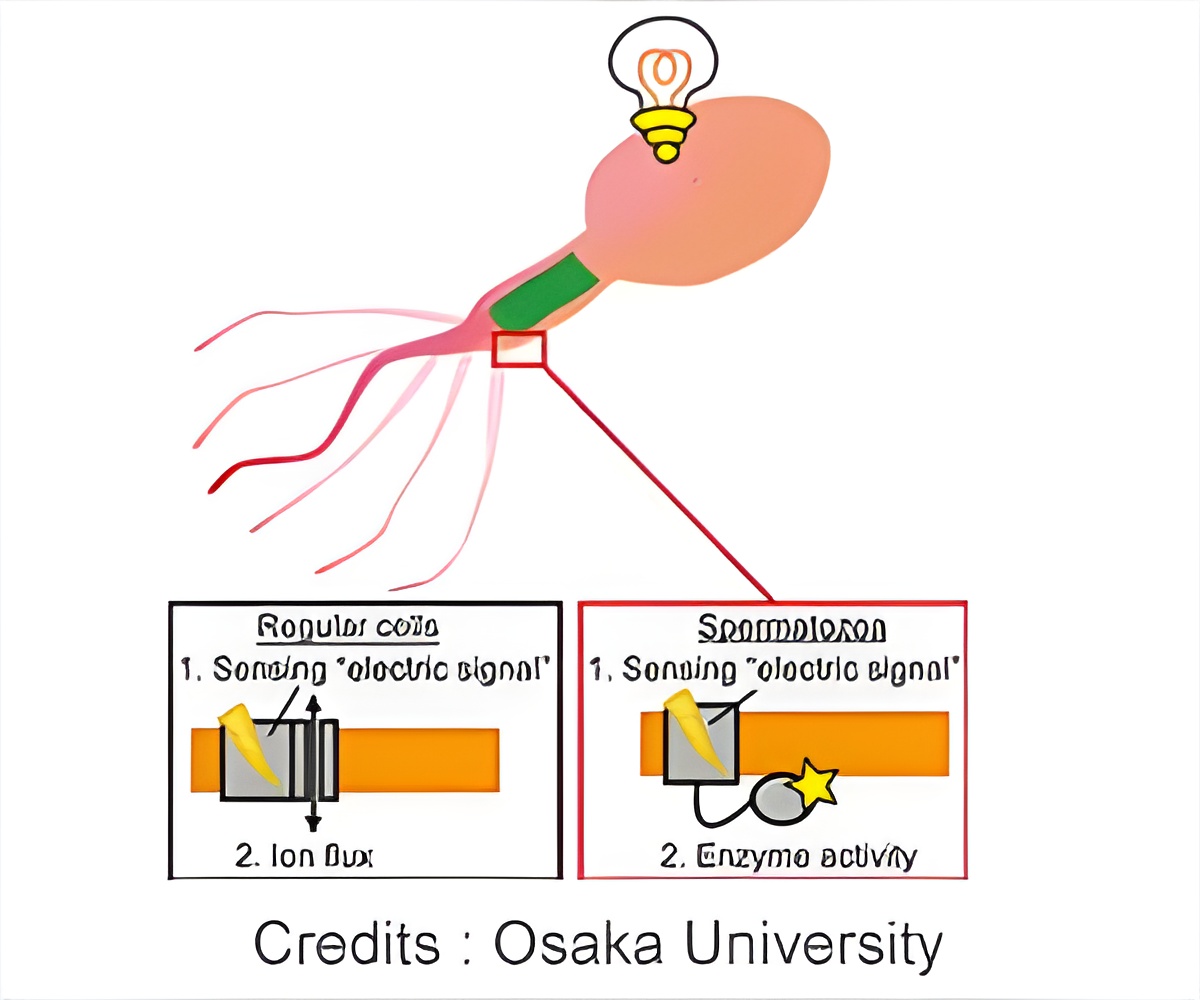
The first thing the researchers noticed was that the VSP-deficient sperm had a greatly reduced ability to fertilize eggs in vitro. Closer inspection showed that the sperm were swimming around in circles during capacitation, meaning that fewer sperm actually made it to their destination. Defective motility suggested a problem with the flagellum, prompting the researchers to examine these structures in more detail.

Quiz on Infertility
Obesity negatively affects fertility in females. Find out why fat women have lesser chances of falling pregnant by participating in the following quiz.
Obesity negatively affects fertility in females. Find out why fat women have lesser chances of falling pregnant by participating in the following quiz.
These findings suggested that VSP plays a major role in ion channel regulation, which ultimately affects motility. The researchers proposed a mechanism whereby VSP is responsible for the polarized distribution of PIP2 in the flagellum. PIP2 then activates potassium ion channels, which indirectly causes a localized influx of calcium ions, enhancing motility. In the VSP-deficient sperm, the dispersed PIP2 causes excessive calcium ion influx which decreases the flexibility of the flagellum, affecting motility.

Less-educated, Low-income Women Less Likely to Seek Infertility Treatment
Women who are less-educated and poor are less likely to get infertility treatment, reveals a new study.
Women who are less-educated and poor are less likely to get infertility treatment, reveals a new study.
Source-Eurekalert

 Email
Email