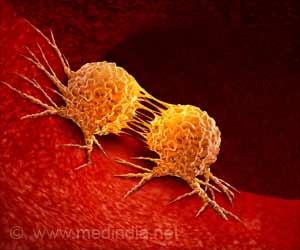
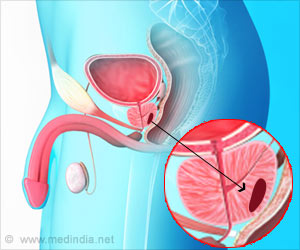
Nimbolide, a bioactive terpenoid compound derived from Neem plant was found to reduce the size of prostate tumor by up to 70 per cent.

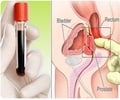
Prostate Cancer Screening
PSA (Prostate Specific Antigen) test and Digital Rectal Examination are two tests that allow detection of prostate cancer at early stages.
PSA (Prostate Specific Antigen) test and Digital Rectal Examination are two tests that allow detection of prostate cancer at early stages.
‘Oral administration of nimbolide - bioactive compound derived from Neem plant, over 12 weeks shows reduction of prostate tumor size by up to 70 per cent and decrease in tumor metastasis by up to 50 per cent.’





Cell
invasion and migration are key steps during tumour metastasis. The
NUS-led study revealed that nimbolide can significantly suppress cell
invasion and migration of prostate cancer cells, suggesting its ability
to reduce tumour metastasis. The researchers observed that upon the 12 weeks of administering nimbolide, the size of prostate cancer tumour was reduced by as much as 70 per cent and its metastasis decreased by about 50 per cent, without exhibiting any significant adverse effects.
“This is possible because a direct target of nimbolide in prostate cancer is glutathione reductase, an enzyme which is responsible for maintaining the antioxidant system that regulates the STAT3 gene in the body. The activation of the STAT3 gene has been reported to contribute to prostate tumour growth and metastasis,” explained Assoc Prof Sethi. “We have found that nimbolide can substantially inhibit STAT3 activation and thereby abrogating the growth and metastasis of prostate tumour,” he added.

Quiz on Prostate Cancer
Prostate cancer is fast gaining as a common cancer form among men; more threatening since its symptoms often go unnoticed until it’s too late. This quiz tests your knowledge on prostate cancer, its diagnosis and treatment options and is as mandatory for men as the screening tests mentioned here are!
Prostate cancer is fast gaining as a common cancer form among men; more threatening since its symptoms often go unnoticed until it’s too late. This quiz tests your knowledge on prostate cancer, its diagnosis and treatment options and is as mandatory for men as the screening tests mentioned here are!
Neem - The medicinal plant
Advertisement
Future Research
Advertisement
Hypofractionated Radiation Therapy Reduces Treatment Time in Prostate Cancer
Similar side effects were observed following conventional and accelerated radiation therapy for early stage, low-risk prostate cancer.
Similar side effects were observed following conventional and accelerated radiation therapy for early stage, low-risk prostate cancer.
Source-Newswise