MEDINDIA
 English
 हिन्दी
 Español
 français
 中文
中文
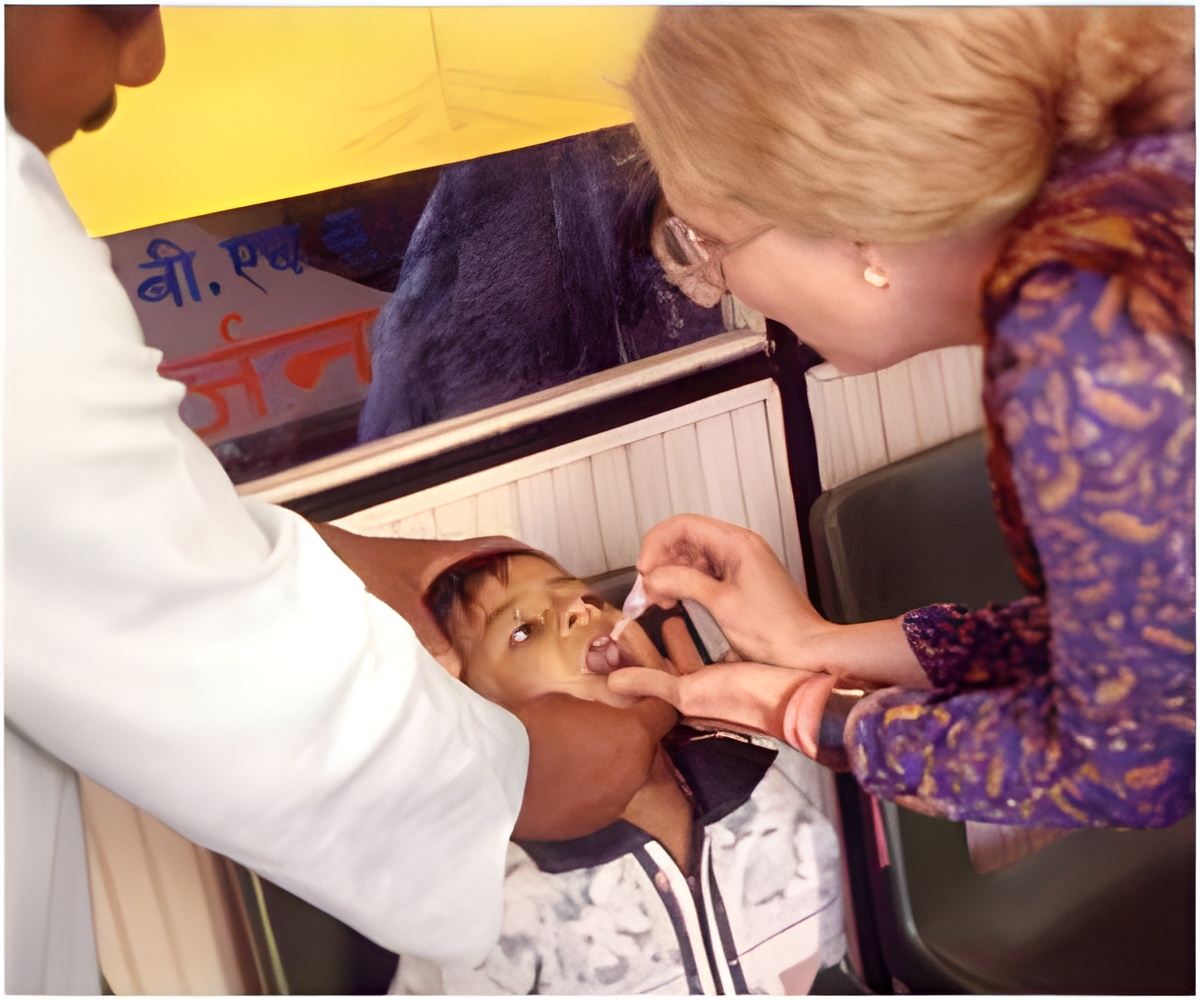
India became the first country globally to introduce fractional doses of IPV in childhood immunisation programme in eight of its 36 states / union territories.
Afghanistan Health Ministry Launches Anti-Polio Drive
The number of polio cases recorded in the militancy-hit country has risen to eight so far this year after a fresh case was confirmed in Barmal district.
The number of polio cases recorded in the militancy-hit country has risen to eight so far this year after a fresh case was confirmed in Barmal district.
TOP INSIGHT

Two fractional doses (one fractional dose is one-fifth of a full dose) of IPV, given twice to infants provide the same protection against all polio viruses as does one full dose of IPV.
India became the first country globally to introduce fractional doses of IPV in childhood immunisation programme in eight of its 36 states / union territories in early 2016.
"The initiative is now being scaled up nationwide. Sri Lanka followed suit in July 2016. Bangladesh has decided to introduce fractional IPV doses this year. Other countries in the region are also considering a shift to the use of fractional IPV doses in their immunisation schedule," Khetrapal added.

8 Polio Cases in Afghanistan This Year: Public Health Ministry
Afghanistan's Public Health Ministry has launched two Supplementary Immunisation Activity (SIA) campaigns in recent months to fight polio.
Afghanistan's Public Health Ministry has launched two Supplementary Immunisation Activity (SIA) campaigns in recent months to fight polio.
"By using fractional IPV, countries are saving vaccine and vaccine cost, without compromising on the protection that the vaccine provides to children against polio," said Khetrapal in the statement.
Polio Drive Launched in Former Islamic State Areas in Afghanistan
The latest five-day drive is aimed to reach about 9.5 million children. Afghanistan and Pakistan are the only two countries in the world where polio remains endemic.
The latest five-day drive is aimed to reach about 9.5 million children. Afghanistan and Pakistan are the only two countries in the world where polio remains endemic.
As a part of the global polio endgame strategy, countries in the region have introduced IPV to supplement the oral polio vaccine (OPV), and ensure protection against all types of polio viruses, while the programme globally strives towards stopping poliovirus transmission and cessation of OPV use.
Nigeria Reports Two New Polio Cases
The Nigerian government has reported two new polio cases in the first re-emergence of the disease since 2014, the World Health Organization said.
The Nigerian government has reported two new polio cases in the first re-emergence of the disease since 2014, the World Health Organization said.
 Email
Email