MEDINDIA
 English
 हिन्दी
 Español
 français
 中文
中文
Microrobotic swarms are revolutionizing cancer therapy through precision targeting and immune activation.
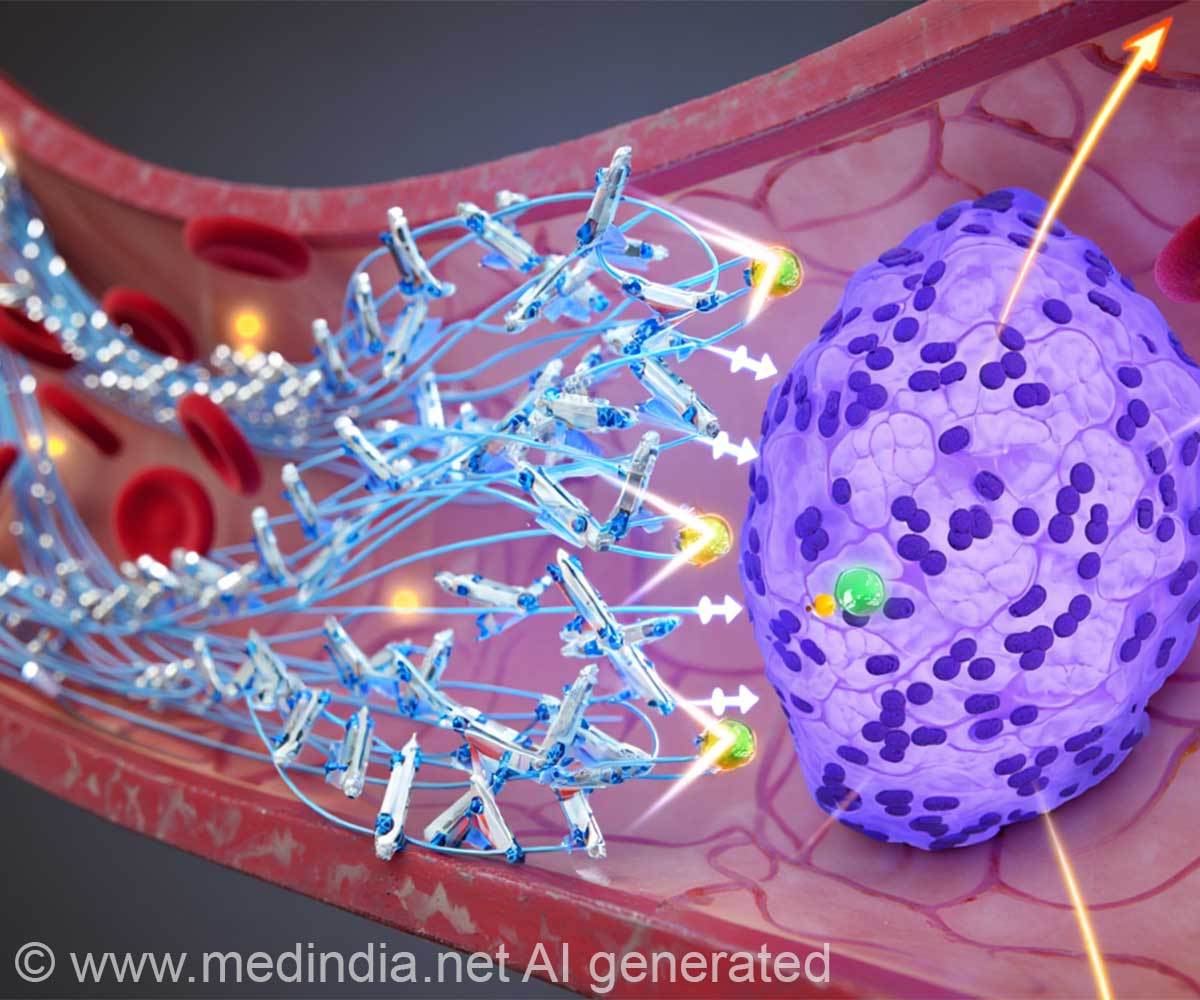
Microrobotic Swarms for Cancer Therapy
Go to source).

Robots May Soon Help Doctors Accurately Diagnose Breast Cancer on Imaging
Robots (artificial intelligence) may soon learn to accurately detect breast cancer lesions on magnetic resonance imaging (MRI) scans promoting early diagnosis and treatment and to improve patient outcome.
Robots (artificial intelligence) may soon learn to accurately detect breast cancer lesions on magnetic resonance imaging (MRI) scans promoting early diagnosis and treatment and to improve patient outcome.
TOP INSIGHT

Cancer-killing bots may be small, but their power lies in precision and teamwork. #cancertech #medindia
What Are Microrobotic Swarms?
Micro-robots are similar to micro-drones, but instead of flying through the air (as regular drones do), they swim and crawl through your bloodstream and tissues in response to commands. They are small and powerless on their own, but when they work together, they form a well-trained rescue squad that fights cancer at the target location.The micro-robots can be moved even to the deep-tumor sites using the external forces, according to the control of the doctor. We are talking about a remote control in our hands and going to the liver tumor now!

Robotic Assistance In Kidney Cancer Surgery Benefits Patients
Fox Chase Cancer Center researchers have shown that robot assisted kidney cancer surgery is more beneficial for patients compared to open surgery.
Fox Chase Cancer Center researchers have shown that robot assisted kidney cancer surgery is more beneficial for patients compared to open surgery.
How Microrobotic Swarms Are Controlled?
Microrobotic swarms can be guided using various actuation methods, each offering unique advantages.Magnetic fields
Magnetic fields manage embedded magnetic materials into chain-, ribbon-, or vortex-like swarms by adjusting the field strength, direction, and frequency, which are ideally suited to deep tissue targeting of high precision.
Electric fields
Microrobots are polarized by electric fields and can rapidly form and reconfigure into gas-like clouds or clusters, depending on the frequency and ion concentration of the field.
Optical fields
Optical fields manipulate light to transport or aggregate particles even more accurately by utilizing light-sensitive material, but have short tissue penetration.
Acoustic fields
The resulting pressure gradients produced by acoustic fields induce chain patterns or swirls that can safely penetrate soft tissues.
Chemical fuels
Microrobots can be powered by chemical fuels to self-propel along reaction-derived gradients to enable the autonomous movement of swarms, which do not require any external control.

Surgical Robots may Give Helping Hand in Cancer-related Surgeries
A patient detected with Stage-4 lung cancer has only a 15 percent chance of survival beyond five years but if detected early, there's an 80% chance of survival.
A patient detected with Stage-4 lung cancer has only a 15 percent chance of survival beyond five years but if detected early, there's an 80% chance of survival.
What Makes Them So Promising?
The functions of microrobotic swarms mainly rely on the properties of agents.| Function | Description | Mechanisms Used |
|---|---|---|
| Tumor Targeting & Killing | Directly attacking tumor cells | Drug release, thermal ablation, ROS, receptor targeting |
| Tumor Infiltration | Penetrating deep tumor regions | Motility, shape adaptation, and extracellular matrix degradation |
| Cancer Immunomodulation | Boosting the immune response against cancer | Immune agent delivery, antigen presentation, and tumor microenvironment shift |
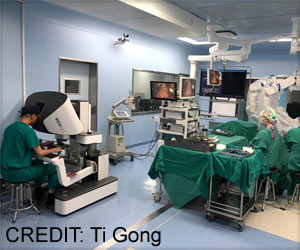
Shanghai Robot Completes First Surgery on a 65-year-old Cancer Patient
A Shanghai-produced surgical robot developed by Shanghai's MicroPort completed its first prostatectomy on a 65-year-old cancer patient at Shanghai East Hospital, Shanghai.
A Shanghai-produced surgical robot developed by Shanghai's MicroPort completed its first prostatectomy on a 65-year-old cancer patient at Shanghai East Hospital, Shanghai.
Uses
Microrobotic swarming is advantageous in cancer treatment because it involves precision, adaptation, and multipurpose usage. They are mostly used in:- Targeted Drug Delivery: The targeted delivery of therapeutic agents by swarms ensures direct transportation of drugs to the tumor, and this reduces damage to healthy tissue.
- Enhanced Tumor Penetration: Their active mobility and coordinated action can lead to deep penetration of the solid tumors that cannot be easily accessed.
- Immunomodulation: Certain swarm agents aim to adjust the tumor microenvironment to facilitate the activation of the immunity by body.
- Real-Time Imaging and Diagnosis: Microrobots can act as contrast agents for MRI, ultrasound, and photoacoustic imaging, enabling clinicians to track their movement and monitor treatment progress.
- Localized Therapy: Certain swarms provide localized heat or reactive oxygen species (ROS) to destroy cancer cells with minimal side effects.
It’s not just about shrinking tumors. It’s about changing lives—quietly, powerfully, and microscopically.
Reference:
- Microrobotic Swarms for Cancer Therapy - (https://spj.science.org/doi/10.34133/research.0686)
Source-Medindia
 Email
Email