MEDINDIA
 English
 हिन्दी
 Español
 français
 中文
中文

Researchers are uncovering how menstrual blood could transform disease diagnosis and regenerative medicine.
Highlights:
Menstrual blood is emerging as an unexpected frontier in healthcare research. Scientists are now studying this monthly biological material not only to understand menstrual and reproductive health but also to explore its value as a tool for diagnosing diseases and developing future regenerative therapies. What was once overlooked is now positioned as a key resource in women’s health innovation (1✔ ✔Trusted Source- Menstrual blood shows high diagnostic accuracy for HPV and genital tuberculosis
- Stem cells from menstrual blood offer regenerative potential across multiple conditions
- Noninvasive collection makes menstrual blood a promising tool for future diagnostics
The secrets of menstrual blood: emerging frontiers from diagnostic tools to stem cell therapies
Go to source).

TOP INSIGHT

Did You Know?
Menstrual blood holds clinically valuable stem cells that may reshape future treatments. #womenshealth #medicalresearch #medindia
Menstrual Blood Research Statistics And Diagnostic Accuracy
Across multiple studies, menstrual blood has shown 97.7 percent sensitivity for detecting high risk HPV when tested through next generation sequencing. In endometriosis research, up to 67.6 percent of affected women showed strong aromatase expression in their menstrual blood, a potential noninvasive biomarker. In genital tuberculosis testing, menstrual blood based PCR achieved 90.2 percent sensitivity and 86.1 percent specificity. Stem cells from menstrual blood also demonstrated rapid proliferation with a doubling time of 19.4 hours, nearly twice as fast as bone marrow derived stem cells.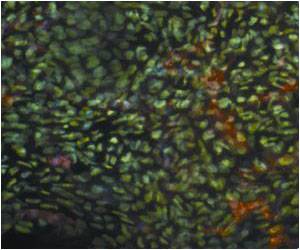
Menstrual Blood-derived Cells 'feed' Embryonic Stem Cells
The human embryonic stem cells must remain undifferentiated to be suitable for medical transplantation
The human embryonic stem cells must remain undifferentiated to be suitable for medical transplantation
Menstrual Blood Stem Cells For Regenerative Medicine
Researchers have identified powerful stem cells in menstrual blood called MenSCs. These cells have high proliferative capacity and can transform into many different tissue types under controlled conditions. Because of their low immunogenicity, they are being investigated for fertility restoration, premature ovarian insufficiency, liver diseases, neurological disorders, and even wound healing. Early studies show they help reduce inflammation, support tissue repair, and encourage healthier cell growth.
Stem Cells from Menstrual Blood may Help Save Limbs
A new study on mouse models of peripheral artery disease has shown that endometrial regenerative cells (ERCs) from menstrual blood can help restore blood flow.
A new study on mouse models of peripheral artery disease has shown that endometrial regenerative cells (ERCs) from menstrual blood can help restore blood flow.
Noninvasive Menstrual Blood Testing For Disease Diagnosis
Using menstrual blood as a diagnostic sample is gaining global attention. It is easy to collect, painless, and widely acceptable among women. Scientists are exploring menstrual blood as a testing medium for conditions such as cervical cancer, endometriosis, and genital tuberculosis. Many women prefer this method because it avoids discomfort from traditional procedures and still delivers clinically reliable information.
Stem Cells in Menstrual Blood Could Help in Transplants
Researchers say that stem cells in menstrual blood could help in transplants.
Researchers say that stem cells in menstrual blood could help in transplants.
Menstrual Blood Biomarkers And Endometriosis Insights
The immune cells and proteins found in menstrual blood offer researchers a unique window into disorders like endometriosis. Studies show that women with endometriosis have altered stem cell behavior and elevated inflammatory markers in their menstrual blood. These findings may help scientists understand why the condition develops and how therapies could be improved.How Menstrual Blood Research Shapes The Future Of Women’s Health
Menstrual blood research is changing how science approaches women's health. It is opening new pathways for early diagnosis, targeted treatments, and regenerative solutions that were once difficult to imagine. As innovations continue, menstrual blood may become one of the most valuable tools in personalized medicine.Your health journey matters and so does your access to better diagnostic tools. Stay informed to stay empowered.
Reference:
- The secrets of menstrual blood: emerging frontiers from diagnostic tools to stem cell therapies - (https://www.frontiersin.org/journals/cell-and-developmental-biology/articles/10.3389/fcell.2025.1623959/full)
Source-Medindia
 Email
Email