MEDINDIA
 English
 हिन्दी
 Español
 français
 中文
中文
By studying enzymes that build bacterial cell walls, scientists can design more-refined antibiotics.
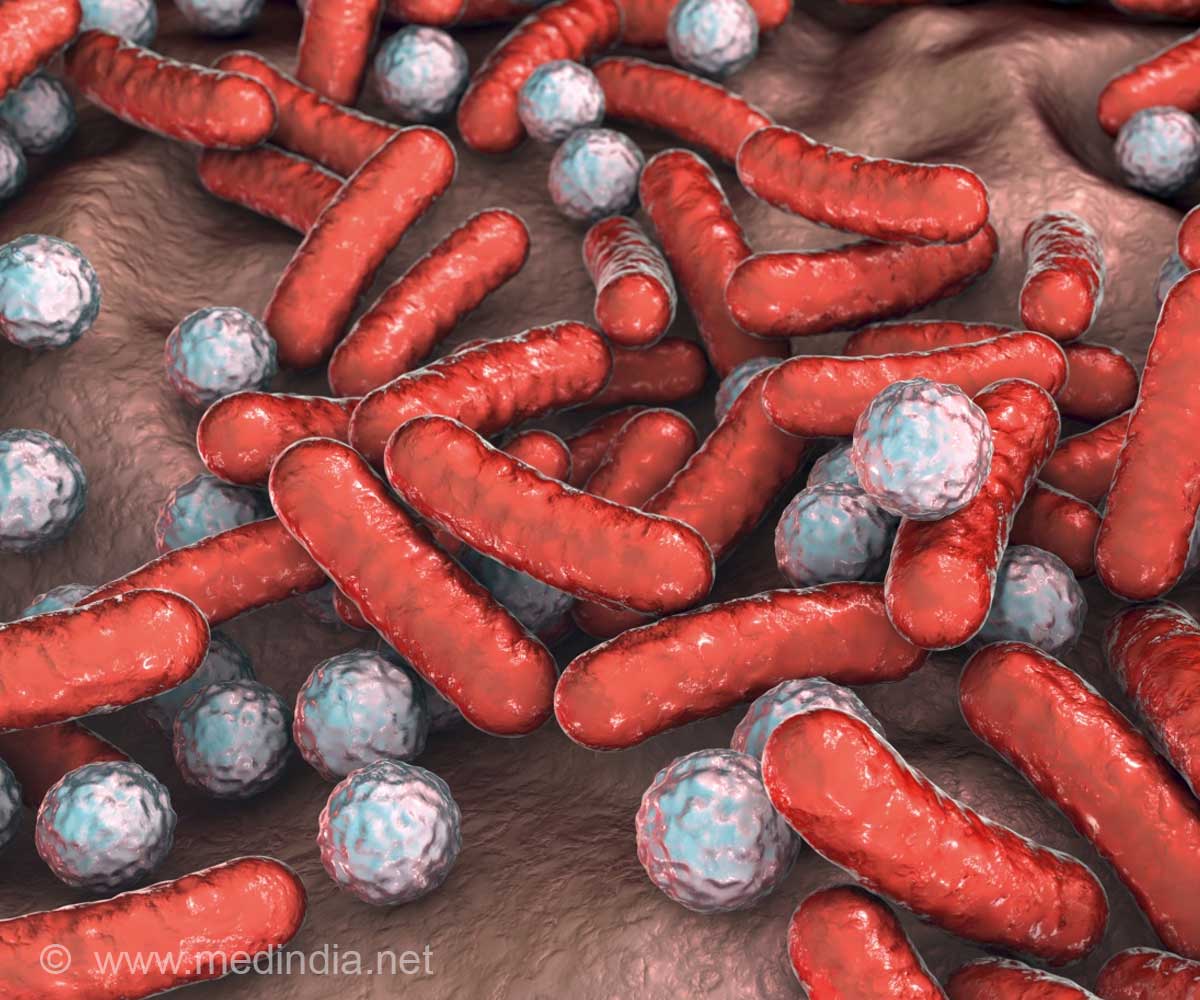
International Microorganism Day
Go to source). The day highlights a connection between microbes and human health. The day features the importance of microbiology through revelations that can help tackle diseases caused by tiny lives.

How Does COVID-19 Affect Microorganisms Present in the Vagina?
New findings on the effects of COVID-19 on preterm birth shed light on the importance of the vaginal microbiota altered by disease-causing organisms.
New findings on the effects of COVID-19 on preterm birth shed light on the importance of the vaginal microbiota altered by disease-causing organisms.
TOP INSIGHT

Even #bacteria can #vaccinate themselves by capturing viral DNA to build their immunity. It's a key to understand our own #immune system. #Microorganisms #Self_Vaccination #ImmuneSystem #IMD
New Ways to Defend Against Tick-Borne Diseases
Johns Hopkins Scientists are researching microscopic life forms like ticks, viruses, and bacteria to unveil new techniques to cure a variety of conditions including cholera and flesh-eating bacteria infections.Erin Goley is studying how the bacterium Rickettsia parkeri proliferates. Her aim is to create effective antibiotics against the deadly, tick-borne fever.
In her research, Goley aims to get a better understanding of how Rickettsia parkeri hijack proteins from host cells to move around, spread from cell to cell, and infect other organs in humans after a tick bite.

Microorganisms In Lungs May Help Predict Outcomes in Critically Ill Patients
How well critically ill patients will respond to care can be predicted by observing changes in the lung microbiome.
How well critically ill patients will respond to care can be predicted by observing changes in the lung microbiome.
Flesh-eating Bacteria Find their Way to Humans from Marine Environment
To explore this, scientist Jonathan Lynch closely observes the relationship between bioluminescent bacteria Aliivibrio fischeri and their close relationship with the Hawaiian bobtail squid. Within a few hours after the bobtail squid is born, these bacteria locate the squid and take residence on the squid’s “light organ” as part of a symbiotic relationship that lasts the entirety of the squid’s life.These light-up bacteria have long tails that they use in a corkscrew-like fashion to swim, and are shaped similarly to Vibrio vulnificus, the so-called “flesh eating bacteria” found in marine environments that can also cause gastroenteritis, or food poisoning.
By seeking to understand how bioluminescent A. fischeri find their way to the Hawaiian bobtail squid, Lynch hopes to define how related bacteria live, move and proliferate. By understanding how these bacteria can infect people, he aims to find more targeted treatments for deadly bacterial diseases.

Quiz on Antibiotics
Your doctor may suggest antibiotics at the first sight of an infection, but how much do you really know about these wonder drugs? Test yourself. ...
Your doctor may suggest antibiotics at the first sight of an infection, but how much do you really know about these wonder drugs? Test yourself. ...
Even Bacteria can Immunize Themselves from Dormant Virus
Like people, bacteria get invaded by viruses. In a bid to further understand human immunity and develop ways to combat diseases, scientists have sought to learn how these single-cell organisms survive infections by these viruses, known as phages. One versatile line of defense is CRISPR-Cas9 systems, which evolved in bacteria to defend against phages and have been co-opted as powerful gene-editing tools.A team of researchers led by Joshua Modell says they have shed new light on how bacteria protect themselves from certain phage invaders — by seizing genetic material from weakened, dormant phages and using it to “vaccinate” themselves to elicit an immune response.
How Bacteria Steal Viral DNA
In their experiments, Modell says Streptococcus pyogenes bacteria (which cause strep throat) take advantage of a class of phages known as temperate phages, which can either kill cells or become dormant.The bacteria steal genetic material from temperate phages during this dormant period and form a biological CRISPR “memory” of the invader that their offspring inherit as the bacteria multiply.
Equipped with these memories, the new population can recognize these viruses and fight them off by using Cas9 to cut their DNA.
From Enzymes to More Sophisticated Antibiotics
Scientist Jie Xiao is working to find new ways to develop more-refined antibiotics that target the enzymes that help build bacteria cell walls, destroying bacteria’s ability to divide and multiply. Xiao has developed new ways to watch these enzymes’ actions as they are doing their work in live cells, which, she says, has not been possible before.The outer covering of most cells is a squishy, permeable, double layer of fat molecules that encloses a cell’s gel-like interior and all its parts. But bacteria cells are different. Their outer covering, like plant cells, is closer to a hard shell than a soft covering.
Such rigidity is important to their survival, says Xiao. Bacteria use a rigid outer cell wall to maintain their shape and defend themselves from onslaughts by an organism’s immune system and environment.
The Science of Bacterial Multiplication for Human Health
Like any structure, cell walls can be broken down and rebuilt. This happens, for example, when bacteria divide and multiply.A cell divides by breaking down old cell wall material and creating a new wall between the splitting cells. Without a wall, bacteria contents will leak out, and the cell will die.
Scientists, including Xiao, have been piecing together the intricate construction steps of bacteria cell walls in fine detail. The information is critical to understanding the science of bacteria, but also has enormous potential for human health.
Reference:
- International Microorganism Day - (https://fems-microbiology.org/international-microorganism-day/)
Source-Newswise
 Email
Email