MEDINDIA
 English
 हिन्दी
 Español
 français
 中文
中文
Portable reagent-less immunosensor detects bone cancer early by targeting OPN biomarker with high accuracy.

An electrochemically charged nanoengineered bioelectronic immunosensing device for osteopontin detection in serum samples
Go to source).
Portable Device Targets Bone Cancer Biomarker
The innovative device targets Osteopontin (OPN)—a key biomarker linked to osteosarcoma, a fast-spreading form of bone cancer that disproportionately affects children and adolescents. Unlike conventional diagnostic techniques that require expensive reagents and complex lab infrastructure, the IIT-BHU device operates without chemical mediators and can provide on-the-spot testing results. This breakthrough has been published in Nanoscale, a prestigious journal by the Royal Society of Chemistry.
Bone Cancer
Find the facts of bone cancer including types of bone cancer, symptoms, causes, treatment, diagnosis and more information.
Find the facts of bone cancer including types of bone cancer, symptoms, causes, treatment, diagnosis and more information.
TOP INSIGHT

A #bioelectronic_device that detects early-stage #bone_cancer and reports it itself? The portable innovation is pushing the boundaries of medical diagnostics. What could this mean for #personalized_healthcare and outcomes? #osteosarcoma
While the exact cause is unknown, factors such as rapid bone growth, prior radiation exposure, and certain genetic mutations may increase risk. Diagnosis usually involves physical exams, imaging tests like X-rays or MRIs, and a biopsy. Treatment typically includes surgery—often limb-sparing—combined with chemotherapy; radiation is used in select cases.
The "Glucose Meter" of Bone Cancer
Designed as a reagent-less immunosensor, the device works with just a buffer solution, utilizing a gold and redox-active nanomaterial sensor surface. Its operation mimics a glucose meter, delivering results quickly and cost-effectively. “This self-reporting system is compact, easy to use, and ideal for deployment in primary health centers, especially in rural and underserved regions,” said Prof. Pranjal Chandra, who led the research team from the School of Biochemical Engineering.
Bone Metastases / Osseous Metastatic Disease
Metastatic or secondary cancer or bone mets is a cancer that has spread from a different part of the body to the bones. Bone pain, fractures, and excessive blood calcium levels are some of the features of metastatic bone cancer.
Metastatic or secondary cancer or bone mets is a cancer that has spread from a different part of the body to the bones. Bone pain, fractures, and excessive blood calcium levels are some of the features of metastatic bone cancer.
Unlike current OPN detection methods—which are often cost-prohibitive and time-intensive—the IIT-BHU solution offers a rapid, accurate, and affordable alternative that could revolutionize cancer diagnostics in India and beyond.

Osteosarcoma
Osteosarcoma is a primary cancer of the bone which targets adolescents most commonly and mainly affects the areas around the knee, shoulder and hip joint.
Osteosarcoma is a primary cancer of the bone which targets adolescents most commonly and mainly affects the areas around the knee, shoulder and hip joint.
With bone cancer diagnoses often occurring at advanced stages due to diagnostic delays, especially in rural areas, this device promises to be a game-changer in the battle against cancer, delivering hope where it's needed most.
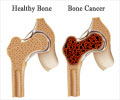
Quiz on Bone Cancer
Bone cancer may arise primarily from a bone or may spread from other organs to the bone. See how much you know on bone cancer by taking this ...
Bone cancer may arise primarily from a bone or may spread from other organs to the bone. See how much you know on bone cancer by taking this ...
- An electrochemically charged nanoengineered bioelectronic immunosensing device for osteopontin detection in serum samples - (https://pubmed.ncbi.nlm.nih.gov/40405794/)
Source-Medindia
 Email
Email