MEDINDIA
 English
 हिन्दी
 Español
 français
 中文
中文
Delve deeper into the first-ever non-damaging laser therapy to pause the macular degeneration disease continuance.
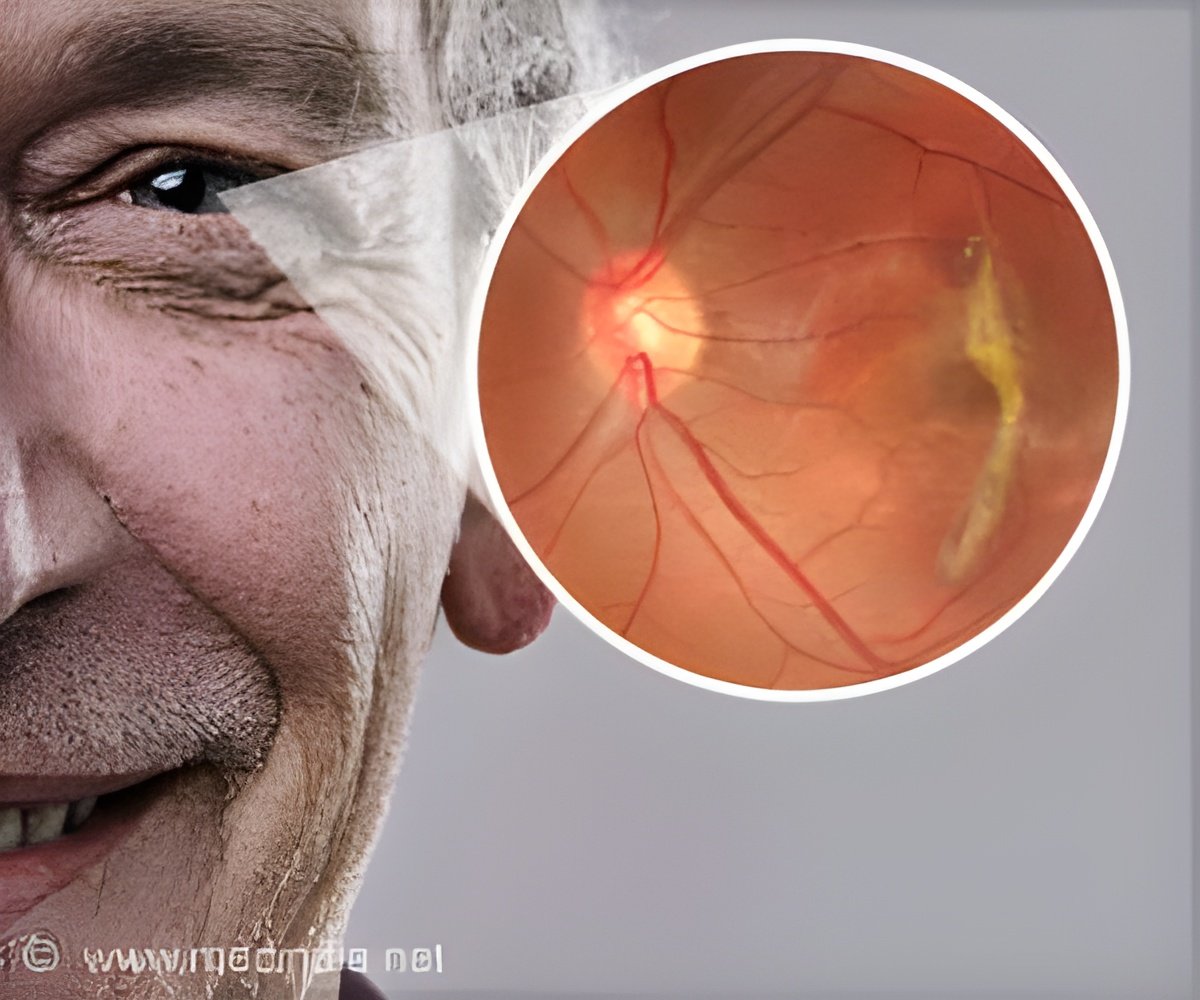
Regardless of this high occurrence, the dry AMD has no effective cure or treatment at present. The new innovative non-damaging laser could provide a first potential to induce eye's innate repair mechanism to stop the AMD progression (1✔ ✔Trusted Source
Non-damaging laser treatment with electroretinography-based thermal dosimetry activates hormetic heat response in pig retinal pigment epithelium
Go to source).
The research was published in Nature Communications.
“Cellular functionality and protective mechanisms weaken with age, which exposes the fundus (the inside surface at the back of the eye) to intense oxidative stress,” explains Professor Ari Koskelainen.

Quiz on Eye Disorders
The gift of sight is very valuable; therefore it is necessary to take good care of our eyes. Here is a quiz to check out your knowledge regarding conditions affecting the eyes. ...
The gift of sight is very valuable; therefore it is necessary to take good care of our eyes. Here is a quiz to check out your knowledge regarding conditions affecting the eyes. ...
TOP INSIGHT

Did You Know?
"Dry age-related #macular-degeneration disease (#AMD) may be a result of oxidative stress. A novel #laser treatment triggers the eye's natural repair, preventing #vision-loss." #retinalrepair #maculaser #eyehealth #medindia
Precision Heating and Temperature Control in the Laser
“Free oxygen radicals damage proteins, which causes them to misfold and aggregate, then fatty protein deposits called drusen begin to accumulate, which is the main diagnostic criterion for the dry form of age-related macular degeneration.”The approach requires heating the tissue by several degrees, which is complicated, as it’s hard to measure the temperature behind the retina, and temperatures above 45 degrees Celsius can cause tissue damage.
The newly developed method allows for temperature monitoring at the same time as heating is carried out with near infrared light. Koskelainen says, amongst other benefits, it harnesses the power of heat to trigger healing responses at a cellular level.
Misfolded proteins can be treated in three different ways. Heat shock proteins, which are produced by cells in response to environmental stress, can repair them to their original shape. If this does not work, the misfolded proteins are primarily directed to be broken down into amino acids.
Activating Cellular Housekeeping, Autophagy
If accumulations have already formed, a process called autophagy comes into play, the discovery of Yoshinori Ohsumi, who was awarded the Nobel Prize in Medicine for the discovery in 2016.In this process, a lipid membrane similar to a cell membrane is built around the accumulation, with recognition proteins on its surface. With the help of these proteins, lysosomal enzymes begin to break down aged and damaged proteins.
“We were able to show that we can activate not only the production of the heat shock proteins, but also autophagy using the heat shocks. This process is like waste disposal,” says Koskelainen.
The method has been shown to work in mice and pigs, and patient trials will start in Finland in spring 2026. The first phase of the trials will ensure the safety of the treatment approach in humans, without yet seeking a therapeutic response.

Age-related Macular Degeneration: Fresh Findings
The American Academy of Ophthalmology is urging people to protect themselves from vision loss from age-related macular degeneration by getting a baseline eye exam by age 40.
The American Academy of Ophthalmology is urging people to protect themselves from vision loss from age-related macular degeneration by getting a baseline eye exam by age 40.
Repetition, Publication, and Path to Commercialization
Researchers then hope to progress towards establishing how often the treatment would need to be repeated.“The treatment needs to be repetitive, since the response can already begin to decline some days after the treatment,” Koskelainen says.
Meanwhile, researchers aim to commercialise the discovery and have established a research-to-business start-up called Maculaser.
“An optimistic schedule would see the method already being used in hospital eye clinics in as little as three years’ time,” says Koskelainen. “The eventual goal is that it would be readily available at your local ophthalmologist.”
Reference:
- Non-damaging laser treatment with electroretinography-based thermal dosimetry activates hormetic heat response in pig retinal pigment epithelium - (https://www.nature.com/articles/s41467-025-64095-6)
Source-Eurekalert
Age Related Macular Degeneration (AMD) - Causes, Symptoms, Diagnosis, Treatment & Prevention
Age related macular degeneration is a disease of the elderly, wherein the macula or the central part of the retina gets affected, leading to loss of vision.
Age related macular degeneration is a disease of the elderly, wherein the macula or the central part of the retina gets affected, leading to loss of vision.
 Email
Email