MEDINDIA
 English
 हिन्दी
 Español
 français
 中文
中文

New research shows that blood and urine tests can accurately reveal how much ultra-processed food (UPF) you've been eating.
Highlights:
What if you could track your junk food intake like a health score? New research published in PLOS Medicine shows it's possible by analyzing specific biomarkers in your blood and urine. Even if you can’t always control your cravings, your body can now reveal the truth about what you’ve been eating!
“This is the first robust evidence that your body can literally ‘tell on you’ about the processed foods you eat,” says lead author Dr. Carmen Piernas from the University of Oxford (1✔ ✔Trusted Source- Metabolite scores from blood and urine reveal true UPF intake
- The study identifies six diet-linked metabolic fingerprints
- Enables real-time, objective dietary assessment for better health outcomes
Blood and urine tests reveal how much ultra-processed food you really eat, study finds
Go to source).

Ultra-Processed Foods Increase Obesity Risk by 45% Among Adolescents
Obesity risk was found to be 45 percent higher among adolescents whose diet was based on ultra-processed food products.
Obesity risk was found to be 45 percent higher among adolescents whose diet was based on ultra-processed food products.
TOP INSIGHT

Did You Know?
Your body can expose your junk food habits better than your memory? #bloodtest #urinetest #healthydieting #ultraprocessedfoods #medindia
The Processed Food Trap
Ultra-processed foods are products made withThese foods are manufactured by companies using industrial formulations that go far beyond basic cooking. Common examples include sodas, packaged snacks, instant noodles, breakfast cereals, fast food, and ready-to-eat meals.
- Ultra-processed foods have been linked to cancer, diabetes, heart disease, and obesity.
- Up to 50% of the calories consumed by people in many nations come from processed foods.
- They are intended to decrease the feeling of fullness that leads to food addiction.

Can Ultra-Processed Food Cause Inflammatory Bowel Disease?
Ultra-processed food is linked to higher risk of inflammatory bowel disease (IBD) However further studies needed identify contributory factors in processed
Ultra-processed food is linked to higher risk of inflammatory bowel disease (IBD) However further studies needed identify contributory factors in processed
Tracking Ultra-Processed Food Intake with Metabolite Scores
The research analyzed blood and urine samples from about 1211 participants in an observational study. The verified findings were presented as a controlled crossover feeding experiment to identify the metabolic patterns associated with the consumption of ultra-processed foods.Six scores were developed to evaluate the consumption of ultra-processed foods by combining 8 to 40 different metabolites.
- Overall Ultra-Processed Food Intake Score: Capturing the general level of UPF consumption.
- Artificial Sweeteners Score: Metabolites associated with synthetic sweeteners commonly found in diet sodas and sugar-free products.
- Modified Fatty Acids Score: Reflecting intake of industrially altered fats present in processed snacks and fast foods.
- Processed Carbohydrates Score: Markers related to refined sugars and starches typical in UPFs like breakfast cereals and baked goods.
- Additives and Emulsifiers Score: Metabolites signaling exposure to food additives used to improve texture and shelf life.
- Packaging Contaminants Score: Metabolites indicative of chemicals leaching from plastic or packaging materials into food.
Identification and validation of poly-metabolite scores for diets high in ultra-processed food: An observational study and post-hoc randomized controlled crossover-feeding trial
Go to source).

Ultra-Processed Foods: A Hidden Threat to Longevity
Do ultra-processed foods impact lifespan? Yes, a 23-year study shows a 10% higher mortality risk for those who consume more ultra-processed foods.
Do ultra-processed foods impact lifespan? Yes, a 23-year study shows a 10% higher mortality risk for those who consume more ultra-processed foods.
Metabolites: The Diet Detectives
During digestion, the food we ingest is broken down into small metabolites. These metabolites can be categorized based on the food we eat, byproducts of natural foods, and byproducts of chemical additives in processed foods. Based on the study, identified markers associated with- Synthetic emulsifiers
- Advanced glycation end-products (AGEs)
- Nitrates/nitrites
- Phthalates and packaging contaminants

Rethinking Ultra-Processed Foods: 'Healthier Processed Goods' Given Green Light
Discover the debate surrounding ultra-processed foods and their link to diseases, as experts argue some can be part of a healthy diet while others warn against their consumption.
Discover the debate surrounding ultra-processed foods and their link to diseases, as experts argue some can be part of a healthy diet while others warn against their consumption.
Why Traditional Food Surveys Fail?
Getting people to recall what they have eaten or fill out questionnaires can be unreliable in many cases. Common mistakes made when completing questionnaires include forgetting, reporting unhealthy foods incorrectly, and trying to look healthier than they are. This approach, on the other hand, eliminates these problems because it offers a timely and accurate assessment of food consumption. In the real world, it could help doctors detect early dietary risks, support public health campaigns related to nutrition, and empower individuals to use data to make educated food choices.Rethink Convenience and Choose Health
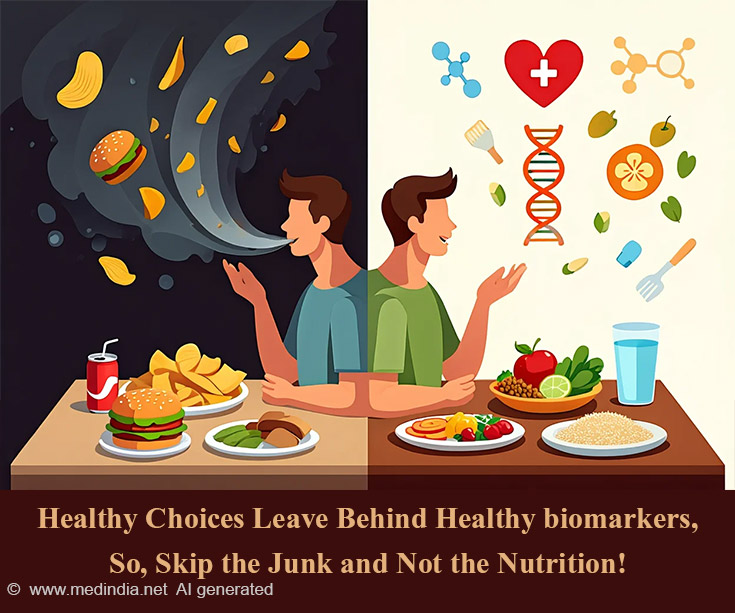
Cutting down on ultra-processed foods (UPFs) doesn't require a complete diet overhaul; rather, small steps can help curb cravings and gradually reduce consumption over time. Try cooking at home with less processed ingredients, paying attention to food labels, swapping processed foods for healthier snacks like fresh fruits, nuts, or plain yogurt, and replacing sugary drinks with water. These small changes might seem simple, but they can have a significant long-term impact on your health and help establish a consistent, healthy eating pattern.
References:
- Blood and urine tests reveal how much ultra-processed food you really eat, study finds - (https://www.news-medical.net/news/20250521/Blood-and-urine-tests-reveal-how-much-ultra-processed-food-you-really-eat-study-finds.aspx)
- Identification and validation of poly-metabolite scores for diets high in ultra-processed food: An observational study and post-hoc randomized controlled crossover-feeding trial - (https://journals.plos.org/plosmedicine/article?id=10.1371/journal.pmed.1004560)
Source-Medindia
 Email
Email