MEDINDIA
 English
 हिन्दी
 Español
 français
 中文
中文
Advanced glycation end products are a group of compounds that are combinations of sugars and proteins and other large molecules.


Alzheimer’s disease - Causes, Symptoms, Diagnosis, Stages, Types, Prevention, Prognosis & Treatment
Alzheimer's disease is a progressive neurodegenerative disease affecting memory and thinking and making the person increasingly dependent on others.
Alzheimer's disease is a progressive neurodegenerative disease affecting memory and thinking and making the person increasingly dependent on others.
RAGE transports beta-amyloid proteins across the blood-brain barrier and contributes to the development of Alzheimer's disease, the researchers explained.
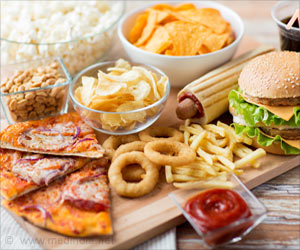
"We found that mice kept on a diet high in AGEs, similar to Western diet, had high levels of AGEs in their brains together with deposits of beta-amyloid proteins, a component of the plaques characteristic of Alzheimer's disease" said Jaime Uribarri and Weijing Cai of The Icahn School of Medicine at Mount Sinai, New York.
Deep Fried and Processed Foods and Sugary Drinks Increase Stroke Risk
A diet rich in deep fried and processed foods and sugary drinks increases the chances of stroke.
A diet rich in deep fried and processed foods and sugary drinks increases the chances of stroke.
549 foods were cooked and AGE content was measured. The researchers found that as the cooking temperature increased, the AGE content also increased.

Red Meat - Myths and Facts
Here’s good news for meat lovers - red meat can play a vital role in a healthy diet; just ensure that the meat is lean and the servings moderate.
Here’s good news for meat lovers - red meat can play a vital role in a healthy diet; just ensure that the meat is lean and the servings moderate.
Source-Medindia
Bitter Truth About Fast Foods
Read along to find out more about the 7 shocking things that make up for your sandwiches, burgers and fries, that shouldn’t be there.
Read along to find out more about the 7 shocking things that make up for your sandwiches, burgers and fries, that shouldn’t be there.
 Email
Email