MEDINDIA
 English
 हिन्दी
 Español
 français
 中文
中文
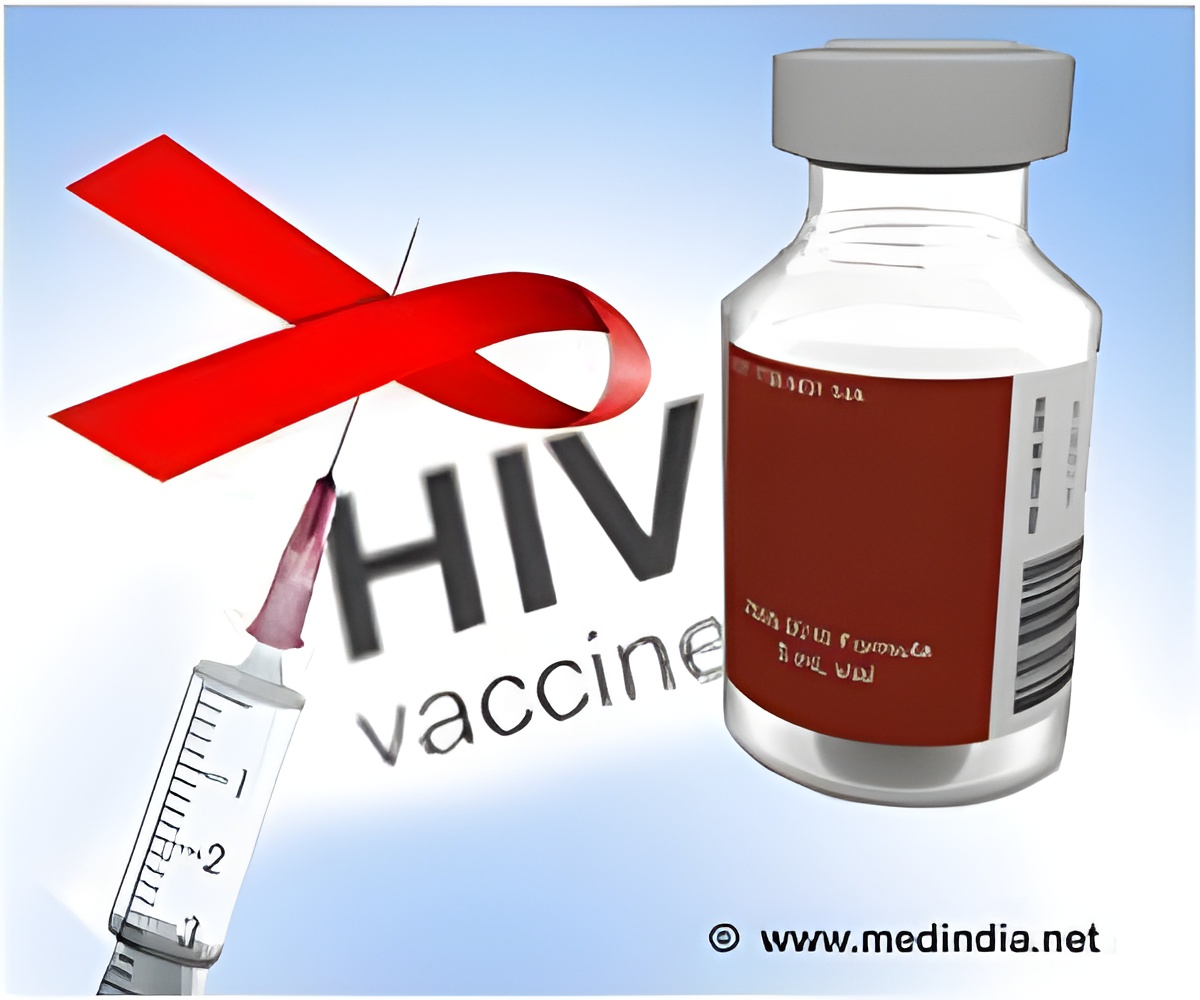
Developing an effective HIV vaccine has been a challenge. The vaccine should naturally enhance the individual’s immunity against HIV infection and should be safe to use.

AIDS / HIV - Treatment
Encyclopedia section of medindia explains in brief about the treatment for AIDS/HIV
Encyclopedia section of medindia explains in brief about the treatment for AIDS/HIV
To understand this issue and to predict which people could possibly get infected, researchers analyzed the blood samples from a subset of participants: 41 of them were vaccinated but later became infected with HIV and 205 participants remain unaffected after vaccination.
The study found that those individuals in whom there was increased binding of the IgG immunoglobulin to a particular part of the HIV viral envelope called the first and second variable regions or V1V2 were well protected against HIV infection.

On the other hand, those individuals who showed a high binding of the IgA antibody to the first constant region or C1 region of the viral envelope showed less protection from the HIV virus. It was suggested that these antibodies may mitigate the protective effect of other protective antibodies.
Fresh Combination HIV Vaccine Shows Promising Effect
Latest study indicated that results of novel vaccine combinations are capable of providing partial defense against infection by Simian Immunodeficiency Virus (SIV) in rhesus monkeys.
Latest study indicated that results of novel vaccine combinations are capable of providing partial defense against infection by Simian Immunodeficiency Virus (SIV) in rhesus monkeys.
Reference:
HIV Vaccine Clears Phase I Clinical Trial
The first phase clinical trial of HIV vaccine has been carried out successfully says Chinese scientists and will launch the second stage in a few months.
The first phase clinical trial of HIV vaccine has been carried out successfully says Chinese scientists and will launch the second stage in a few months.
Source-Medindia
 Email
Email