MEDINDIA
 English
 हिन्दी
 Español
 français
 中文
中文
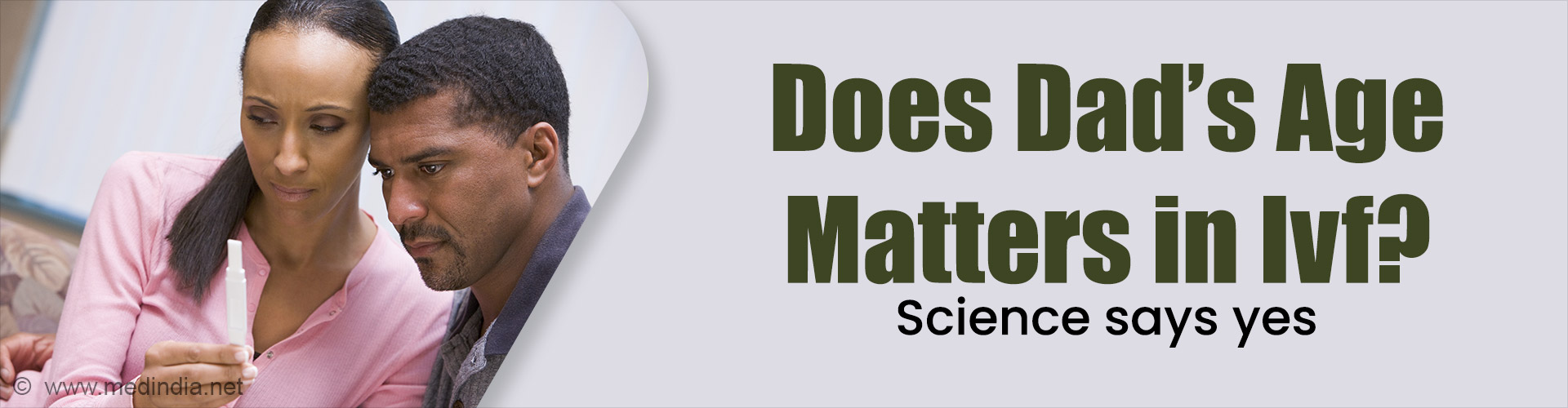
New IVF study shows men over 45 face a 46% higher miscarriage riskand lower live birth rates, even when young donor eggs are used.
Highlights:
When it comes to fertility, most people focus on a woman’s age. However, a new international study suggests that the father’s age matters too, even when young donor eggs are used (1✔ ✔Trusted Source- Men over 45 linked to higher miscarriage and lower live birth rates
- Study used young donor eggs, isolating male age as a key factor
- Experts urge fertility counseling to include paternal age risks
ESHRE 2025: Impact of Advanced Paternal Age on Donor Egg IVF Success
Go to source). Researchers presented data at the 41st Annual Meeting of the European Society of Human Reproduction and Embryology (ESHRE) showing that men over 45 have higher miscarriage rates and lower live birth rates during IVF cycles, even with young, healthy donor eggs.
The study analyzed 1,712 first egg donation cycles between 2019 and 2023 across six IVF centers in Italy and Spain. The donor eggs were from women with an average age of 26, while female recipients were an average of 43 years old. The researchers divided male partners into two groups: those 45 years or younger and those over 45.
Key outcomes revealed that men over 45 had a miscarriage rate of 23.8%, compared to 16.3% among younger men. The live birth rate was also lower, at 35.1% for older fathers versus 41% for those aged 45 or younger.

In Vitro Fertilization (IVF) - Introduction To Infertility And Reproduction
Encyclopedia section of medindia gives a brief introduction to infertility and reproduction
Encyclopedia section of medindia gives a brief introduction to infertility and reproduction
TOP INSIGHT

Did You Know?
It's not just the woman's age that matters - men over 45 may be quietly tipping the odds against a successful pregnancy. #ivf #paternalage #fertilityawareness #malefertility #medindia
Why Paternal Age Matters
“Traditionally, maternal age has been the central focus in reproductive medicine, but our results show that the age of the male partner also plays a crucial and independent role,” said Dr. Maria Cristina Guglielmo, an embryologist at Eugin Italy and lead researcher of the study.She explained that as men age, the repeated division of sperm stem cells increases the risk of DNA errors and mutations. This can lead to sperm carrying abnormal chromosomes, higher DNA fragmentation, and changes in the sperm’s epigenetic profile, all of which may harm embryo development and raise miscarriage risk.
“These factors affect both the genetic integrity and functional quality of sperm,” Dr. Guglielmo noted. “Even when we use young, healthy donor eggs and a single high-quality embryo, we see poorer outcomes in men over 45.”

Quiz on Miscarriage
Take this miscarriage quiz and test your knowledge about miscarriage, its types and pregnancy after ...
Take this miscarriage quiz and test your knowledge about miscarriage, its types and pregnancy after ...
Why Fertility Clinics Need to Talk About Dad’s Age
The findings highlight the need for fertility clinics to inform male patients about the influence of advancing paternal age. “Clinics should ensure that male patients are fully informed about how their age can impact fertility potential, pregnancy success, and miscarriage risk,” Dr. Guglielmo advised.Professor Dr. Carlos Calhaz-Jorge, immediate past chair of ESHRE, described the paper as “important” and suggested it could reshape how doctors counsel couples. “Although it might be interesting to further subdivide the ‘older paternal age’ group, the results presented should be seriously considered,” he said.

Quiz on Pregnancy
There is a general belief that a pregnant woman should eat for two people. How far is this true? This compilation of information, presented in the quiz, will tell you ...
There is a general belief that a pregnant woman should eat for two people. How far is this true? This compilation of information, presented in the quiz, will tell you ...
Future Focus: Understanding Genetic Risks Linked to Older Sperm
Dr. Guglielmo and her team plan to investigate more deeply how paternal age affects the long-term health of children born through donor egg cycles, including links to neurodevelopmental disorders.“Our future work will look closely at how sperm DNA damage, oxidative stress, and epigenetic changes may impact not only pregnancy outcomes but also children’s health,” she said.
While maternal age has long been the primary focus of fertility conversations, this research serves as a timely reminder: the father’s age counts, too.
Reference:
- ESHRE 2025: Impact of Advanced Paternal Age on Donor Egg IVF Success - (https://www.emjreviews.com/reproductive-health/news/impact-of-advanced-paternal-age-on-donor-egg-ivf-success/)
Source-Medindia

IVF Calculator to Predict Chances of Pregnancy
The calculator can estimate a couples chance of having a baby before and after first IVF treatment, and over multiple cycles.
The calculator can estimate a couples chance of having a baby before and after first IVF treatment, and over multiple cycles.
 Email
Email