MEDINDIA
 English
 हिन्दी
 Español
 français
 中文
中文

A simple, non-invasive sound-based treatment has been shown to alleviate motion sickness symptoms in both animals and humans. Just one minute of exposure can offer fast relief.
Highlights:
Motion sickness is a common problem, often triggered by travel in cars, boats, or flights. It causes a mix of nausea, dizziness, fatigue, and cold sweats, and current remedies are either ineffective or come with side effects. But researchers in a new study have discovered a surprising non-invasive tool that could offer fast relief: sound (1✔ ✔Trusted Source- 1-minute exposure to 100 Hz pure tone significantly reduced motion sickness symptoms
- Studies show both mice and humans experienced improved balance and reduced nausea
- The approach targets the vestibular system, a key player in motion-related discomfort
Just 1-min exposure to a pure tone at 100 Hz with daily exposable sound pressure levels may improve motion sickness
Go to source).

Motion Sickness | Travel Sickness - Causes, Symptoms, Prevention & Treatment
Motions sickness occurs due to the physiological imbalance between the eyes and inner ear when you travel. It triggers unpleasant feeling of nausea, vomiting, dizziness.
Motions sickness occurs due to the physiological imbalance between the eyes and inner ear when you travel. It triggers unpleasant feeling of nausea, vomiting, dizziness.
TOP INSIGHT

Did You Know?
Sound can help combat motion sickness #motionsicknessrelief #soundtherapy #medindia
A Sound-Based Breakthrough for a Common Problem
In a novel approach, researchers have discovered that exposure to a specific pure tone—100 Hz at 80–85 decibels—for just one minute significantly reduced motion sickness symptoms in both animals and humans. This innovative approach targets the vestibular system, the balance center of the inner ear, which is known to play a major role in motion-related nausea and discomfort.
Top 10 Tips to Prevent Motion Sickness
Do you often feel sick while traveling? It may be due to motion sickness. Here we give you the top 10 tips to prevent motion sickness easily.
Do you often feel sick while traveling? It may be due to motion sickness. Here we give you the top 10 tips to prevent motion sickness easily.
How the Study Was Conducted
The study was led by a Japanese research team and combined animal testing with human trials to assess the tone’s effectiveness.In Mice:
- A short 5-minute exposure to a 100 Hz pure tone improved balance in mice subjected to motion stress.
- The effect lasted for up to two hours after the sound exposure.
In Humans:
- Volunteers were exposed to motion stimuli using a swing, driving simulator, and a real vehicle.
- The team measured physical responses using posturography (to assess balance) and
electrocardiography (ECG) to track heart rate variability (HRV)—a marker of autonomic nervous system function. - Participants also self-reported symptoms using the Motion Sickness Assessment Questionnaire (MSAQ).

Motion Sickness in Virtual Reality Games: Know Why Some People Experience It
New study highlighting the aftereffects of virtual reality for sensory perception, suggests a link between the susceptibility to cyber sickness and sensory reweighting.
New study highlighting the aftereffects of virtual reality for sensory perception, suggests a link between the susceptibility to cyber sickness and sensory reweighting.
The Results: Less Nausea, Better Balance
After listening to the tone:- Postural stability improved, as seen in reduced envelope areas during posturography.
- Autonomic symptoms, such as dizziness and nausea, lessened, based on improved HRV.
- Self-reported symptoms showed noticeable reduction in motion sickness severity.
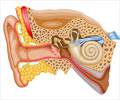
Airplane Ear | Ear Barotrauma – Causes, Symptoms, Diagnosis, Treatment and Prevention
Airplane ear, also called barotrauma, is caused during takeoff and landing of a flight due to pressure changes in the ear. Yawning and swallowing help ease it.
Airplane ear, also called barotrauma, is caused during takeoff and landing of a flight due to pressure changes in the ear. Yawning and swallowing help ease it.
Why It Works: Resetting the Inner Compass
The pure tone was selected based on prior ex vivo testing of the inner ear (utricle) in mice. Researchers found that a sound at 100 Hz stimulated vestibular function, essentially priming the system to withstand motion stress better. By engaging the body’s balance center and calming its response to confusing motion signals, the tone appears to prevent the cascade of nausea, dizziness, and imbalance that define motion sickness.Future Implications
This discovery opens exciting possibilities for non-invasive, portable motion sickness prevention. A simple sound clip or app-based tone could eventually serve as a travel companion for millions affected by motion sickness. Unlike medications, it doesn’t cause drowsiness or other side effects.This study opens the door to rethinking how we manage motion sickness—not with pills or patches, but with something as simple and accessible as sound. If further research confirms these findings, it could revolutionize how we support the body’s natural balance system in real-world scenarios. It’s a reminder that sometimes, the most effective solutions don’t come from adding chemicals, but from tuning in to the body’s own rhythms.
Don’t let motion sickness control your journey—stay tuned to science, and be ready to embrace a future where relief might be just a sound away.
Reference:
- Just 1-min exposure to a pure tone at 100 Hz with daily exposable sound pressure levels may improve motion sickness - (https://pmc.ncbi.nlm.nih.gov/articles/PMC11955832/)
Source-Medindia
 Email
Email