MEDINDIA
 English
 हिन्दी
 Español
 français
 中文
中文

Learn to understand the five distinct baby cries that indicate hunger, sleep, discomfort, gas, and the need to burp. Respond better and build deeper parent-child bonds.
Highlights:
For every new parent, a crying baby can spark anxiety, confusion, and a frantic game of guesswork. Is it hunger? Discomfort? Sleepiness? The inability to understand what your baby needs can leave even the most prepared parents feeling helpless. But recent research and expert guidance are helping parents crack the “cry code” (1✔ ✔Trusted Source- 5 universal baby cries signal needs like hunger, sleep, and gas
- Sound-based cues help parents respond with confidence
- Learning cry patterns may reduce stress in new mothers
Can You Understand Why I Am Crying? A Decision-making System for Classifying Infants' Cry Languages Based on DeepSVM Model
Go to source).

Baby’s Cry Has an Impact on Parent’s Cognitive Functions
The baby's cry reduced attention to the task and triggered greater cognitive conflict processing than infant laughs.
The baby's cry reduced attention to the task and triggered greater cognitive conflict processing than infant laughs.
TOP INSIGHT

Did You Know?
Babies speak a universal sound language that parents worldwide can learn to decode. #newparenttips #babycare #medindia
A Universally Recognized Baby Language
In a fascinating study presented at the International Conference on Speech Technology and Human-Computer Dialogue, researchers trained an AI model on baby cries recorded in Australia and tested it using recordings of Romanian infants. The result? The AI successfully identified baby cries across cultures—supporting the theory that baby sounds are universal.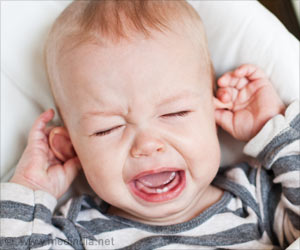
Monitor Your Cry Babies With This Parent-Friendly App
To ease the tough job of parenting, a new app has been developed for helping parents to differentiate their babies� cry in seconds.
To ease the tough job of parenting, a new app has been developed for helping parents to differentiate their babies� cry in seconds.
The 5 Baby Cries Every Parent Should Know
1. Neh – “I’m Hungry”
The most common cry is the hunger cry. It begins with a soft, rhythmic “neh” sound. This noise comes from the baby’s natural sucking reflex, as the tongue rises to the roof of the mouth. If not responded to quickly, the sound intensifies. Once you hear “neh,” it’s time to prepare for feeding.
2. Owh – “I’m Sleepy”
When your baby is tired, the cry often mimics a yawn—sounding like “owh” or “oah.” Accompanied by rubbing eyes or yawning, this cry usually escalates into fussiness if ignored. Recognizing this cue early allows you to create a calm, soothing sleep environment.
3. Heh – “I’m Uncomfortable”
Is the diaper wet? Is the room too cold or hot? The “heh” sound is your baby’s way of saying something feels off. This cry is often high-pitched and repetitive, indicating physical discomfort that needs quick attention.
4. Eairh – “I Have Gas”
Digestive discomfort—often due to colic or trapped gas—is one of the most distressing reasons for crying. The “eairh” sound typically accompanies squirming or the baby pulling their legs toward the belly. This cry tends to be guttural, longer, and more desperate. It’s painful, and timely intervention through massage or prescribed drops can offer relief.
5. Eh – “I Need to Burp”
The “eh” sound is a short, sharp cry that signals the need to release trapped air after a feed. Though less intense, it’s frequent and important—especially if ignored, as it can lead to discomfort or colic.

Babies can be Calmed by Rocking and Cradling as It Slows Down Heart Rate
Cradling and rocking seems to calm a crying baby, according to a recent study.
Cradling and rocking seems to calm a crying baby, according to a recent study.
Parenting Becomes Easier with Practice
Opera singer and mother Priscilla Dunstan first observed this pattern of cries and developed what is now called the “Dunstan Baby Language.” She believed—and later showed through international research—that these cries form a predictable pattern linked to specific needs, applicable to babies worldwide. Who is Good at Recognizing Baby’s Cry – Father or Mother ?
Who is better at recognizing baby’s cry – mom or dad? French researchers found that both mum and dad are equally good at recognizing it.
Who is better at recognizing baby’s cry – mom or dad? French researchers found that both mum and dad are equally good at recognizing it.
How Parents Benefit From Recognizing Cry Patterns
A 2016 study investigating parental stress found that mothers trained in baby language showed a gradual reduction in stress levels over three weeks, compared to a control group. While the difference was not statistically significant, the consistent downward trend in the trained group highlighted how simple understanding can make parenting feel less overwhelming.The study targeted first-time mothers with babies up to 2 months old. Even though the findings were modest, the real-world implications are encouraging—mothers felt more confident, calmer, and more in tune with their newborns.
It’s Not Just About the Cry
Experts remind parents that while recognizing these cries is helpful, they should also observe body language and facial expressions. A baby arching their back, turning red, or pulling at their ears may be giving you more clues than just the sound.Think of baby cries as part of a broader “communication toolkit.” Listening carefully, observing closely, and staying calm are your biggest assets (2✔ ✔Trusted Source
The efficacy of Dunstan baby language in decreasing the parenting stress levels of housewives with 0-2 month old infants: a quasi-experimental study
Go to source).
The Heart of It All: Building Bonds Through Understanding
Understanding baby cries isn’t just about solving a temporary problem—it’s about establishing trust. When your baby realizes you respond to their needs quickly and correctly, they feel safe. Over time, this builds a deep emotional connection, forming the foundation of a strong parent-child bond.Moreover, parents feel more empowered and less reactive. This calm presence sets a tone in the home where both baby and parent thrive. And while every baby is unique, learning to decode these universal cries offers a gentle starting point for that journey.
Parenting doesn’t come with an instruction manual, but baby cries might just be the closest thing. They’re not random sounds—they’re meaningful signals. And learning to understand them doesn’t just ease the baby’s discomfort—it reshapes your entire parenting experience into one that’s calmer, more connected, and far less confusing.
Your baby is already talking to you. All you have to do is listen—and turn every cry into a moment of care.
References:
- Can You Understand Why I Am Crying? A Decision-making System for Classifying Infants’ Cry Languages Based on DeepSVM Model - (https://www.researchgate.net/publication/367372561_Can_you_Understand_why_I_am_Crying_A_Decision-making_System_for_Classifying_Infants'_Cry_Languages_Based_on_deepSVM_Model)
- The efficacy of Dunstan baby language in decreasing the parenting stress levels of housewives with 0-2 month old infants: a quasi-experimental study - (https://www.herdin.ph/index.php?view=research&cid=61647)
Source-Medindia
 Email
Email