MEDINDIA
 English
 हिन्दी
 Español
 français
 中文
中文

India launches its first fully indigenous antibiotic, Nafithromycin, to combat drug-resistant respiratory infections, offering new hope for cancer and diabetic patients.
Highlights:
Antibiotic resistance has become a growing global health crisis, and in India, it is especially severe in respiratory infections such as community-acquired bacterial pneumonia (CABP) (1✔ ✔Trusted Source- India launches its first indigenously discovered antibiotic, Nafithromycin
- Effective against drug-resistant respiratory infections in vulnerable patients
- Offers a short 3-day regimen, broad spectrum of action, and excellent safety profile
Nafithromycin: Pioneering India's Indigenous Antibiotic Revolution
Go to source). India contributes nearly 23% of the global burden of pneumonia, making new treatment options crucial. Community-Acquired Bacterial Pneumonia (CABP) is a lung infection contracted outside of healthcare settings, typically caused by bacteria like Streptococcus pneumoniae. It leads to inflammation in the air sacs of the lungs, causing symptoms such as fever, cough, chest pain, and difficulty breathing. Prompt antibiotic treatment is essential for recovery and to prevent complications.
Older antibiotics like azithromycin and fluoroquinolones are increasingly ineffective against resistant bacteria, leaving immunocompromised patients — including those with cancer and poorly controlled diabetes — at high risk of treatment failure.
Against this backdrop, the launch of Nafithromycin marks a historic milestone for Indian healthcare and scientific self-reliance. Developed entirely within India, it is the first antibiotic molecule to be conceptualized, discovered, and clinically validated in the country.

Indigenous Technology Developed for Paracetamol Production
Indigenous technology developed for efficient paracetamol production, boosting local manufacturing capabilities and reducing dependency on imports.
Indigenous technology developed for efficient paracetamol production, boosting local manufacturing capabilities and reducing dependency on imports.
TOP INSIGHT

Did You Know?
When drug resistance leaves few options, #Nafithromycin - India’s first indigenous #antibiotic — may offer a lifeline to patients with diabetes or cancer. #amr #nafithromycin #infectiousdiseases #healthinnovation #medindia
What Makes Nafithromycin Unique
Developed by Wockhardt Ltd. in collaboration with the Department of Biotechnology and BIRAC, Nafithromycin (WCK-4873) is a next-generation ketolide antibiotic designed to fight drug-resistant respiratory infections.Key features include:
- A simple 3-day once-daily oral regimen that improves patient compliance.
- Up to 10 times higher potency than azithromycin and 8 times greater lung tissue concentration, ensuring targeted action against respiratory pathogens.
- Broad-spectrum efficacy against both typical and atypical bacteria, including Streptococcus pneumoniae, Mycoplasma pneumoniae, and Chlamydia pneumoniae.
- A favorable safety profile with minimal gastrointestinal effects, negligible drug interactions, and no impact from food consumption.
Drug Resistance – Antibiotic or Antimicrobial Resistance
Drug resistance is often a problem in malaria, tuberculosis, HIV, sexually transmitted diseases and hospital acquired diseases. Judicious use of antibiotics can control the problem.
Drug resistance is often a problem in malaria, tuberculosis, HIV, sexually transmitted diseases and hospital acquired diseases. Judicious use of antibiotics can control the problem.
A Lifeline for Cancer and Diabetic Patients
Cancer patients undergoing chemotherapy and individuals with poorly controlled diabetes are at greater risk of drug-resistant respiratory infections. For them, Nafithromycin represents a breakthrough — a shorter, safer, and more effective antibiotic with fewer interactions. Dr. Jitendra Singh, Union Minister of State for Science & Technology, highlighted that the antibiotic’s benefits extend particularly to these vulnerable groups. He emphasized that this innovation underscores India’s growing capability to produce high-quality pharmaceuticals without dependency on imports (2✔ ✔Trusted SourceActivity of novel lactone ketolide nafithromycin against multicentric invasive and non-invasive pneumococcal isolates collected in India
Go to source).
Antibiotic Resistance - An Emerging Global Crisis
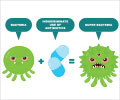
Antibiotic resistance refers to the adaption of bacteria that allows them to grow even in the presence of antibiotics. The infection by the resistant bacteria are difficult to treat.
Antibiotic resistance refers to the adaption of bacteria that allows them to grow even in the presence of antibiotics. The infection by the resistant bacteria are difficult to treat.
India’s Push for Innovation-Driven Healthcare
Dr. Singh described Nafithromycin as a symbol of India’s innovation-driven healthcare journey. He stressed that the nation must develop a self-sustainable research ecosystem involving public-private partnerships and philanthropic support to achieve global scientific recognition.Ongoing studies are exploring Nafithromycin’s potential in treating skin and soft tissue infections and even its role in lung cancer therapy due to interactions with cancer-related proteins.
The government’s focus on indigenous discovery aims to reduce antibiotic imports, strengthen antimicrobial stewardship, and ensure affordable access across healthcare systems such as Ayushman Bharat.

Global Antibiotic Resistance Report 2025: Superbugs Resistance Reaches Critical Levels
WHO’s 2025 report shows alarming global rise in antibiotic resistance, threatening to make common infections deadly and treatments ineffective.
WHO’s 2025 report shows alarming global rise in antibiotic resistance, threatening to make common infections deadly and treatments ineffective.
The Road Ahead
As India celebrates this scientific milestone, the focus now shifts to responsible use, wide distribution, and continued research to monitor efficacy and resistance trends.Nafithromycin may soon become a cornerstone in India’s fight against antimicrobial resistance and a symbol of its growing global presence in biotech innovation.
References:
- Nafithromycin: Pioneering India's Indigenous Antibiotic Revolution - (https://journal.jkscience.org/index.php/JK-Science/article/view/327)
- Activity of novel lactone ketolide nafithromycin against multicentric invasive and non-invasive pneumococcal isolates collected in India - (https://pmc.ncbi.nlm.nih.gov/articles/PMC8210042/)
Source-Medindia
 Email
Email