MEDINDIA
 English
 हिन्दी
 Español
 français
 中文
中文
A flurry of unwelcome guests can come to our house - flies, mosquitoes, fleas, wasps, bedbugs and lice during warmer temperatures.


Pesticides and Pharmaceuticals Understudied Drivers of Environmental Change
The amount and diversity of chemicals that humans are releasing into the environment are increasing at rates that match or exceed recent increases in CO2 emissions.
The amount and diversity of chemicals that humans are releasing into the environment are increasing at rates that match or exceed recent increases in CO2 emissions.
TOP INSIGHT

Pesticides used in the controlled experiment broke down more quickly than those in the test house, with 70% of cypermethrin,a pyrethroid pesticide found in up to 90% of homes,was still found in dust samples around the house after one year.
Lia Nakagawa, lead author and a researcher at the Biological Institute in São Paulo, Brazil, and her colleagues pointed out a few distinct differences from earlier studies on these substances: When used outdoors, microorganisms, rain or sprinklers, and sunlight act to break down the pesticide's chemical compounds fairly quickly. Second, the chemicals in pyrethroid pesticides adhere to cloth, tiled floors and wood differently than they would to outdoor surfaces.
The authors conclude that the persistence of pesticides inside buildings, on surfaces and in the dust in houses can be viewed in a couple of different ways. On the one hand, when using pesticide products in the home, fewer applications should still maintain a long-term control of pests. On the other hand, extended persistence increases the likelihood that residents will be exposed to the pesticide, which can be especially worrying for young children and household pets, who spend more time on the floor and are frequently picking up things and putting them in their mouths. The findings highlight the importance of further studies to evaluate the actual risks of human exposure to pyrethroids when present in dust and on miscellaneous surfaces.
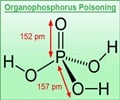
Organophosphorus Poisoning
Organosphosphorus compounds are used as insecticides and chemical warfare. They are easily accessible, thus they are a commonly associated with suicides and accidental poisoning.
Organosphosphorus compounds are used as insecticides and chemical warfare. They are easily accessible, thus they are a commonly associated with suicides and accidental poisoning.
Source-Eurekalert

Pesticides can Kill Amphibian Parasites
The traditional methods of toxicology that rely on dose-dependent responses may not be enough to help us predict what pesticides are doing to parasites.
The traditional methods of toxicology that rely on dose-dependent responses may not be enough to help us predict what pesticides are doing to parasites.

Pesticides Used to Fight Zika Virus Could be Harmful
Miami residents are fretting over the mist of a pesticide called naled that is drifting down over north Miami every now and then.
Miami residents are fretting over the mist of a pesticide called naled that is drifting down over north Miami every now and then.
 Email
Email