MEDINDIA
 English
 हिन्दी
 Español
 français
 中文
中文

A simple urine test could transform prostate cancer detection with higher accuracy than current screening tools.
Highlights:
Prostate cancer remains one of the most common cancers among men, yet diagnosing it accurately has long been a challenge. The widely used PSA blood test often leads to confusion, as it can flag benign conditions as cancer while missing true cases in men with normal PSA levels. This uncertainty leaves many patients anxious and forces others into unnecessary biopsies. Now, scientists say a simple urine test may change the game, offering far greater precision and a much-needed boost in confidence for men and their doctors (1✔ ✔Trusted Source- New urine biomarker test shows over 90% accuracy in detecting prostate cancer
- Test works even when PSA levels appear normal
- Biomarker levels drop after surgery, confirming prostate origin
A sensitive and specific non-invasive urine biomarker panel for prostate cancer detection
Go to source).

Simple Urine Test can Detect Prostate Cancer Better Than PSA
An experimental, non-invasive biomarker test has shown promise to accurately detect prostate cancer, more than any other screening method currently in use, say researchers.
An experimental, non-invasive biomarker test has shown promise to accurately detect prostate cancer, more than any other screening method currently in use, say researchers.
TOP INSIGHT

Did You Know?
Prostate cancer can be detected with over 90% accuracy using a urine test #prostatehealth #cancerawareness #medindia
Prostate Cancer Statistics from New Urine Biomarker Study
In the new study published in eBioMedicine, scientists tested a urine-based panel of three RNA biomarkers. The results were striking: the test showed a diagnostic accuracy (AUC) of 0.96 in the development group and 0.92 in the validation group, compared to 0.83 and 0.76 for the existing PCA3 urine test. It achieved 94 percent sensitivity and 86 percent specificity in early testing, and 91 percent sensitivity and 84 percent specificity in validation. Importantly, the panel was able to detect cancers even in men with normal PSA levels below four ng/ml. After prostate removal surgery, the biomarker levels dropped to nearly zero, confirming their direct link to the prostate.
New Way to Predict Risk in Prostate Cancer Patients Discovered
A new pilot study reveals how urine biomarkers can show the amount of significant cancer in a prostate, highlighting with more certainty which men need treatment.
A new pilot study reveals how urine biomarkers can show the amount of significant cancer in a prostate, highlighting with more certainty which men need treatment.
Limitations of PSA Test for Prostate Cancer Screening
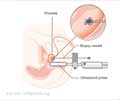
For decades, the PSA blood test has been the frontline tool for prostate cancer detection. While it has saved lives, it is far from perfect. High PSA levels can appear in men with noncancerous conditions such as benign prostatic hyperplasia (BPH) or prostatitis, leading to unnecessary biopsies and stress. On the other hand, many men with prostate cancer may have normal PSA levels, meaning the disease can go unnoticed until it advances. This gap in accurate detection has created an urgent demand for better, more reliable testing methods.![Prostate Specific Antigen [PSA] & Prostate Cancer Diagnosis](https://images.medindia.net/patientinfo/120_100/prostate-specific-antigen.jpg "Prostate Specific Antigen [PSA] & Prostate Cancer Diagnosis")
Prostate Specific Antigen [PSA] & Prostate Cancer Diagnosis
PSA blood test is specific to prostate gland but not necessarily a cancer specific test but is commonly used to diagnose prostate cancer.
PSA blood test is specific to prostate gland but not necessarily a cancer specific test but is commonly used to diagnose prostate cancer.
Urine Biomarker Test as a Non-Invasive Prostate Cancer Tool
The new urine test uses tiny fragments of RNA, the genetic material that carries instructions from DNA. When prostate cells are shed into urine, these fragments can be collected and analyzed. By focusing on three specific biomarkers, TTC3, H4C5, and EPCAM, researchers created a panel that could consistently separate cancerous cases from benign conditions. Unlike PSA, which reflects a general signal, these biomarkers appear to be closely tied to the biology of prostate tumors.Early Prostate Cancer Detection with Urine Biomarkers
One of the most critical aspects of this test is its ability to flag cancers in men whose PSA levels remain within the “normal” range. For patients, this means fewer missed cases and greater chances of catching the disease early, when treatment is most effective. It also reduces the likelihood of undergoing invasive biopsies for conditions that turn out to be harmless.
Reliable Results Confirmed After Prostate Surgery
The study also followed men who had undergone prostate removal surgery. In these patients, the biomarker levels dropped significantly, confirming that the signals came from the prostate and not from other sources in the body. This adds a strong layer of confidence to the test’s reliability.

Simple Home Urine Test Kit for Prostate Cancer Could ‘revolutionise Care’
Noninvasive home urine test could revolutionise prostate cancer diagnosis for thousands of men and put an end for invasive rectal exams, reveals a new study.
Noninvasive home urine test could revolutionise prostate cancer diagnosis for thousands of men and put an end for invasive rectal exams, reveals a new study.
Future of Non-Invasive Testing for Prostate Cancer
While more work is needed before this test becomes part of routine clinical practice, the evidence is encouraging. It highlights a broader trend in cancer care, where non-invasive diagnostics are becoming increasingly central. Similar to how liquid biopsies are reshaping cancer monitoring through blood samples, urine-based testing could open a new chapter for prostate health.Prostate Cancer Screening Advances
This research represents more than just a technological breakthrough. It offers men a path toward earlier, safer, and more precise detection of one of the most common cancers. By combining accuracy with simplicity, it has the potential to ease the fear and uncertainty that often surround prostate cancer screening. It is a reminder that innovation in medical science can not only save lives but also improve the quality of life.Prostate cancer may be silent, but your action does not have to be. Seek timely screening for yourself and for those you love.
Reference:
- A sensitive and specific non-invasive urine biomarker panel for prostate cancer detection - (https://www.thelancet.com/journals/ebiom/article/PIIS2352-3964(25)00339-1/fulltext)
Source-Medindia
 Email
Email