MEDINDIA
 English
 हिन्दी
 Español
 français
 中文
中文
Bioengineers at the University of California San Diego are a step closer to making CAR T-cell therapy safer, more precise and easy to control.
TOP INSIGHT

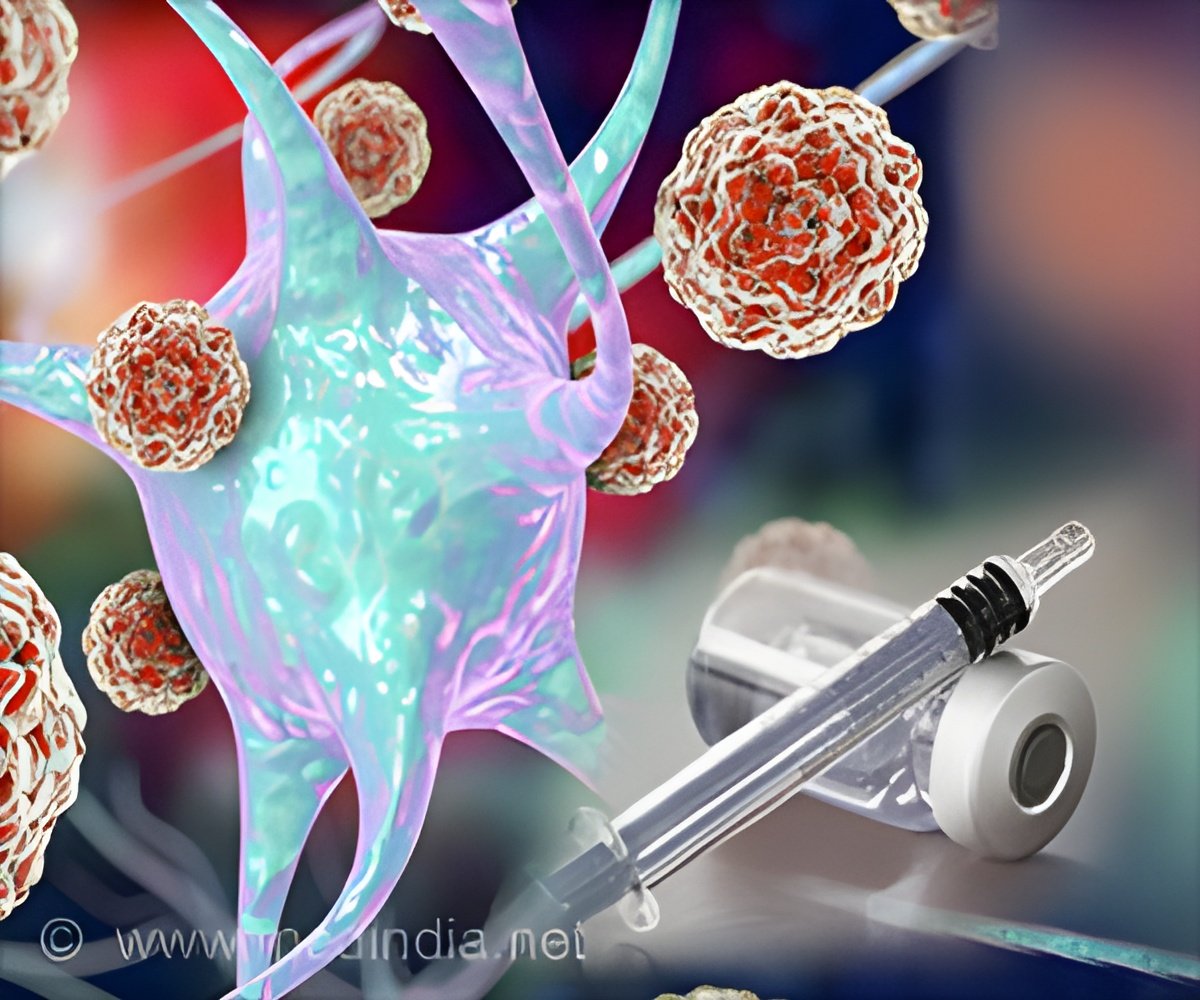
CAR T cells could be engineered using tamoxifen and blue light, so as to get activated at a specific location. This combo could reduce the incidence of side effects caused by CAR T-cell therapy.
Read More..
Chimeric antigen receptor (CAR) T-cell therapy is a promising new approach to treat cancer. It involves collecting a patient's T cells and genetically engineering them to express special receptors on their surface that can recognize an antigen on targeted cancer cells. The engineered T cells are then infused back into the patient to find and attack cells that have the targeted antigen on their surface.
This approach has worked well for some types of blood cancer and lymphoma. But a major problem, Wang explains, is that it can work too well. Many targeted cancer antigens are also expressed on healthy cells, which can lead to attack of essential organs such as the heart, lungs or liver. This risk is known as "on-target, off-tumor toxicity" and can be life-threatening to patients receiving CAR T-cell therapy.
"Traditional CAR T cells are always on, meaning they continuously express an antigen-targeting receptor. Our approach was to engineer T cells that can be selectively turned on to express the receptor at a specific location and time frame," Wang said.
Wang and colleagues engineered T cells that are only activated following a sequence of two inputs: treatment with the small molecule drug Tamoxifen, followed by exposure to short pulses of low intensity blue light.
Initially, the CAR T cells are in standby mode. In order to turn on, two particular proteins (one outside the nucleus and one inside) need to bind together in order to trigger expression of the antigen-targeting receptor.
CAR T-Cell Therapy - Novel Form of Immunotherapy
CAR T-cell therapy is a type of gene therapy where the patient’s T-lymphocytes are genetically altered to target cancer cells within the patient’s body.
CAR T-cell therapy is a type of gene therapy where the patient’s T-lymphocytes are genetically altered to target cancer cells within the patient’s body.
The light cannot penetrate deeply in the body, so Wang envisions that this approach could be useful for treating cancers on the skin, head and neck. He is now looking to collaborate with clinicians to do in vivo testing to treat melanoma.
Source-Eurekalert
 Email
Email