MEDINDIA
 English
 हिन्दी
 Español
 français
 中文
中文
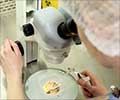
Embryo chromosome testing in IVF treatment resulted in 72% effective embryo transfers, compared with 52% in the standard group.

Preimplantation Genetic Testing for Aneuploidy Versus Morphological Selection in Women Aged 35-42: Results of a Pilot Randomized Controlled Trial
Go to source). The study found, women over 35 have a higher chance of producing embryos with chromosomal abnormalities, which can be detected using Preimplantation Genetic Testing for Aneuploidy (PGT-A) prior to embryo transfer. This was the first randomized controlled trial worldwide focusing on women aged 35–42, published in the Journal of Clinical Medicine.

In Vitro Fertilization (IVF) - Introduction To Infertility And Reproduction
Encyclopedia section of medindia gives a brief introduction to infertility and reproduction
Encyclopedia section of medindia gives a brief introduction to infertility and reproduction
TOP INSIGHT

Did You Know?
More #women who aged 35 and older are starting families. Yet #chromosomal_abnormalities raise the potential for #miscarriage or failed implantation. #genetictesting #ivf #womenshealth #fertility #medindia
The study also offered a new understanding on 'mosaic embryos,' which are embryos that contain both normal and abnormal cells.
Embryos’ Genetic Testing Can Increase Live Birth Rates in IVF
The pilot study of 100 women undergoing fertility treatment at King’s Fertility was aimed to fill the evidence gap by focusing on older patients, and assessing the feasibility of conducting a multi-centre randomised controlled trial that explores the test’s impact on pregnancy and live birth rates in women aged 35-42. Both the clinical treatment and embryology procedures for the study were carried out at King’s Fertility.The unblinded trial was conducted from June 2021 to June 2023. There were 50 patients in the PGT-A group and 50 patients in the control group.
The study showed that the PGT-A test showed a higher cumulative live birth rate after up to three embryo transfers with 72% in the PGT-A group versus 52% in the control group.

Quiz on Invitro Fertilization
In vitro fertilization (IVF) is a widely used assisted reproductive technology (ART) developed to help individuals and couples conceive a child. IVF is the most common form of ART. The process involves taking eggs from a woman's ovaries ...
In vitro fertilization (IVF) is a widely used assisted reproductive technology (ART) developed to help individuals and couples conceive a child. IVF is the most common form of ART. The process involves taking eggs from a woman's ovaries ...
Whilst this is a pilot study and the difference did not reach statistical significance due to the small sample size, the trend suggests a potential benefit that warrants investigation in a larger, multi-centre trial.

Pregnancy Confirmation Calculator
Are you pregnant? Use Medindia’s simple and useful calculator to find out whether you are pregnant or not.
Are you pregnant? Use Medindia’s simple and useful calculator to find out whether you are pregnant or not.
Genetic Testing Can Curtail Physical and Emotional Burden in IVF
Dr. Yusuf Beebeejaun, first author of the paper at King’s College London and King’s Fertility, said: “The number of women starting their family above the age of 35 is increasing and women in this age group are more likely to create embryos with the wrong number of chromosomes. This increases the risk of unsuccessful implantation and miscarriages. Our findings suggest that targeted use of PGT-A in this age group could help more women have a baby sooner, while also reducing the emotional toll of repeated unsuccessful cycles.”Lead author Dr. Sesh Sunkara from King’s College London and King’s Fertility added: “By focusing exclusively on women aged 35–42 and including mosaic embryos, we have addressed questions that previous studies have not adequately explored. While larger multi-centre trials are needed to confirm these findings, improving treatment efficiency with a shorter time to achieving pregnancy and live birth could reduce the physical and emotional burden of IVF for women of advanced reproductive age.”
Dr. Ippokratis Sarris, Director of King’s Fertility and co-author of the study, said: “This research is a testament to the dedication and expertise of the team at King’s Fertility. Not only were all patients recruited and treated here, but the embryology work was also carried out by our laboratory staff. We are proud to have led this pioneering trial, which addresses one of the most important questions in IVF treatment for women over 35, and we look forward to building on these findings in larger, multi-centre studies.”
Reference:
- Preimplantation Genetic Testing for Aneuploidy Versus Morphological Selection in Women Aged 35-42: Results of a Pilot Randomized Controlled Trial - (https://pmc.ncbi.nlm.nih.gov/articles/PMC12295310/)
Source-Eurekalert
 Email
Email