MEDINDIA
 English
 हिन्दी
 Español
 français
 中文
中文
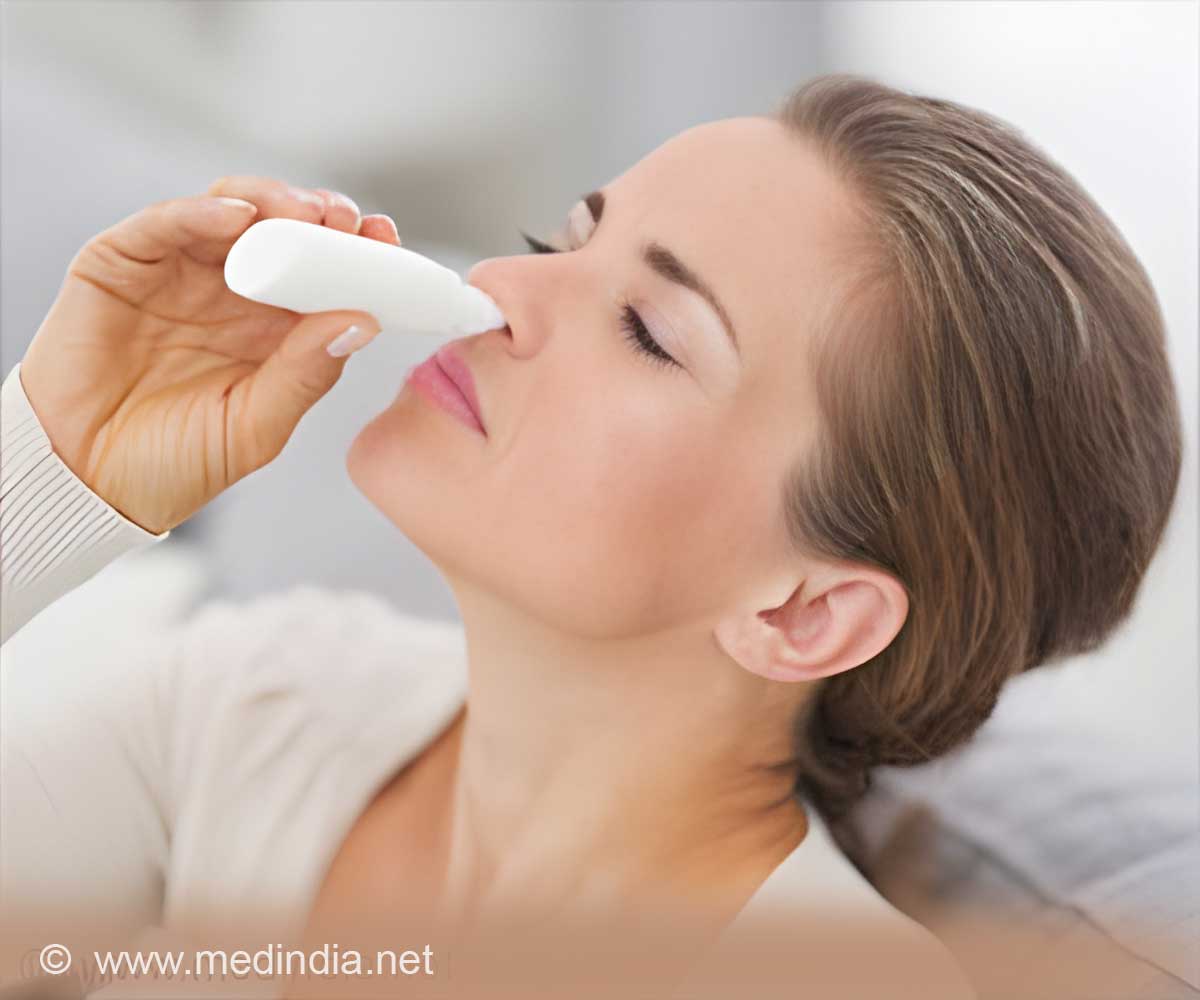
An intranasal vaccine-boosting plan is critical to protecting people against emerging variants of concern.
First Case of BA.4 and BA.5 COVID Variants Confirmed in India
In India, the first case of BA.4 and BA.5 variants of COVID-19 has been confirmed by the Indian SARS-CoV-2 Genomics Consortium (INSACOG).
In India, the first case of BA.4 and BA.5 variants of COVID-19 has been confirmed by the Indian SARS-CoV-2 Genomics Consortium (INSACOG).
TOP INSIGHT

An adenovirus-based nasal vaccine has also yet to be approved for humans, mainly out of a fear of unwanted side effects. One of them could be Bell’s palsy, a condition that causes muscle weakness in the face.
Bloodstreams get strongly ramped up by the vaccine, while the mucosal linings experience moderate or little neutralizing antibody response, the study found.
“The Omicron variant almost completely escaped neutralization by mucosal antibodies in individuals who received mRNA vaccines and in previously infected individuals,” said Sun. “Our data showed that mRNA vaccination also did not induce sufficient tissue-residing cellular immunity in the airways, another arm of our immune system to prevent the entry of the virus into our bodies.”
mRNA Vaccination for COVID Variants
Only the bodies of unvaccinated patients who were seriously ill put up a vigorous fight against the virus in both their airways and their bloodstreams, the researchers found – a less-than-ideal way of achieving a united front.
Israeli Boy Detected With 3 Different Covid Variants
People who have recovered from Covid-19 can expect to become reinfected within one or two years. Therefore, take precautions - get vaccinated and wear face masks.
People who have recovered from Covid-19 can expect to become reinfected within one or two years. Therefore, take precautions - get vaccinated and wear face masks.
Mice that were administered a nasally delivered vaccine originating from adenovirus, a relative of the family of cold viruses that expresses the spike protein found in COVID-19, demonstrated “robust neutralizing antibody responses” in combination with mRNA vaccine shots.
Experts Say Vaccines Need to be Updated to Combat COVID Variants
New COVID-19 vaccines can help prevent infection caused by variants of concern (VOC), say health experts.
New COVID-19 vaccines can help prevent infection caused by variants of concern (VOC), say health experts.
The uptick was found not only in the bronchi of the lungs, but also as an improvement over the bloodstream’s normal vaccinated response.
How can You Get Maximum Protection Against COVID Variants?
People who had COVID and then get vaccinated can develop not only a boost in antibody amount, but also an improved antibody quality, which can act against Covid variants.
People who had COVID and then get vaccinated can develop not only a boost in antibody amount, but also an improved antibody quality, which can act against Covid variants.
The research further validates scientists’ suspicion that greater immunity to the coronavirus can be developed starting where the virus first takes root, the mucus membranes of the nose – perhaps stopping it cold.
In humans, Sun said, “We think the robust antibody responses in the respiratory tract would neutralize the virus immediately upon viral entry when the individual contracts the virus, preventing the establishment of viral infection and subsequent passing of the infection to others.”
Pharmaceutical labs are working on COVID-19 nasal vaccines, but to date, none have been approved for use. A spray would require a weakened version of the live virus. If the live virus is too weak, the spray won’t work. If it’s too strong, people will get sick and the virus will spread.
A study found a possible connection after people were vaccinated with an influenza nasal vaccine specially formulated to create a stronger immune response.
“For a nasal vaccine, we do need to be more careful about the safety profiles,” Sun said. “So I think we need a step-up trial from a mouse to human study in the U.S. A human trial has been performed in China already using nasal adenovirus spray, which suggests it is generally safe and can boost good immune responses, but mucosal immunity was not examined.”
Sun and colleagues plan to follow up on their research. As the first team to investigate respiratory mucosal memory with COVID-19, they identified that the body’s natural immune response to the virus caused permanent damage to the lungs in hospitalized, unvaccinated patients.
Their recent look at the immunized builds upon that research.
The research was conducted among several departments at UVA Health and in the University of Virginia (UVA) School of Medicine, as well as at Chung-Ang University (Korea), Indiana University, Ohio State University, the University of Pennsylvania, the Fred Hutchinson Cancer Research Center and the Mayo Clinic.
Sun coordinated the research, which included more than two dozen researchers, with Dr. Shan-Lu Liu of Ohio State University. Jinyi Tang, research associate at UVA Health, is the first author of the publication.
Source-Eurekalert
 Email
Email