MEDINDIA
 English
 हिन्दी
 Español
 français
 中文
中文
The latest biotechnology innovation promises a breakthrough defense against Africa's deadly elapid snakebites.
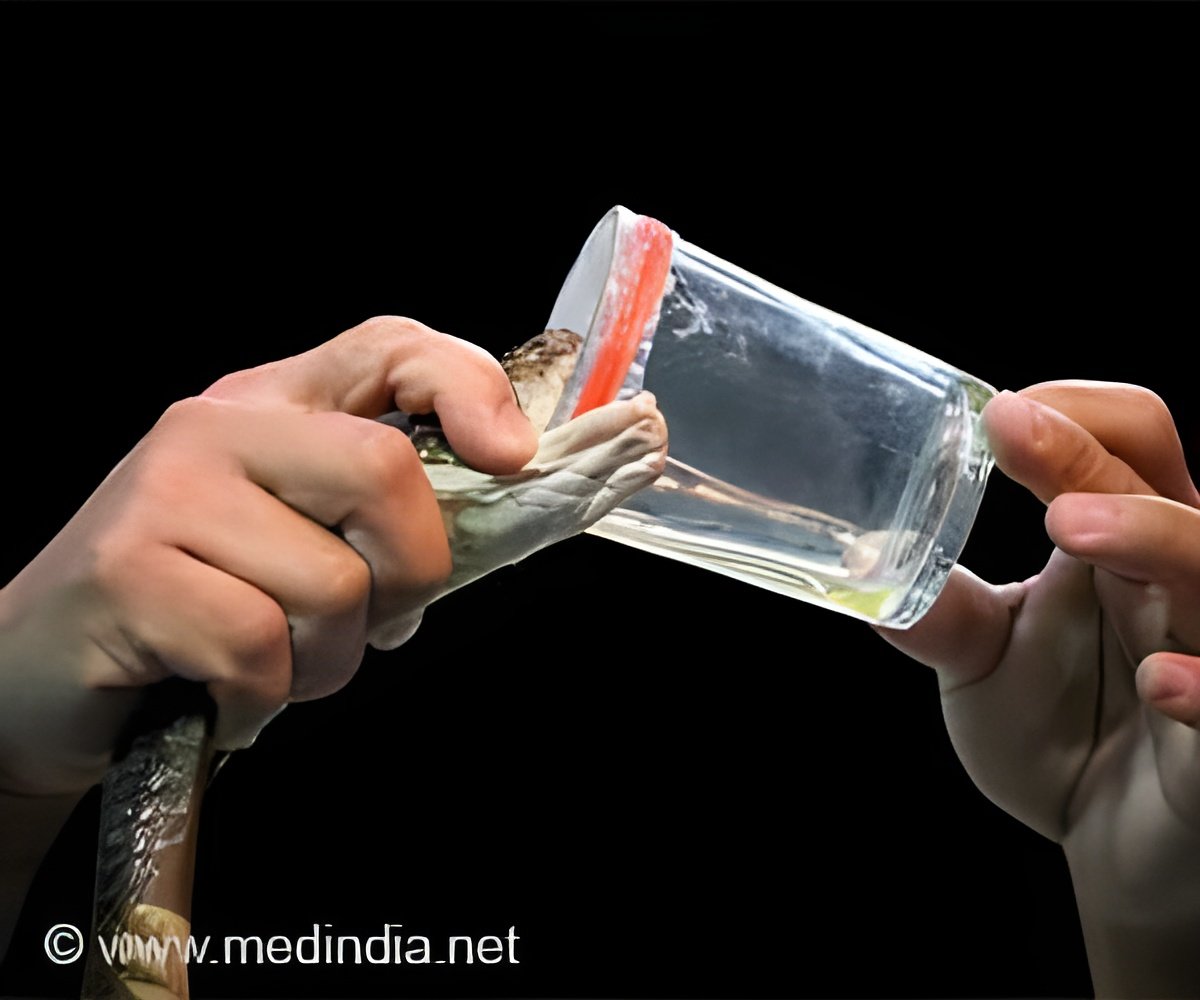
Nanobody-based recombinant antivenom for cobra, mamba and rinkhals bites
Go to source)
Traditional antivenoms are made by using antibodies, which are produced by immunizing animals. They often provide a shield against a few snakebites and fail to prevent tissue damage, also induce side effects in patients.
To overcome these challenges, researchers from the Technical University of Denmark (DTU), in collaboration with LSTM, have developed a cutting-edge recombinant antivenom combining eight nanobodies, small, stable antibody fragments, that together neutralize seven key toxin subfamilies found across African elapid snakes such as cobras and mambas.

Snake Bites Quiz: Test Your Knowledge on Identification, Management, and Prevention
Introduction: Did you know that snake bites are a significant health concern around the world, and can lead to serious harm if not treated promptly and effectively. India has the highest number of snakebite fatalities in the ...
Introduction: Did you know that snake bites are a significant health concern around the world, and can lead to serious harm if not treated promptly and effectively. India has the highest number of snakebite fatalities in the ...
TOP INSIGHT

Did You Know?
#Elapid snakebites kill over hundreds of thousands of people every year, leaving many with disabilities. #Biotechnology offers strong hope through lab-produced #antivenoms for those affected people. #elapidsnakes #biotechnology #antivenomresearch #toxicology #medindia
Broad-Spectrum Efficacy Against 17 African Elapids
In preclinical studies, this new recombinant antivenom formulation provided a high degree of protection against death and, crucially, severe tissue damage caused by 17 different elapid snakes.Because the antibodies are produced in a lab they can be manufactured at scale, offering consistent quality and potentially lower production costs.
Corresponding author and project lead, Professor Andreas Laustsen from DTU, said: “This work shows how we developed the first product-ready recombinant snakebite antivenom that cover all the elapid species in Africa, including cobras, mambas, and rinkhals, and which outperforms existing serum-derived products.”
Professor Nicholas Casewell, Director of LSTM’s Centre for Snakebite Research & Interventions, said: “This study marks a major step forward in how we approach snakebite treatment.”
Snake Bites - First Aid and Emergency Treatment Guide
Snake bite from a venomous snakes like King Cobra, Russell viper can be deadly. A quick and simple First Aid guide on Snake bite treatment and management.
Snake bite from a venomous snakes like King Cobra, Russell viper can be deadly. A quick and simple First Aid guide on Snake bite treatment and management.
Serious Limitations of Existing Antivenom Products
“For more than a century, antivenoms have been made using animals, and while these products save lives, they come with serious limitations.”“The recombinant nanobody approach enables us to target venom toxins in a precise manner, which should lead to a safer, more consistent, and scalable therapy that ultimately could transform how snakebite is treated across Africa. The hope is that this breakthrough will ultimately make effective antivenoms more accessible to those who need them most.”
Snakebite is one of the world’s most neglected tropical diseases as recognized by the World Health Organization, killing 140,000 people a year and leaving over 400,000 with disabilities or disfigurements.

Antivenom
This medication is an antitoxin, prescribed for the treatment of envenomation caused by bites of crotalids (pit vipers)including rattlesnakes, copperhead and cottonmouth moccasins, and ...
This medication is an antitoxin, prescribed for the treatment of envenomation caused by bites of crotalids (pit vipers)including rattlesnakes, copperhead and cottonmouth moccasins, and ...
Making Antivenoms Accessible in the Field
The burden falls overwhelmingly on rural communities in sub-Saharan Africa and south Asia where access to effective and affordable treatment remains limited.This new research validates a modular platform for snakebite treatment, showing that a defined antibody mixture can replace complex animal products. The next step will be to optimize large-scale production and move towards clinical translation, with the goal of making recombinant antivenoms accessible in the field.
By harnessing biotechnology, the study demonstrates how the future of snakebite treatment can be safer, more effective, and more equitable, offering real hope to the hundreds of thousands of people affected by snakebite each year.
Reference:
- Nanobody-based recombinant antivenom for cobra, mamba and rinkhals bites - (https://www.nature.com/articles/s41586-025-09661-0)
Source-Eurekalert

New 'Antivenomics' Technique to Create Universal Snake Bite Anti-venom
Scientists are working towards creating universal snake bite anti-venom with the help of a new technique called 'antivenomics'.
Scientists are working towards creating universal snake bite anti-venom with the help of a new technique called 'antivenomics'.
 Email
Email