MEDINDIA
 English
 हिन्दी
 Español
 français
 中文
中文
Genetically encoded fluorescent biosensors can enable the generation and testing of billions of individual variants of a metabolic pathway in record time.
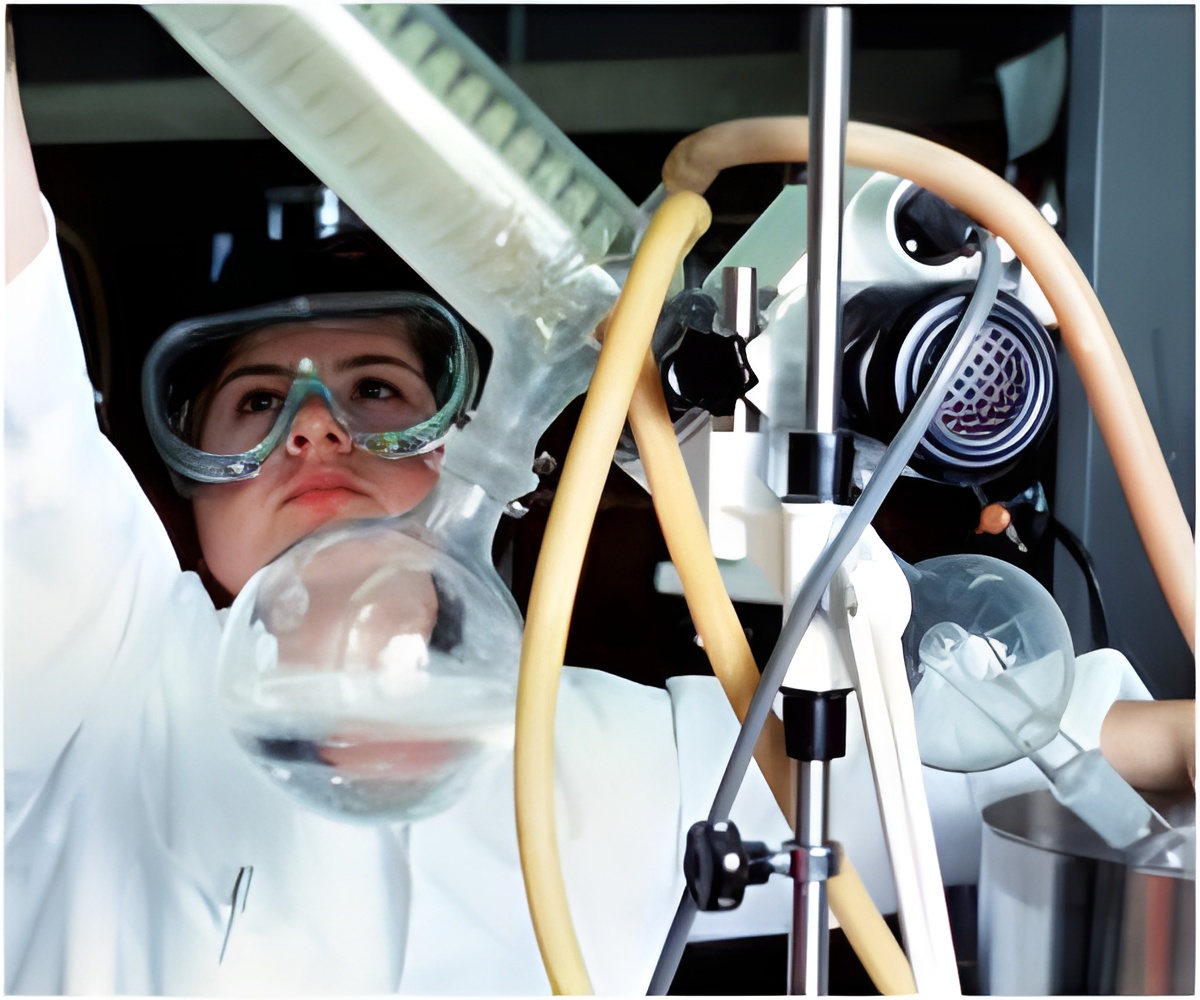

New Biosensor to Detect Traces of Contaminants
A new generation of biosensors spot microscopic traces of contaminants, say researchers.
A new generation of biosensors spot microscopic traces of contaminants, say researchers.
TOP INSIGHT

Bioengineers thoroughly understand how metabolic pathways work on the biochemical level and have a plethora of DNA sequences encoding variants of all of the necessary enzymes at their disposal.
In the Trends in Biotechnology article, Wyss Institute scientists George Church and Jameson Rogers lay out the current state-of-the-art for designing, building and testing many variants at a time, a methodology that bioengineers call 'multiplexing'. Church is a Wyss Core Faculty member and Professor of Genetics at Harvard Medical School and Rogers, currently with the Boston Consulting Group, performed his work as a Harvard Pierce Fellow and Doctoral Student mentored by Church.
Bioengineers thoroughly understand how metabolic pathways work on the biochemical level and have a plethora of DNA sequences encoding variants of all of the necessary enzymes at their disposal. Deploying these sequences with the help of computational tools and regulating their expression with an ever-growing number of genetic elements, gives them access to an almost infinite pool of design possibilities. Similarly, revolutionary advances in technologies enabling DNA synthesis and manipulation have made the construction of billions of microorganisms, each containing a distinct design variant, a routine process.

Coming Soon, Biosensors to Detect Lung Cancer
Researchers are in the process of developing biosensors to detect tumor markers of lung cancer in exhaled breath.
Researchers are in the process of developing biosensors to detect tumor markers of lung cancer in exhaled breath.
Church and Rogers discuss how genetically encoded biosensors can help bioengineers overcome this hurdle. Such biosensors work by coupling the amount of a desired product produced within a microorganism to the expression of an antibiotic resistance gene such that only high producers survive. Alternatively, the expression of a fluorescent protein can be used for high-speed sorting of rare but highly productive candidates from large populations of less productive microbes.

MIPT Scientists Design and Patent Graphene Biosensors
Researchers at MIPT's Center of Excellence for Nanoscale Optoelectronics are currently investigating commercial applications for graphene and other materials.
Researchers at MIPT's Center of Excellence for Nanoscale Optoelectronics are currently investigating commercial applications for graphene and other materials.
Earlier work by Church's team at the Wyss Institute already demonstrated that the levels of commercially valuable chemicals produced by bacteria could be raised through several rounds of a design-build-test cycle that employed an antibiotic selection-based biosensor. Now, Church and Rogers report in PNAS the unique advantages that fluorescent biosensors provide to bioengineers.
Paper-Based Biosensors to Detect Disease Causing Bacteria, Viruses and Other Pathogens
This new technique is stable and compatible making it easy for DNA strands to spot micro-organisms and small molecules, which are markers for disease.
This new technique is stable and compatible making it easy for DNA strands to spot micro-organisms and small molecules, which are markers for disease.
Using this strategy, the Wyss researchers have established fluorescent biosensors for the production of super-absorbent polymers and plastics like the coveted acrylate from which a range of products is made. In fact, the study established the first engineered pathway able to biologically produce acrylate from common sugar, rather than the previously required petroleum compounds.
"This newly emerging biosensor technology has the potential to transform metabolic engineering in areas ranging from industrial manufacturing to medicine, and it can have a positive impact on our environment by making the production of drugs and chemicals independent from fossil fuels," said Wyss Institute Founding Director Donald Ingber, M.D., Ph.D., who is the Judah Folkman Professor of Vascular Biology at HMS and the Vascular Biology Program at Boston Children's Hospital, as well as Professor of Bioengineering at the Harvard John A. Paulson School of Engineering and Applied Sciences.
Source-Eurekalert
 Email
Email