MEDINDIA
 English
 हिन्दी
 Español
 français
 中文
中文
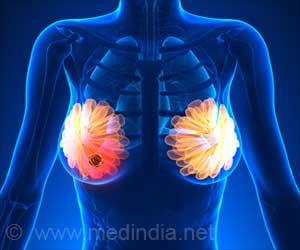
Researchers have shown that the Atox1 protein, found in breast cancer cells, participates in the process by which cancer cells metastasize. The protein could, therefore, be a potential biomarker for assessing the aggressiveness of the disease, as well as a possible target for new drugs.


Recent Advances and the Present Status of Breast cancer Management
The crab that invades the breast is no more a fear factor with all the advancements that medical science and customized protocols can fight breast cancer. the recent developments in the management of breast cancer.
The crab that invades the breast is no more a fear factor with all the advancements that medical science and customized protocols can fight breast cancer. the recent developments in the management of breast cancer.
TOP INSIGHT

Researchers at Chalmers University of Technology have now identified a copper-binding protein that clearly affects breast cancer cell migration.
Previous studies have shown that, like other cancers, breast cancer coincides with higher levels of copper in the blood and in tumour cells, but the use of this extra copper in cancer cells is not known. Copper and other metal ions in our body are absorbed through food and are vital for many biological functions, in small, controlled quantities. Free copper ions are toxic and thus all copper in our body is bound to proteins.
Researchers at Chalmers University of Technology have now identified a copper-binding protein that clearly affects breast cancer cell migration.
Triple-Negative Breast Cancer - Causes, Symptoms, Diagnosis, Treatment, Prevention & Prognosis
Triple-negative breast cancers are ER negative, PR negative, and lack overexpression of HER-2. They are difficult to treat and are very aggressive.
Triple-negative breast cancers are ER negative, PR negative, and lack overexpression of HER-2. They are difficult to treat and are very aggressive.
Atox1 is a protein that transports copper to other proteins in our cells which require it for enzymatic functions. The Chalmers researchers recently found that Atox1 placed itself at the leading edge of moving cancer cells, indicating that the protein may be involved in cell movement. This observation was the starting point for the now published study.
"We were able to demonstrate that the cells moved at higher speeds and over longer distances when Atox1 was present, compared to those same kinds of cells moving without the protein," says Stéphanie Blockhuys, a Postdoctoral Researcher in Chemical Biology at Chalmers, and first author of the study.
"When Atox1 in the cancer cells was reduced, we found LOX activity to be decreased. Thus, it appears that without Atox1, LOX doesn’t receive the copper required for its cell migration activity," says Stéphanie Blockhuys.
In parallel, the researchers analysed a database of reported Atox1 transcript levels in 1904 different breast cancer patients, along with survival times. They found that patients with tumours with high Atox1 levels have drastically lower survival times. They conclude therefore that the mechanism they identified in their cell culture experiments seems to play a role in the development of the disease in patients
This indicates that Atox1 could be a biomarker for assessing how aggressive a breast cancer is. Such information could be used, for example, to determine if treatment to remove copper from the body could be appropriate. Atox1 could also become a target for drugs to block metastasis and thereby increase survival times.
"What we have found could be important for all types of cancer. How cancer cells move is a fundamental process that we still don’t understand well enough," says Pernilla Wittung-Stafshede. The researchers will now transfer the experiments from cells to small animal models and investigate whether there are other copper-binding proteins involved.
Source-Eurekalert
 Email
Email