MEDINDIA
 English
 हिन्दी
 Español
 français
 中文
中文
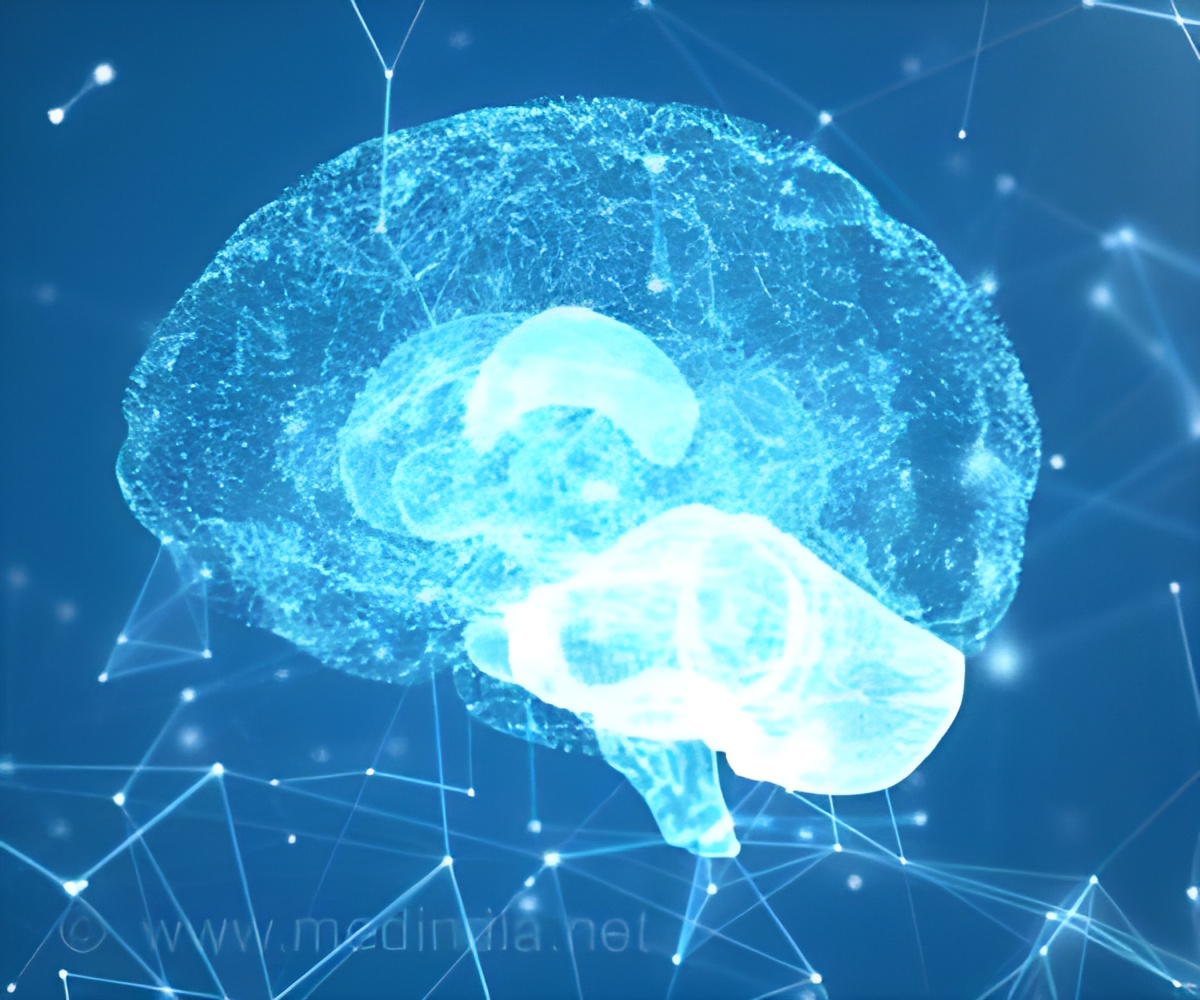
Conscious experience may emerge from the brain's sensory regions, challenging long-standing theories that spotlight the prefrontal cortex.
Adversarial testing of global neuronal workspace and integrated information theories of consciousness
Go to source).

Seat of Human Consciousness may Originate in the Brain Stem Region of the Brain
Regions and networks of the brain that may play a crucial role in maintaining human consciousness has been identified.
Regions and networks of the brain that may play a crucial role in maintaining human consciousness has been identified.
TOP INSIGHT

Did You Know?
Turns out, the back of your brain might be doing the real thinking!
#consciousness #medindia
Great Consciousness Showdown
Two of the most debated theories in neuroscience—Integrated Information Theory (IIT) and Global Neuronal Workspace Theory (GNWT)—were put head-to-head in a large-scale scientific face-off. Instead of competing independently, scientists from around the world engaged in an “adversarial collaboration,” an open-science approach where both theory camps jointly developed predictions, methods, and analyses. This move eliminated bias and ensured unprecedented transparency.IIT suggests that consciousness arises from richly interconnected sensory areas in the posterior brain, while GNWT claims it’s the frontal cortex that broadcasts conscious experiences across the brain. This study was designed to settle the score through real-time brain data.

Scientists Find Ways To Manipulate Consciousness in Rats
New research suggest that the neurons in the central thalamus works like a radio dial that tunes the brain to different states of activity and arousal.
New research suggest that the neurons in the central thalamus works like a radio dial that tunes the brain to different states of activity and arousal.
Visual Cortex Takes Center Stage
With over 250 participants undergoing advanced brain scans (fMRI, MEG, iEEG), researchers discovered that conscious perception lights up the back of the brain—particularly the visual and ventral temporal cortices. Surprisingly, prefrontal cortex activity was limited, contradicting GNWT’s core claim.This points to consciousness being rooted in sensory experience, not higher-order reasoning alone. Faces, letters, and even orientation of images could be decoded from sensory areas. GNWT's idea of “ignition” in the frontal cortex at stimulus onset and offset was largely absent. These findings suggest consciousness might be more about seeing than thinking.

EEG Scans May Help Indicate Level of Awareness in Patients With a Disorder of Consciousness
The ultimate aim is to provide more accurate diagnoses for all patients, thus directing appropriate rehabilitation an therapy to those most likely to benefit.
The ultimate aim is to provide more accurate diagnoses for all patients, thus directing appropriate rehabilitation an therapy to those most likely to benefit.
Rethinking the Brain’s Role in Awareness
Despite well-defined predictions, both theories struggled under empirical scrutiny. IIT’s notion of ongoing, synchronized posterior activity was not fully supported—suggesting consciousness may not rely solely on persistent network states. GNWT fared worse, as its critical “offset response” never materialized, leaving its foundational mechanism in doubt.These challenges hint at a deeper truth: b>consciousness may not belong exclusively to any one region or function. Instead, a hybrid theory or entirely new model might better explain the intricate dance of awareness in the brain. Researchers now advocate for a quantitative, cross-modal approach to build more resilient models in the future.
References:
- Adversarial testing of global neuronal workspace and integrated information theories of consciousness - (https://www.nature.com/articles/s41586-025-08888-1)
Source-Nature
Lucid Dreamers Help Scientists Locate the Seat of Meta-Consciousness in the Brain
New studies on lucid dreaming have now helped scientists discover the seat of meta-consciousness of the brain.
New studies on lucid dreaming have now helped scientists discover the seat of meta-consciousness of the brain.
 Email
Email