MEDINDIA
 English
 हिन्दी
 Español
 français
 中文
中文
In order to ensure the delivery of the anti-cancer drug, floxuridine is being combined with natural serum albumin, which usually settles around target cancer cells, finds a new study.

New Generation of RNA Based Anticancer Drugs
RNA nanotechnology used to produce therapy-loaded extracellular vesicles that successfully targeted three types of cancer cells.
RNA nanotechnology used to produce therapy-loaded extracellular vesicles that successfully targeted three types of cancer cells.
TOP INSIGHT

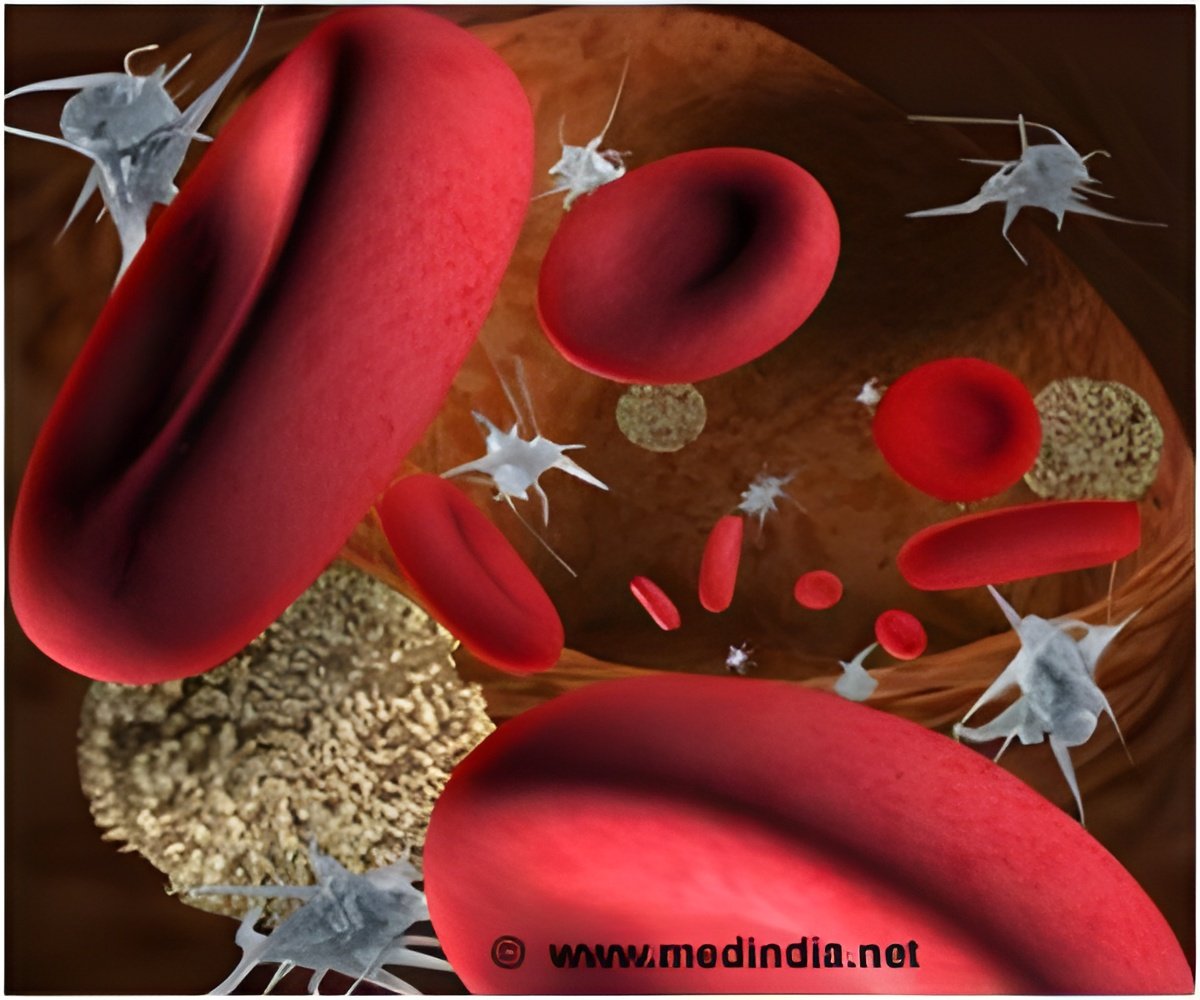
When anti-cancer drugs enter the bloodstream, they sometimes tend to get themselves degraded by enzymes, interfere with healthy cells or even get eliminated from the body before doing anything. This new strategy of combining natural serum albumin with floxuridine has been devised to avoid all these circumstances.
Floxuridine is a fluorinated pyrimidine nucleoside and antimetabolite, which inhibits the enzymes of DNA synthesis. Its oligomer, an oligonucleotide of 10 units, is even more efficient and is actively internalized in the cell. To make it transportable by serum albumin, Prof. Tan and his group decided to endow the oligonucleotide with hydrophobic alkyl chains as a linker. This was necessary because albumin naturally transports lipophilic molecules such as lipids and cholesterol, but not negatively charged oligonucleotides.
The synthesis of the alkyl-chain-conjugated floxuridine oligonucleotide containing 20 units (LFU20) proceeded on a DNA synthesizer. The authors tested the compound for its interaction with serum albumin, cell internalization, transport through the bloodstream in tumor-implanted mice, and tumor proliferation. They observed that although a large fraction of the drug still left the body, a much higher proportion than in the control group accumulated in the tumor. There, the drug was internalized in the cells. The "enhanced permeability and retention effect" directed the accumulation, an effect well established in tumor research. In the cells, the lysosomes take up the drug, and enzymes release the antimetabolic floxuridine structure, the authors note.

Neural Network is well trained to Select New Anticancer Drugs
A neural network that selects potential anticancer drugs, developed by a research team from Medicine and Moscow Institute of Physics and Technology (MIPT).
A neural network that selects potential anticancer drugs, developed by a research team from Medicine and Moscow Institute of Physics and Technology (MIPT).
Source-Eurekalert

Breast Cancer Patients Experience Side Effects from Anticancer Drugs
A new experiment has found that both real and sham acupuncture treatments may help alleviate side effects of drugs normally used to treat breast cancer.
A new experiment has found that both real and sham acupuncture treatments may help alleviate side effects of drugs normally used to treat breast cancer.

Target of Anticancer Drugs Have Broader Functions
Histone deacetylases (HDACs) are the drugs that inhibit the activity of enzymes. They are being widely developed for treating cancer and other diseases, with two already on the market.
Histone deacetylases (HDACs) are the drugs that inhibit the activity of enzymes. They are being widely developed for treating cancer and other diseases, with two already on the market.
 Email
Email