MEDINDIA
 English
 हिन्दी
 Español
 français
 中文
中文
A flexible wristband with a fingertip-inspired sensor and AI decoding can track breathing patterns with over 99.5% accuracy.

Direct extraction of respiratory information from pulse waves using a finger-inspired flexible pressure sensor system
Go to source). Developed by a team including researchers from North University of China and Xiamen University, this system offers an effortless and unobtrusive alternative to bulky chest straps or nasal devices, enabling continuous, real-time respiratory monitoring. This breakthrough could transform respiratory care, especially for individuals managing chronic conditions or recovering from illness.

Now Portable, Low-Cost Sensor Detects Disease Markers in Breath
A small sensor made from porous thin films of organic conductive plastics could detect trace compounds like ammonia in the breath, indicating the risk of diseases.
A small sensor made from porous thin films of organic conductive plastics could detect trace compounds like ammonia in the breath, indicating the risk of diseases.
TOP INSIGHT

Did You Know?
A flexible wristband weighing just 9 grams can measure your breathing with over 99.5% accuracy by analyzing subtle pulse changes and improve respiratory care for millions worldwide. #medindia #respiratoryhealth #wearabletech
Chronic Respiratory Diseases and Monitoring Challenges
Chronic respiratory diseases affect millions globally and require constant monitoring to manage symptoms and prevent complications. However, existing technologies—such as chest belts or nasal prongs—can be intrusive and unsuitable for long-term daily use. Recent approaches have explored indirect signals like heart rate or pulse waveforms, offering better comfort but often sacrificing accuracy.Traditional signal classification methods fall short when faced with the complexity of human respiration. Due to these challenges, there is a growing demand for devices that are not only comfortable to wear but also capable of extracting high-fidelity respiratory data over extended periods. Based on these challenges, there is a pressing need to develop advanced systems for long-term, precise respiratory monitoring.

Breath Test To Analyze Fat Breakdown in The Body
Acetone levels in the breath after a heavy workout indicate breakdown of fat. his makes it suitable for everyday use.
Acetone levels in the breath after a heavy workout indicate breakdown of fat. his makes it suitable for everyday use.
Innovative Wearable System With Artificial Intelligence
Researchers from North University of China and Xiamen University have unveiled a novel wearable system that reads respiratory patterns directly from wrist pulse signals. Published in Microsystems & Nanoengineering, the study details a miniaturized, AI-powered device that integrates a flexible pressure sensor with a deep neural network. The sensor system enables continuous respiratory tracking with high comfort and clinical-grade precision, offering a promising alternative to traditional respiratory monitors.Fingertip-Inspired Sensor and Deep Neural Network Design
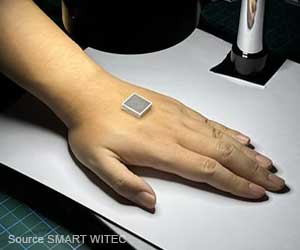
At the heart of the system lies a 300-μm-thick flexible pressure sensor, inspired by the structure of a human fingertip. Printed on a thermoplastic polyurethane (TPU) substrate, the sensor is capable of detecting subtle fluctuations in pulse waves caused by respiration.These signals—categorized as respiration-induced amplitude variation (RIAV), respiration-induced fluctuation in ventricular filling (RIFV), and respiration-induced variation in baseline (RIIV)—are transmitted to a mobile application via Bluetooth and processed using a hybrid Residual Network – Bidirectional Long Short-Term Memory (ResNet-BiLSTM) neural network. This deep learning model captures the temporal and spatial dynamics of respiratory patterns, classifying slow, normal, fast, and simulated breathing states with a remarkable 99.5% accuracy.

Breath Biometrics: It’s Time to Sniff Out Your Identity
Do you know! Your breath can be your best ID. Newly developed olfactory sensor can now screen breath for biometric authentication.
Do you know! Your breath can be your best ID. Newly developed olfactory sensor can now screen breath for biometric authentication.
Lightweight Design and Real-World Testing
The device’s ultra-lightweight construction (just 9 grams), skin-conforming design, and long-term mechanical stability allow it to be worn for hours without discomfort.Testing involved 13 human volunteers and machine-simulated breathing, demonstrating the sensor’s robustness across real and artificial respiratory scenarios. By avoiding reliance on chest placement or airflow proximity, the device simplifies setup and enhances usability—making it ideal for users in everyday environments.
Potential Impact on Chronic Disease Management
“Our mission was to bridge the gap between high-precision monitoring and wearable comfort,” said Dr. Libo Gao, senior author of the study. “We’ve shown that you can track respiration with clinical accuracy—without putting anything on your chest or face. This could be a game-changer in how we approach remote health monitoring, especially for patients who need round-the-clock care.”The device's ability to deliver accurate respiratory insights in a comfortable, wearable format opens new doors for chronic disease management, eldercare, and telemedicine. Its seamless integration with mobile platforms allows for real-time alerts and long-term data logging—tools that are essential for early intervention in conditions like COPD or sleep apnea. Beyond healthcare, this innovation could also benefit athletes, astronauts, or high-altitude workers by offering continuous respiration tracking in dynamic environments. As wearable tech evolves, this wrist-worn system could become a cornerstone in the future of personalized respiratory health monitoring.
Reference:
- Direct extraction of respiratory information from pulse waves using a finger-inspired flexible pressure sensor system - (https://www.nature.com/articles/s41378-025-00924-4)
Source-Eurekalert
 Email
Email